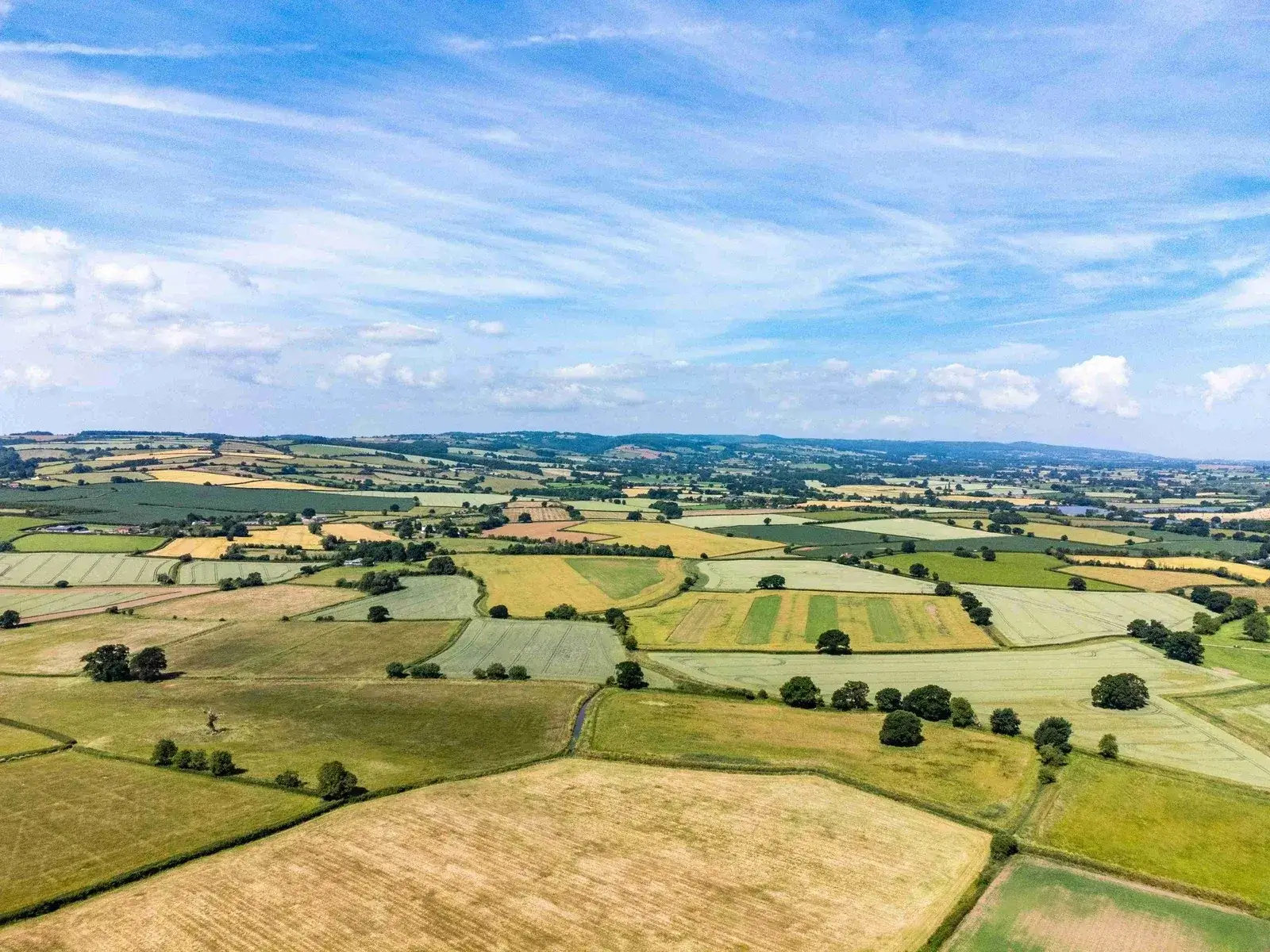
Warwickshire farmland reviewed for agricultural and development value
Warwickshire Farm Value & Development

How Much Is My Farm Worth in Warwickshire?

Whole-farm valuation for Warwickshire: assess the farmhouse, buildings, farmland, occupation and diversified income first, then review any individual parcel with separate strategic or development potential.

This Warwickshire farm guide provides an integrated review of farm value, planning potential and development-sale options. It assesses the holding as a collection of assets, identifies whether a defined parcel warrants planning work and compares the available sale or promotion routes before terms are signed.

Warwickshire farm values can be pulled in several directions at once. A productive commercial holding, a residential farm close to Warwick or Leamington Spa, land around Rugby’s growth corridors and a Green Belt holding near Coventry or Birmingham can all have very different buyer pools even where the acreage is comparable.

The correct starting point is therefore to identify the assets inside the title. Value My Land considers the farmhouse, cottages, farmland, buildings, yards, diversified income, occupation and any individual field whose access or settlement relationship may justify strategic planning investigation.

This distinction is particularly important in Warwickshire because strong residential and employment demand can encourage owners to assume that all well-located farmland carries development value. In practice, Green Belt, heritage, landscape, highways and infrastructure can be decisive. A careful review separates genuine optionality from ordinary agricultural value before decisions are made.

Request a free, no-obligation review of your Warwickshire farm, its planning potential and the available development-sale options

Get Your Free Farm Review

Tell us where the farm is, its approximate size and what you would like reviewed

Complete Warwickshire Farm Guide

Farm Value, Planning Potential and Development-Sale Options in One Place

This guide addresses three of the questions most frequently asked by Warwickshire farmers and landowners: what the farm may be worth, whether part of it has planning potential, and whether development land should be sold or promoted. Use the links below to move directly to the part of the review that matters to you.

Warwickshire Valuation Lens

Warwickshire Farm Value Reflects Several Competing Land Markets

Agricultural buyers, lifestyle purchasers, commercial occupiers and strategic land promoters can all be active in Warwickshire, but they do not value the same characteristics. A neighbouring farmer may prioritise a clean block of productive land; a residential buyer may focus on the farmhouse, privacy and paddocks; a business may value a well-located yard; and a promoter concentrates on planning policy, access and settlement form.

The influence of place is substantial. Warwick, Leamington Spa and Kenilworth sit in a different residential and Green Belt context from Rugby and the eastern transport corridors. Stratford-on-Avon combines high-value rural and tourism influences with sensitive heritage and landscape settings. North Warwickshire and the Nuneaton/Bedworth area are affected by Birmingham, Coventry, logistics demand and major infrastructure.

A farm review should turn those broad influences into a practical asset plan. Which fields are central to the farming business? Which buildings can be separated? Does the farmhouse need retained land to preserve its value? Is there a parcel whose strategic potential warrants protection from a whole-farm sale? Answering those questions can matter more than debating a small movement in the agricultural price per acre.

Existing Agricultural Value

Benchmark the productive land and operational holding first, using the characteristics that matter to genuine agricultural buyers rather than a headline regional average.

Residential and Building Value

Separate the farmhouse, cottages, yards and buildings where their buyer market or income potential differs from the agricultural acreage.

Strategic or Hope Value

Only attribute an additional strategic layer where location, planning context and technical deliverability provide evidence that a parcel deserves further investigation.

Retained-Farm Impact

Test whether selling an asset removes access, services, buildings or productive land that materially reduces the value and efficiency of what the family intends to keep.

Different Measures of Value

Agricultural Value, Farm Value, Hope Value and Development Value

Agricultural value reflects the land and agricultural buildings in their existing use, taking account of productive capacity, local demand and occupation. It is normally the appropriate starting point for fields that are expected to remain in farming use.

Farm value considers the holding as a broader property and business asset. It can include the farmhouse, cottages, buildings, yards, diversified income, leases, rights, environmental agreements and the benefit or burden created by the way the individual assets operate together.

Hope value is additional value attached to the possibility of a more valuable future use. It may apply to a settlement-edge field, a redundant farmyard, a traditional building or land affected by future infrastructure. It is not the same as full development value and depends on the strength, timing and risk of the opportunity.

Development value generally becomes relevant once a site's planning position has been materially improved. The gross headline value must still be reduced for affordable housing, infrastructure, professional fees, abnormal costs, finance, developer profit and other scheme-specific deductions.

Compare Existing Use Value and Development Value

Why a Single Price Per Acre Can Be Misleading

The farmhouse and cottages may need separate residential or investment evidence.

Different fields may vary in soil quality, access, drainage, shape and agricultural demand.

The farmyard may be essential to the business or capable of a higher-value alternative use.

Only one defined parcel may have a realistic planning or infrastructure opportunity.

Tenancies, licences, covenants and rights can affect timing, control and vacant-possession value.

Lotting the farm differently can widen the buyer pool and materially change the overall result.

The more useful question is not simply “what is the average price per acre?” but “which assets should be valued together, which should be separated and which may have a different future use?”

Warwickshire Development Value Context

How One Field Could Change the Value of an Entire Farm

Most farms will not have development potential across the entire holding. The important task is to identify whether one field, a road-frontage parcel, a farmyard or land adjoining a settlement may justify a separate planning and value assessment.

A relatively small parcel can sometimes account for a significant share of the farm's potential value, while the remainder continues to be used and valued for agriculture. This is why a farm should be reviewed parcel by parcel before any whole-holding sale, family transfer or long-term agreement is completed.

MHCLG Residential Land Value Estimates for Warwickshire

The latest land value estimates for Warwickshire, published by the Ministry of Housing, Communities and Local Government (MHCLG), indicate that residential development land with planning permission could be worth between £1.1 million and £3.4 million per acre. These figures highlight the significant uplift in value that can be achieved when suitable land secures planning consent. Residential development land values can vary significantly across Warwickshire depending on location, planning status, density, infrastructure costs, abnormal development costs and market demand. However, land with planning permission for housing can be worth substantially more than land used for agriculture, grazing, equestrian or amenity purposes. These potential value differences highlight why it is important to obtain a professional assessment before deciding whether to sell or promote land.

1

The 180-Acre Holding

Most of the holding may continue to be valued primarily for agricultural production, together with the farmhouse, buildings and income-producing uses. Applying a development rate across the full acreage would be unrealistic and could distort decisions about succession, borrowing or sale.

2

The Five-Acre Edge Parcel

A small field adjoining a town or village may have a different planning profile from the rest of the farm. If it has suitable access, a logical relationship with existing development and manageable constraints, it may justify Local Plan promotion, a planning application or longer-term strategic retention.

3

The Retained Farm

Any sale or promotion strategy must protect the remaining business. Machinery access, livestock routes, water, drainage, services, field connections, future buildings and biosecurity should be considered before boundaries or rights are agreed. Unlocking one parcel should not unnecessarily reduce the value or usability of everything retained.

Do You Own a Field That Adjoins a Warwickshire Town or Village?

Send us the location of the farm and we will carry out a free initial review to identify whether any defined parcel may warrant closer planning assessment. We can consider settlement relationship, access, Local Plan context, nearby development and obvious constraints before explaining whether the land appears principally agricultural or may justify further promotion work.

Component Values

Warwickshire Value Drivers That Should Be Appraised Separately

The following components can attract different buyers and should be understood before deciding whether the best strategy is a whole-farm sale, a selective disposal or retention with longer-term planning work.

High-quality agricultural blocks

Productive, accessible and well-shaped land can attract strong commercial farming demand and should be valued on genuine agricultural comparables before strategic assumptions are introduced.

Residential farmhouses and paddocks

Around Warwick, Leamington Spa, Kenilworth, Stratford-upon-Avon and attractive villages, residential and lifestyle demand can materially influence the value of the house and immediately associated land.

Farmyards near strategic routes

Buildings and hardstanding close to the M40, M42, M6, M69 or A5 may have operational or diversification advantages, subject to access and planning controls.

Traditional and heritage assets

Character farmsteads can add value but listed status, conservation settings and separation from active farm uses may materially affect conversion or residential prospects.

Settlement-edge land

Parcels around Rugby, Nuneaton, Bedworth, Warwick, Stratford and other growth locations should be screened individually for Green Belt, settlement policy, access and infrastructure.

Access and ransom positions

Control of a frontage, track or service corridor can be strategically important. Any disposal should preserve rights needed by retained land and avoid unintentionally creating value for a third party at the owner’s expense.

Farm Valuation Evidence

How Is the Value of a Warwickshire Farm Assessed?

A reliable farm valuation should draw together evidence from several markets rather than treating the holding as one uniform block. Comparable farm sales, bare land transactions, residential property evidence, building and yard values, income, tenancy terms and alternative-use prospects may all be relevant.

The weight given to each source depends on what is being valued and why. A whole working farm offered with vacant possession will not necessarily be assessed in the same way as a tenanted holding, a residential farm with lifestyle appeal or a property divided into separate lots.

Comparable Farm Sales

Recent sales of farms with a similar location, acreage, land quality, farmhouse, buildings and occupation position can provide useful evidence. However, apparently similar holdings can achieve different prices where one has stronger residential appeal, better infrastructure, diversified income, valuable sporting rights or additional strategic potential. Sale circumstances and lotting also need to be understood.

Bare Agricultural Land Evidence

Local arable and pasture sales provide context, but soil quality, field size, drainage, access, topography and neighbouring farmer demand can materially alter the price. A county or regional average should therefore be treated as a broad benchmark rather than a valuation of a particular field. Equestrian and amenity demand may also create a separate market.

Compare UK Agricultural Land Values

Residential and Lifestyle Value

The farmhouse, gardens, privacy, views, access and proximity to towns or villages can attract buyers who are not solely motivated by agricultural returns. In some cases the residential element contributes a substantial share of the overall value. Agricultural occupancy conditions, shared yards, intensive uses and the condition of the dwelling can significantly alter that contribution.

Buildings and Yard Evidence

Modern livestock buildings, grain stores, workshops, hardstanding and yards may support the agricultural business, while traditional or redundant buildings may have residential, commercial, storage or tourism potential. Condition, services, access, planning status, adaptability and liabilities such as asbestos or contamination affect whether the asset adds value or requires costly work.

Income and Investment Value

Rental income from cottages, commercial units, storage, telecoms, renewables, sporting rights or other agreements may increase investment appeal. The value depends on the amount and security of the income, lease duration, rent review, tenant covenant, repairing obligations and liabilities retained by the owner. Informal income may be given limited weight until documented.

Hope and Strategic Value

A defined parcel may attract additional value where there is a credible prospect of planning permission, allocation, settlement expansion, infrastructure development or another higher-value use. The allowance should reflect probability, timescale, costs and risk. Strategic value should be assessed separately and should not automatically be applied across the whole farm.

Read Our Hope Value Guide

Why the Purpose of the Valuation Matters

A valuation prepared for an open-market sale may not be the same as one required for secured lending, partnership accounts, probate, matrimonial proceedings, tax planning or an internal family transfer. Different assumptions, reporting standards and professional requirements may apply.

Our free review is intended to identify the holding's principal value drivers and any overlooked planning or strategic potential. It is not a formal valuation prepared in accordance with the RICS Red Book.

Where a formal valuation is required, the landowner should instruct an appropriately qualified rural valuer and provide clear instructions about the valuation date, purpose, ownership, occupation and assets to be included.

Our review can help frame those instructions by identifying whether particular fields, buildings or rights require separate treatment instead of being absorbed into a single average figure.

Read How Land Is Valued in the UK

Agricultural and Environmental Factors

Farm Characteristics That Can Increase or Reduce Agricultural Value

Even where no development potential exists, the agricultural characteristics of a holding can create significant differences in value. Buyers will consider productive capacity, ease of management, environmental obligations and the cost of maintaining or improving the farm.

Land Quality and Soil

Agricultural Land Classification, soil type, depth, drainage, stone content and the ability to support arable cropping or productive grassland can influence demand. Past cropping, compaction, contamination and soil-management requirements may also matter. The most productive land is not always the land with the strongest alternative-use potential, so agricultural and strategic value should be considered separately.

Field Size, Shape and Layout

Large, regular fields with efficient access may appeal to commercial farmers, while small or fragmented parcels can be more expensive to manage. Awkward boundaries, steep slopes and long travel distances reduce efficiency. Conversely, smaller paddocks near settlements may attract lifestyle, equestrian or amenity purchasers and command a different price from conventional agricultural evidence.

Water, Drainage and Flooding

Reliable water supplies, effective field drainage and manageable flood risk support productivity. Defective drainage, waterlogging or dependence on uncertain private supplies can reduce value and lead purchasers to price in improvement costs. Where the holding is divided, water and drainage rights must be protected so that both sold and retained land remain usable.

Read Our Flood Risk and Drainage Guide

Environmental Schemes and Obligations

Countryside Stewardship, Sustainable Farming Incentive agreements and other environmental commitments may provide income but can also impose management obligations. The payment terms, duration, transferability, penalties and effect on future land use should be understood. A buyer may value secure income positively but discount restrictions that conflict with their intended farming or development strategy.

Woodland, Hedgerows and Trees

Woodland may have timber, amenity, sporting, carbon or biodiversity value. Mature trees and hedgerows can enhance character, shelter and residential appeal, but may also increase management obligations or constrain access, layout and alternative uses. Protected trees, ancient woodland and important hedgerows require particularly careful consideration where development is being explored.

Explore Ecology and Development Considerations

Location and Buyer Competition

Competition from neighbouring farmers, lifestyle buyers, investors and developers can create a premium. Farms close to Warwick, Royal Leamington Spa, Rugby, Stratford-upon-Avon, the M40 and M6 corridors or attractive Warwickshire towns and villages may appeal to a wider buyer pool than remote holdings. However, urban influence can also create trespass, traffic, neighbour and management pressures that some agricultural purchasers will price into their offer.

Why Location Matters When Assessing Land

No Obvious Development Potential?

A farm can still have several value drivers beyond residential development, including agricultural demand, residential appeal, commercial buildings, diversified income, renewable agreements, woodland or alternative rural uses. Our initial review can help establish whether the holding is principally an agricultural and residential asset or whether any part warrants a separate strategic assessment.

Ask Us to Review Your Farm
Local Farm Market Context

Warwickshire Farm Value Context

Farm values vary significantly across Warwickshire because the county includes productive arable and pasture land, Green Belt, major market towns, rural villages, the Coventry and Birmingham fringes and strategic M40, M42, M6, M69 and A5 transport corridors. Buyer demand can also be influenced by strong residential, automotive, logistics and tourism markets.

The same acreage can therefore have a different buyer pool and value profile depending on whether it is an operational commercial holding, a residential lifestyle farm, land close to a growing settlement or a property with buildings and diversified income.

The relevant planning authority may be Warwick District Council, Stratford-on-Avon District Council, Rugby Borough Council, North Warwickshire Borough Council or Nuneaton and Bedworth Borough Council. Identifying the correct authority matters because planning policies and development opportunities differ across the county.

Warwick, Leamington Spa and Kenilworth

Farms around Warwick, Royal Leamington Spa, Kenilworth, Whitnash, Cubbington and nearby villages may need careful separation between agricultural value, settlement-edge hope value and Green Belt, heritage or landscape constraints. Strong residential and lifestyle demand can affect farmhouses, paddocks and smaller holdings.

Stratford-on-Avon and Southern Warwickshire

Land near Stratford-upon-Avon, Alcester, Southam, Shipston-on-Stour, Henley-in-Arden, Wellesbourne, Kineton and Bidford-on-Avon can have very different values depending on settlement role, heritage setting, Green Belt in parts, landscape, tourism and access.

Rugby and Eastern Warwickshire

Farms around Rugby, Dunchurch, Long Lawford, Wolston, Ryton-on-Dunsmore, Brinklow and the M6, A5 and A45 corridors may require a value review that considers both residential and employment-led demand, strategic infrastructure and cross-boundary growth.

North Warwickshire

Land near Atherstone, Coleshill, Polesworth, Kingsbury, Hartshill and Water Orton may be affected by Green Belt, logistics demand, HS2-related infrastructure, village boundaries and capacity constraints. Farmyards and road-frontage land can have a different market from the wider agricultural holding.

Nuneaton and Bedworth

Farms and edge parcels around Nuneaton, Bedworth, Bulkington, Exhall and Ash Green may need a valuation that reflects adopted policy, nearby allocations, urban-edge demand, access and deliverability constraints. Proximity to the A5, M6 and Coventry can widen the buyer pool.

Coventry Fringe and Cross-Boundary Demand

Warwickshire land close to Coventry, including areas around Kenilworth, Baginton, Ryton-on-Dunsmore, Bulkington and the wider urban edge, may be influenced by Coventry's housing and employment market even where planning decisions sit with a Warwickshire authority. Cross-boundary infrastructure and Green Belt considerations can be particularly important.

Warwickshire farm planning

Planning Permission for Farms and Agricultural Land in Warwickshire

Warwickshire’s opportunities differ between the county’s planning areas. South Warwickshire combines major towns, market towns and extensive rural areas; Rugby has a submitted plan and strategic growth context; North Warwickshire is influenced by the M42, M6 Toll and employment demand; and Nuneaton and Bedworth has both an adopted Borough Plan Review and a newly commenced Local Plan process.

Green Belt affects significant parts of the county, while other sites are shaped by settlement gaps, heritage, landscape, flooding, highways and strategic infrastructure. A field close to Coventry, Birmingham or a motorway can attract strong interest but still be unsuitable for the use or scale proposed.

The assessment should identify the strongest parcel and test its settlement relationship, actual policy status, access, drainage, utilities and ability to deliver independently. It should also review whether the farm has already been submitted, assessed, reduced or omitted.

Value My Land converts that evidence into an action plan. During active plan-making, the first priority may be a representation or update rather than an application; elsewhere a contained settlement-edge or building-led route may be more proportionate.

Parcel-specific review

Key Planning Considerations for Warwickshire Farms

Live Plan Timetables and Submission Windows

Warwickshire authorities are consulting, examining or commencing different plans at the same time. A landowner must identify the correct authority, document and deadline and verify whether a previous Call for Sites submission remains active.

The Local Plan Tracker and Call for Sites Tracker help identify the stage, but the council notice and submission reference should always be checked directly.

Green Belt, Settlement Gaps and Urban Influence

Green Belt affects parts of North Warwickshire, Nuneaton and Bedworth, Rugby, Stratford-on-Avon and Warwick District. Other land may perform a gap, landscape or settlement-separation role even where it is not Green Belt.

Urban proximity alone does not establish Grey Belt. The parcel should be assessed against the actual designation, contribution and plan route. Read the Grey Belt farmland guide.

M40, M42, M6, A5 and A46 Corridors

Warwickshire’s strategic roads create strong housing, employment and logistics interest around Rugby, Warwick, Leamington Spa, Stratford-upon-Avon, Nuneaton, Bedworth, Coleshill and the north of the county. They also generate freight, junction, noise and landscape impacts.

The proposal should distinguish strategic connectivity from safe local access and sustainable travel. See the access and highways guide.

Historic Towns, Villages and Landscape Setting

Stratford-upon-Avon, Warwick, Kenilworth and many villages have sensitive heritage and landscape settings. Development can affect listed buildings, conservation areas, registered parks, ridge lines and approaches to settlements even where the site itself is not designated.

Early heritage and landscape work should inform the boundary and scale.

Avon, Tame and Surface-Water Drainage

The Rivers Avon, Tame, Anker and their tributaries influence agricultural land and settlement edges. Surface-water pathways and drainage capacity can be important even outside the mapped fluvial floodplain.

A capacity plan should allow for SuDS, outfalls, easements and biodiversity corridors. Review the flood-risk and drainage guide before relying on gross acreage.

Strategic Ownership and Infrastructure Coordination

Major growth areas can involve several farms, access points, schools, utilities and phased infrastructure. A parcel may carry a road or drainage route that unlocks adjoining land, while another owner receives most of the developable area.

The planning and agreement structure should recognise enabling value and allocate costs fairly. See the multiple landowners guide.

Planning position checked:

Warwickshire Local Plan and Growth Context

Warwickshire’s principal authorities were at four different live stages when reviewed on 10 August 2026. The dates below should be checked against the council documents and the England Local Plan Tracker before a submission or representation is made.

South Warwickshire

Warwick and Stratford-on-Avon District Councils are consulting on the Regulation 19 South Warwickshire Local Plan from 21 July to 8 September 2026. Farms should be checked against proposed allocations, omitted-site conclusions, settlement hierarchy, Green Belt and supporting evidence. Representations at this stage should address legal compliance and soundness as well as site-specific planning merits. See the guides for Warwick, Leamington Spa and Stratford-upon-Avon.

Rugby Borough

Rugby Borough submitted its Local Plan 2025–2042 for examination on 27 April 2026. Hearing sessions are scheduled to begin in person on 17 November 2026, followed by virtual sessions during the weeks beginning 7 and 14 December 2026. Farms should be reviewed against the submitted strategy, allocations, omissions, infrastructure evidence and examination matters. See the Rugby land guide.

North Warwickshire

The Draft North Warwickshire Local Plan Regulation 18 consultation ran from 9 July to 19 August 2026 and has now closed. It included proposed site allocations, and the Council says the representations received will inform the next stage. Regulation 19 is expected in October 2026. A landowner should now confirm that any representation was received, review how the farm was assessed and whether it appears in the draft, and prepare any further technical or policy evidence needed for the publication stage. See the North Warwickshire guide.

Nuneaton and Bedworth

The Borough Plan Review 2021–2039 was adopted on 10 December 2025. The Council’s new Local Plan scoping consultation and Call for Sites ran from 29 June to 11:59pm on 10 August 2026 and have now closed. Officers are summarising the representations received, and the Council expects to pass through Gateway 1 on 30 October 2026. Landowners should retain submission evidence, verify reference numbers and monitor the later site-assessment work and proposed plan content and evidence consultation anticipated for summer 2027. See the Nuneaton and Bedworth guide.

Strategic Corridors and Employment

The M40, M42, M6, M6 Toll, A5 and A46 support national and regional growth and can create employment, logistics and mixed-use interest. They also raise junction, freight, noise, air-quality and Green Belt issues. A proposal should demonstrate safe local access and infrastructure capacity, not merely motorway proximity.

Rural Character and Constraints

Green Belt, National Landscape settings, historic towns and villages, the Avon and Tame corridors, ecology and agricultural land quality can all influence site selection. Early work should combine landscape, heritage, ecology and drainage evidence.

Monitor Call for Sites Opportunities and Published Site Assessments

The live Warwickshire processes have different closing dates and participation rules. The Call for Sites Tracker can flag openings, but a Regulation 19 representation, draft-plan response, examination statement and Call for Sites form are not interchangeable.

Published HELAA, site-selection and omitted-site reports should be checked for access, Green Belt, settlement, landscape, flood or availability conclusions. Use the HELAA and SHLAA Tracker and preserve copies of all submissions and acknowledgements.

After a consultation closes, monitor officer responses, changes, examination questions and infrastructure evidence. A site omitted at one stage may still require a carefully evidenced future strategy rather than immediate abandonment or sale.

How the evidence changes the route

Three Warwickshire Farm Planning Scenarios

These examples show why location, constraint, plan stage and parcel role must be assessed together before an owner commits to a planning or commercial strategy.

Farm Omitted from a South Warwickshire Regulation 19 Allocation

A previously promoted farm does not appear as a proposed allocation. The owner has historic access and landscape work but the latest site-selection report raises deliverability or strategy concerns.

The next step is not simply to resubmit the old case. A Regulation 19 representation should address the published reason, soundness and comparative performance, supported by updated availability, access and constraint evidence.

North Warwickshire Farm with Housing and Logistics Interest

A farm close to the M42 or A5 attracts competing housing and employment approaches while the draft plan is under consultation. Green Belt, freight access and neighbouring uses create different implications for each option.

The owner should compare uses independently and retain control over the promoted use and boundary. A broad option allowing unilateral switching could transfer the strongest planning and value decision to the buyer.

Rugby Strategic Area Involving Several Owners

The parcel forms part of a wider growth concept requiring a junction, school, drainage and utilities across several holdings. The submitted plan or examination may alter the masterplan and phasing.

The landowner should understand the farm’s enabling role, proposed infrastructure and cost share before joining a collaboration. Access or drainage land serving later phases must be protected commercially.

Planning Routes for Farmland in Warwickshire

There is rarely one universal route. The appropriate strategy depends on the Local Plan stage, policy position, site constraints, likely timescale and the landowner's objectives. An early review should compare the available routes rather than assume that an immediate planning application is always the best option.

Local Plan Promotion

The land is promoted as a future allocation and supported through the relevant consultation stages with proportionate evidence on suitability, availability and deliverability. This can be appropriate where current policy does not support an immediate application.

Local Plan guide

Call for Sites

A submission identifies the parcel, proposed use, ownership, availability, access and known constraints so the council can assess it through its evidence base. A clear boundary and realistic capacity are particularly important where only part of a farm is offered.

Farmer's Call for Sites guide

Planning Application

An application may be realistic where the development plan, housing supply position or site-specific circumstances create a credible case. The likely reports, obligations, refusal risk and possible appeal position should be understood before substantial costs are incurred.

Planning permission guide

Land Promotion

A promoter can fund and manage the planning strategy in return for an agreed share of sale proceeds following a successful sale. The agreement should protect the landowner's control, minimum price position and objective of maximising the net return.

What is land promotion?

Where a developer has already approached you, compare the structures in our guide to Promotion Agreements and Option Agreements for farmers. The planning route and commercial agreement should support the same strategy.

We Can Help You Choose and Deliver the Right Planning Route

You do not need to decide between a Call for Sites submission, Local Plan promotion, planning application or Promotion Agreement before speaking to us. We can compare the options, explain the likely evidence, cost, risk and timescale and identify the route that best reflects the planning position and your objectives as a farmer or landowner.

Request Planning Route Advice

Define use, policy route and strategic rights before price

A Warwickshire Farm Sale May Need to Preserve Several Potential Markets

The commercial strategy should reflect the part of Warwickshire in which the land lies. A Green Belt promotion near Warwick, Leamington Spa or Kenilworth, a Coventry-edge urban extension, an M40 employment proposal and a logistics opportunity near the M6 or M42 do not carry the same planning risk, infrastructure burden or purchaser market.

Where more than one use is plausible, the agreement should not allow a purchaser to secure the land under one appraisal and later pursue a broader or more valuable scheme without a fresh price test. Use, capacity, access and off-site infrastructure assumptions should be recorded at heads-of-terms stage.

The farm business also needs its own plan. A road-frontage field may contain the only practical machinery entrance, drainage route or service corridor to retained land. A development boundary selected for the first scheme can reduce the value of the farmhouse, buildings and future phases unless rights are reserved early.

Plan for Green Belt Timescales

South Warwickshire and other Green Belt opportunities may need sustained plan promotion. Agreements should contain funded obligations, review points, milestones and a final longstop.

Understand Coventry-Edge Value

Cross-boundary housing and employment demand can increase strategic interest. Clarify adjoining ownerships, infrastructure and whether the parcel unlocks a wider scheme.

Separate M40 and Motorway Uses

Housing, employment, roadside, logistics and mixed-use appraisals use different assumptions. A material change should require owner approval and revaluation.

Test Net Value After Infrastructure

Access, junction, utilities and strategic works can materially reduce a gross figure. Require evidence, apportionment, approval controls and minimum-return protection.

Protect the Retained Holding

Reserve farm drives, machinery routes, water, drainage, privacy, future buildings and later phases before the purchaser’s layout fixes the boundary.

Preserve Competitive Marketing

Compare an early private option with promotion and later sale. Where several developer types may compete, open market testing can expose premiums that one appraisal misses.

Free Initial Review

Define the Sale Strategy Before the Buyer Defines It for You

We can review the parcel, planning route, proposed use, price mechanism, deductions and retained-farm requirements before you enter exclusivity or accept detailed commercial terms.

Request Free Sale Review

Compare timing, control and net value

When Should Warwickshire Farmland Be Sold, Promoted or Retained?

Timing should reflect policy maturity, infrastructure and the likely purchaser market. A defined current opportunity can support an earlier sale, while a credible Green Belt or strategic growth case may justify promotion and later competition. Premature land may be better retained with active plan monitoring.

Sell at the Current Stage

This can suit a defined parcel where the owner values certainty and the buyer accepts the present planning risk under a clear price without broad future discretion.

Potential benefit: An earlier receipt and reduced planning exposure.

Main caution: Cross-boundary, alternative-use, access or phase value may be transferred before competition is created.

Promote Before Market Sale

This can suit credible South Warwickshire, Coventry-edge, Rugby or corridor land where plan and technical work could reduce risk and attract several housebuilders or employment purchasers.

Potential benefit: Planning progress can strengthen negotiating leverage and support competitive marketing.

Main caution: The agreement must control use changes, infrastructure deductions, expenditure, fee, milestones and sale procedure.

Retain and Monitor

This can suit land where Green Belt, heritage, infrastructure or settlement strategy remains too uncertain to justify a long option on fair terms.

Potential benefit: The farmer keeps control while the policy opportunity develops.

Main caution: Relevant Local Plan, Call for Sites and cross-boundary evidence must still be monitored and promoted when appropriate.

Read our detailed guide on whether to sell farmland now or wait.

Compare control, risk and price testing

Principal Routes for Selling a Farm for Development

The label placed on an agreement does not tell the whole story. The detailed drafting determines who controls planning, whether the land must be purchased, how the price is established, what can be deducted and whether the land will be exposed to competition.

Unconditional Sale

The land is sold without a planning condition, usually at the value supported by its current status and market demand.

Check: price, completion, title, vacant possession, retained rights and any overage.

Conditional Contract

The buyer is normally required to complete if defined conditions, often planning-related, are satisfied or waived.

Check: conditions, planning standard, buyer obligations, appeals, longstop and price adjustment.

Promotion Agreement

A promoter funds and manages the planning strategy and the land is ordinarily marketed after planning success.

Check: promotion fee, recoverable costs, approvals, minimum return, marketing and sale obligations.

Option Agreement

The developer receives a contractual right, but not normally an obligation, to purchase the land during the option period.

Check: option term, trigger, discount, valuation assumptions, deductions and challenge procedure.

Hybrid Agreement

The structure combines promotion features with purchase rights or other mechanisms tailored to the parties.

Check: which party benefits from each feature and whether open-market competition is preserved.

Sale After Allocation

The land is marketed after it has been allocated or otherwise supported through the plan-making process.

Check: remaining planning risk, infrastructure requirements, policy obligations and delivery timetable.

Sale After Planning Permission

The land is marketed with the benefit of permission, allowing purchasers to price a more defined development opportunity.

Check: conditions, obligations, reserved matters, abnormal costs and implementation requirements.

Sale With Overage

The land is sold now with a contractual right to additional payment if a future value-trigger occurs.

Check: trigger, duration, calculation, deductions, security, disposals and anti-avoidance wording.

Put every offer onto the same schedule

Compare Warwickshire Proposals by Use, Planning Route and Future Control

A high option payment may accompany a long term, broad use rights and substantial infrastructure deductions. A lower promotion fee may still be outweighed by wide cost recovery or a weak sale process. Every proposal should therefore be tested through the same control and net-return schedule.

The schedule should identify the exact land, intended uses, planning programme, infrastructure scope, price method, minimum return, market-testing obligations and the rights required by the retained farm and later phases.

Agreement boundary

Does the red line include only the credible development land, or also capture strategic frontage, access, farm buildings or adjoining phase land?

Use flexibility

Can the purchaser move between housing, employment, logistics, roadside or mixed use, and how will a more valuable outcome be re-priced?

Planning obligations

Are plan promotion, authority engagement, evidence, applications, appeals and reporting tied to milestones and a final longstop?

Infrastructure and deductions

Which highway, junction, utility and drainage costs are site-specific, and how are wider or cross-boundary works apportioned?

Price and minimum return

Will value be independently assessed or market tested, and is the farmer protected after all recoverable costs, discounts and fees?

Marketing process

Will suitable national, regional and specialist purchasers compete using consistent information after planning progress?

Funding and track record

Can the counterparty fund a potentially long strategic process and the technical work required for access, infrastructure and environmental evidence?

Retained farm and future phases

Are farm access, privacy, drainage, services, later connections and strategic rights expressly reserved?

A Change of Use Must Not Freeze the Old Price

Where the planning outcome shifts from employment to housing, or becomes mixed use or higher capacity, the valuation mechanism should be reset rather than preserving assumptions negotiated for the original proposal.

Strategic Access Should Be Paid For or Retained

Land controlling a junction, service route or later family phase can carry value beyond its acreage. The first transaction should recognise that function explicitly.

Compare the Likely Net Outcome, Not One Headline Term

Price, conditions, funding, planning obligations, deductions, timing, market exposure and retained-land protections should be considered together before a preferred counterparty is selected.

Discuss the Proposals

Warwickshire transaction context

Local Factors That Can Change a Farm Sale Strategy in Warwickshire

The same agreement should not be used without adjustment for every farm. Local market influences, infrastructure, constraints and the likely purchaser pool can change the appropriate sale route, agreement period, price mechanism and protections required by the landowner.

South Warwickshire and Green Belt Strategy

Land around Warwick, Leamington Spa, Kenilworth and parts of Stratford-on-Avon can combine strong residential interest with Green Belt, heritage and infrastructure constraints. A developer may approach before the policy position is settled. The farmer should compare an early option with continued plan promotion and later competitive marketing, using milestones and a final longstop.

Coventry Edge and Cross-Boundary Demand

Farms near Coventry can be influenced by housing and employment demand arising beyond the district boundary. A buyer may identify value in access, infrastructure or a wider cross-boundary scheme. The proposed red line, intended use and adjoining ownership strategy should be explained so that the farmer does not grant strategic control without appropriate payment.

M40, Gaydon and Employment-Led Interest

The M40 corridor and major employment locations can create interest in housing, employment, roadside and mixed-use land. Those uses have different appraisals and infrastructure requirements. The agreement should state the intended market, preserve owner approval for material changes and ensure that value is retested if the planning outcome becomes broader or more valuable.

Rugby, the M6 and A5 Corridors

Around Rugby and eastern Warwickshire, residential growth, logistics and strategic infrastructure can generate several buyer types. Access and off-site works can materially affect net value. Deductions should be supported by a defined scheme and evidence, while competitive marketing can test premiums linked to market share or adjoining ownership.

North Warwickshire Logistics and Green Belt

Land near Atherstone, Coleshill, Polesworth and strategic motorway corridors can attract logistics and employment developers but may also face Green Belt and settlement issues. A single buyer’s employment appraisal should not automatically determine value where housing, mixed-use or later phases remain possible. Use and price assumptions need clear controls.

Historic Market Towns and Retained Farm Operations

Near Stratford-upon-Avon, Alcester, Southam, Shipston-on-Stour and rural villages, heritage, landscape and settlement scale can reduce capacity without removing all opportunity. A proportionate parcel may be more credible than a broad holding. The sale should protect farm access, privacy, drainage, future buildings and any adjoining phase.

Protect what is not being sold

Protecting a Warwickshire Farm Beside New Housing, Employment or Logistics Development

A Warwickshire development parcel may contain the main farm drive, private drainage, electricity or water serving the farmhouse, buildings and retained fields. Those rights should be mapped, reserved and supported by maintenance provisions before the planning layout is advanced.

New development adjoining active agriculture should account for machinery movements, harvesting, livestock, spraying, noise, dust, lighting and biosecurity. Buffers and boundary treatment can reduce future conflict while preserving the farm’s ability to operate normally.

Where the first scheme could unlock adjoining family land, future road and service connections should be protected. The purchaser should not obtain an unpriced ransom or design the first phase in a way that sterilises a later parcel.

Construction traffic and surveys should use agreed routes, avoid operational yards where practicable and include reinstatement, insurance and timing controls. These practical terms matter even where the headline sale price appears strong.

Main farm drive retained
Water and drainage rights
Machinery and livestock routes
Buffers and privacy
Utility and service corridors
Later phases protected
Strategic access value
Farm buildings kept usable

For a fuller review of parcel boundaries, access, services and the continuing operation of the holding, read our guide to selling part of a farm for development.

Our Review Process

How We Carry Out an Initial Farm and Development Review

Our free initial review is designed to identify the principal value drivers and whether further specialist valuation, planning, legal or tax advice may be appropriate. It is a practical first step rather than a formal Red Book valuation.

1

Locate the Holding

We review the farm boundaries, approximate acreage, access points, surrounding settlements, neighbouring uses and wider location using the information and mapping you provide.

2

Separate the Assets

We identify the agricultural fields, farmhouse, cottages, buildings, yards, woodland, diversified uses and any parcel that may need to be considered independently.

3

Review Occupation

We ask about tenancies, grazing arrangements, leases, licences, vacant possession, access and other rights that could affect value, timing or future flexibility.

4

Identify Opportunities

We consider building, diversification and strategic land potential, including whether any field should be checked against planning policy and settlement growth.

5

Explain Next Steps

We outline whether the farm appears principally agricultural, whether specialist formal valuation is required and whether retention, sale, diversification or promotion should be explored.

What Do We Need From You?

A postcode, Google Maps pin or what3words reference, approximate acreage and a brief description of the farmhouse, buildings and current use are enough to begin. It is also helpful to tell us about any tenancies, diversified uses, previous planning history or approaches from developers, agents or promoters.

How Value My Land Can Help Warwickshire Farmers and Landowners

Value My Land provides a free initial assessment to identify whether there is a credible planning opportunity before a farmer or landowner commits to planning fees, technical surveys or a long-term agreement. Where land is suitable for promotion, we can coordinate the planning, technical and commercial work for the opportunity parcel while allowing the remainder of the holding to continue operating.

1

Free initial farm review

We identify the farm, acreage, planning authority, settlement relationship and obvious constraints and clarify whether the enquiry concerns open farmland, a particular field, existing buildings or a wider strategic opportunity.

2

Parcel-by-parcel opportunity check

We focus on the parts of the holding with the strongest planning relationship rather than treating every field equally, helping protect productive land and the continued operation of the farm where only part of the ownership needs to be promoted.

3

Planning and technical strategy

Where appropriate, we assemble the planning, highways, landscape, ecology, drainage and other evidence needed for the chosen route and keep the scope proportionate to the stage reached so that unnecessary work is not commissioned too early.

4

Funding and management of promotion work

For land we accept under a Promotion Agreement, we fund and manage the promotion and planning process at our own cost and risk. Our fee is an agreed percentage of the sale proceeds and is payable only when the land is successfully sold with the benefit of planning permission, aligning the promotion strategy with the objective of maximising the landowner's net return.

5

Competitive marketing following planning success

Following planning success, the land can be marketed competitively to suitable housebuilders or developers with the objective of securing the strongest deliverable offer and maximising the net return to the landowner rather than being tied to a single buyer's valuation.

Start With a Free, No-Obligation Farm Planning Assessment

Send us the location and approximate size of your farm or opportunity parcel. We will explain what appears realistic, which planning route may be appropriate and what information would be needed next. There is no obligation to enter into a Promotion Agreement or sell your land.

You can also read more about Promotion Agreements for farmers and maximising farmland value.

August 2026 National Policy

How the August 2026 NPPF Affects Farm and Rural Land in Warwickshire

The final framework provides clearer national routes for specified development outside settlements. Those routes can be relevant to a farm in Warwickshire, but they must be separated from permitted-development rights, Local Plan promotion and any Green Belt policy that applies.

Agriculture and Necessary Rural Businesses

Policy S5 supports development for agriculture, horticulture and forestry. It also supports rural businesses and services where the need for a location outside settlements is demonstrated. The scale, design, access, landscape and operational justification still require evidence.

Existing Buildings and Previously Developed Land

S5 separately addresses the reuse, alteration, extension or replacement of lawful permanent and substantial buildings and the redevelopment of previously developed land. Agricultural buildings do not automatically make every adjoining field brownfield land, and Class Q remains a separate legal route.

Settlement and Green Belt Position

The exact farm boundary should be tested against the settlement definition and adopted policies map. Where land is in the Green Belt, policies GB6 to GB8 apply instead of treating the general S5 countryside list as the permission route. Grey-belt status is only one part of that assessment.

Planning Probability Is Not Present Development Value

A supportive policy route can introduce or strengthen hope value, but the appraisal must allow for evidence, promotion time, affordable housing, infrastructure, abnormal costs, retained-farm impacts and the probability of securing a deliverable consent.

Farm valuation in Warwickshire should distinguish agricultural value, whole-farm value, hope value and consented development value. The August 2026 NPPF may justify a fresh planning review, but it does not justify valuing an unconsented field as development land.

Read the National Planning Policy Framework published on 17 August 2026.

Warwickshire Farm FAQs

Frequently Asked Questions About Farm Value, Planning and Development in Warwickshire

These questions cover the value of the whole farm, the planning potential of individual parcels and the commercial choices available where land may be sold or promoted for development in Warwickshire.

Review Your Warwickshire Farm Before You Value, Promote or Sell It

A single initial review can separate the value of the working farm from the planning potential of individual parcels and identify the commercial route that best protects the landowner and retained holding.

Request Your Free Warwickshire Farm Review

Contact Us Today for a Free Warwickshire Farm Value and Development Review

Tell us where the farm is and whether your main concern is current value, planning potential, a developer approach or the best route to sell or promote part of the holding.

Free Warwickshire Farm Value and Development Review

Contact Information

Office

13 Ensign Business Centre
Westwood Way
Coventry
CV4 8JA