
Existing Use Value
The underlying value of the land based on its current agricultural use.
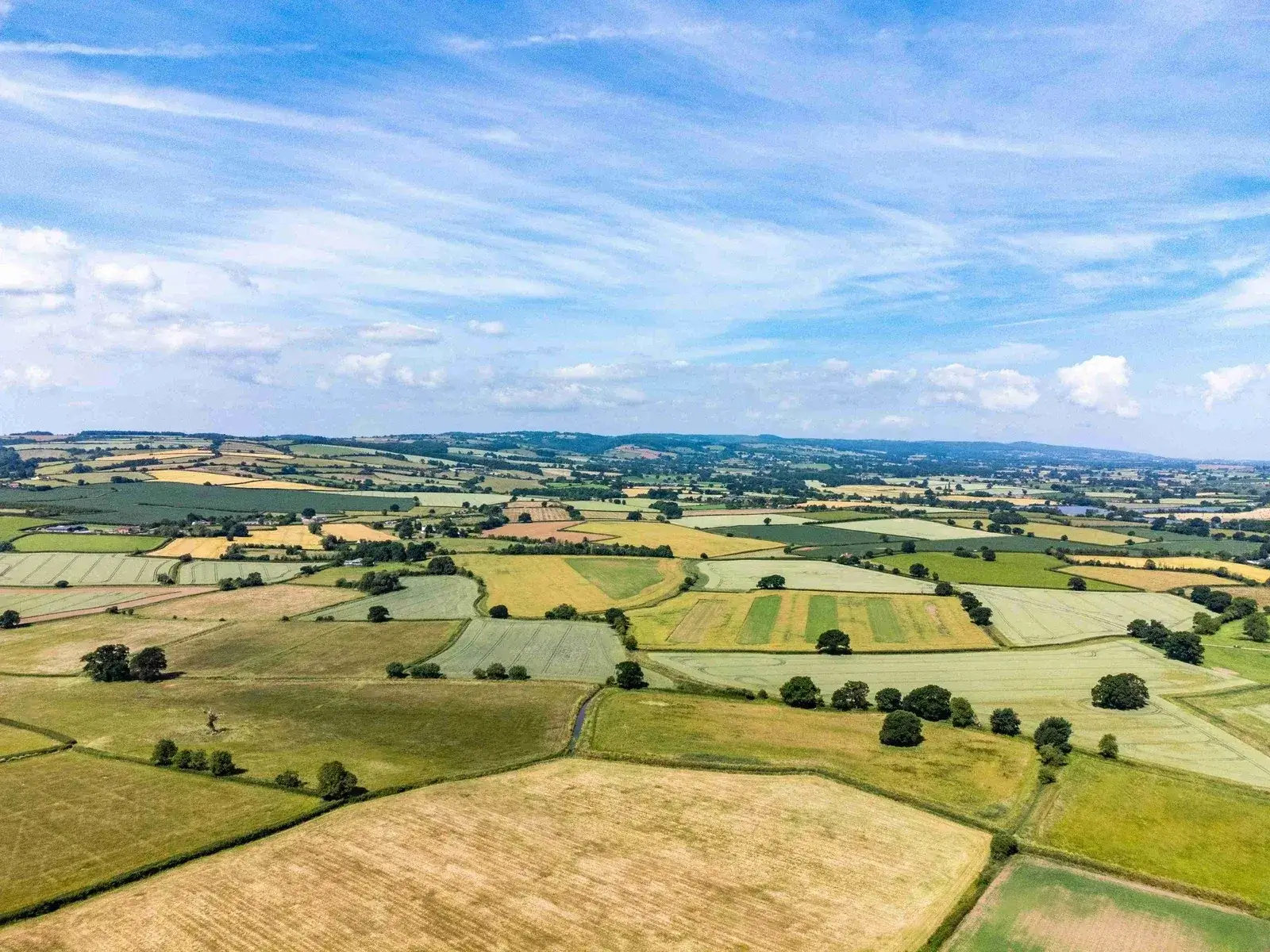
Hope value is the additional value that may exist where land does not yet have planning permission but has a realistic chance of future development.
For farmers, landowners and farming families, hope value can be important when selling farmland, negotiating overage, considering a promotion agreement, reviewing succession plans or deciding whether to submit land through the Local Plan process.
It is not the same as full development value, but it can still make a major difference where the land has credible planning prospects, a strong settlement relationship, suitable access and limited constraints.
Hope value can arise where land is being promoted for development, has been submitted through a Call for Sites process, lies adjacent to an existing settlement or benefits from other factors that suggest future planning opportunities may exist. While development is not guaranteed, the market may recognise the possibility of future planning success.
Hope value is best understood as the market value of a possibility, not the value of a planning permission that has already been secured. The more credible the route to a higher-value use and the shorter the expected timescale, the more influence that possibility may have on what a purchaser is prepared to pay. Where the route is remote, heavily constrained or dependent on uncertain policy change, the premium may be limited.
For farmland, that means the evidence behind the “hope” matters. A Local Plan opportunity, settlement-edge location, developer competition or identifiable planning route may support a different assessment from a purely speculative long-term possibility. The aim is to understand the probability, timing and risks before the landowner either sells the upside or commits the land to a long agreement.
Understanding hope value can help prevent land being sold too cheaply before its future development potential has been properly assessed.
Find out whether your farmland has development potential
Understanding the valuation basis
Hope value sits between existing use value and full development value. It reflects the market's assessment of the possibility that planning permission may be achieved in the future.
For example, farmland may not have planning permission today, but if it is located close to a village, adjacent to existing housing, capable of being accessed and situated within an area experiencing growth pressure, a purchaser may be willing to pay more than agricultural value because of its future development prospects.
Hope value is uncertain and can change over time. It is influenced by planning risk, policy support, housing need, site constraints, market demand and the likelihood of securing planning permission in the future.
The level of hope value attached to a site will often depend on several factors:
The underlying value of the land based on its current agricultural use.
The additional value attributed to the possibility of future development.
The greater the uncertainty surrounding planning permission, the lower the hope value is likely to be.
Sites that may take many years to progress through the planning system may attract lower levels of hope value than those with more immediate prospects.
Land benefiting from favourable planning policy, Local Plan promotion or identified growth opportunities may command stronger hope value.
The higher value that may be achieved if planning permission is ultimately secured.
Before selling the future upside
We can review the planning context and identify the events that could strengthen or weaken the opportunity before you accept an early premium or long-term agreement.
Understanding the valuation basis
We review the planning prospects of farmland and explain whether hope value may exist. We can also advise whether land promotion, Local Plan submissions, a planning application or sale with overage may be appropriate.
How We Help Farmers Maximise Land Value
Understanding the valuation basis
Hope value is easiest to understand as the value between ordinary agricultural value and full development value. Agricultural value is usually based on the current farming use of the land. Development value is normally linked to land that has planning permission, is allocated for development, or has a clear route to being built out by a developer.
Hope value sits in the middle. It reflects the possibility that land could become more valuable in the future if planning policy changes, a Local Plan review identifies the site, a Call for Sites process supports the land, or a planning application becomes realistic.
For farmers, this distinction matters because a field may appear to be ordinary agricultural land but still have strategic value to a developer, housebuilder or land promoter. That value may not be obvious from agricultural comparables alone.
1. Existing Use Value
The land is valued mainly for farming, grazing, cropping or other current lawful use.
2. Hope Value
The land has a credible possibility of future development, but planning permission is not yet secured.
3. Development Value
The land has planning permission or a substantially stronger planning position and can attract developer demand.
Understanding the valuation basis
Hope value is not created by wishful thinking. It usually arises where there is evidence that a site could become suitable for development in the future. The stronger the planning evidence, the more credible the hope value is likely to be.
Several factors can influence whether hope value exists and how much a purchaser may be prepared to pay. While no single factor guarantees future planning success, a combination of positive indicators can strengthen the case for development and increase market interest in the land.
The following factors can influence whether hope value exists:
Land adjoining a town, village or existing housing area may have stronger prospects than isolated countryside land, especially where it forms a logical extension to the settlement.
When councils review Local Plans, they often need to consider future housing and employment land. This can create opportunities for suitable farmland to be promoted.
A Call for Sites allows landowners to put land forward for assessment. A well-presented submission can help demonstrate availability, suitability and deliverability.
Where an authority cannot demonstrate sufficient housing land supply, suitable sites may attract greater planning interest, although each site still needs careful assessment.
Safe highway access, visibility, proximity to utilities and the ability to connect to services can all improve the credibility of future development prospects.
Hope value is usually stronger where flood risk, ecology, heritage, landscape, access and legal constraints can be avoided or mitigated.
Understanding the valuation basis
A hope value assessment should look beyond a simple acreage figure. It should consider the likelihood of planning success, the likely timescale, policy support, development costs, abnormal constraints, market demand and the value that could be achieved if permission were eventually secured.
Policy position: whether the site is inside or outside a settlement boundary, affected by Green Belt, countryside policies or emerging allocations.
Sustainability: whether the land is close to shops, schools, services, employment, public transport and existing infrastructure.
Deliverability: whether the site is available, achievable, viable and capable of being delivered within a realistic timescale.
Technical evidence: whether highways, ecology, drainage, landscape, heritage and utilities issues can be addressed.
Market appetite: whether developers or promoters are active in the area and interested in settlement-edge opportunities.
Gross-to-net land area: how much of the land may be developable after open space, drainage, buffers, access and constraints.
Abnormal costs: whether access works, utilities, contamination, ecology, drainage or infrastructure costs could reduce land value.
Risk and timing: the longer and riskier the planning route, the more carefully hope value needs to be negotiated.
Protecting value before a sale
Farmers should be cautious about selling land quickly where hope value may exist. A purchaser may be pricing in future development potential, even if the offer is presented as an agricultural land purchase.
Before agreeing a sale, it can be worthwhile to understand whether the land has characteristics that may support future development. An assessment of planning policy, settlement relationship, access, constraints and market demand can help determine whether the land's value extends beyond its existing agricultural use.
Understanding the presence of hope value can help landowners negotiate from a stronger position and make informed decisions about the most appropriate route forward.
A direct sale may provide certainty and speed, but it can leave future uplift with the buyer unless the price or legal terms reflect planning potential.
Overage may allow the seller to receive an additional payment if planning permission or another agreed trigger occurs after completion.
A promotion strategy may help establish the planning case, increase market competition and improve the eventual sale price.
Understanding the valuation basis
Land promotion can be a useful route where farmland has credible development potential but planning permission is not yet in place. Under a promotion agreement, the promoter typically funds and manages the planning strategy, promotes the land through the Local Plan where appropriate and seeks to maximise the land value before sale.
This can be attractive for farmers who do not want to fund planning consultants, technical reports, surveys, representations, legal work and applications themselves. It can also help ensure the site is properly presented to the market once the planning position has improved.
Hope value is often central to these discussions. The promoter and landowner need to understand the planning opportunity, likely timescale, cost risk and commercial upside before agreeing the best route forward.
Understanding the valuation basis
Hope value can be missed, overstated or poorly protected. The best approach is to obtain a realistic planning-led assessment before agreeing sale terms or committing to a strategy.
Agricultural comparables may not reflect the value of land with possible housing, employment or mixed-use development potential.
Not every field near a settlement will be suitable for development. Constraints, policy, access and deliverability can reduce or remove hope value.
If land is sold without overage, promotion terms or appropriate legal safeguards, the seller may not benefit from later planning success.
Local Plan promotion often takes time. Missing Call for Sites or consultation stages can delay or weaken a future development strategy.
Probability and timing drive the premium
A parcel that has been positively assessed in land-availability evidence, adjoins a settlement being considered for growth and has a credible access may attract stronger interest than land requiring several major policy changes before development could even be considered. Similarly, a site that could realistically enter a planning process within a few years may be priced differently from land whose opportunity depends on a much longer and less certain horizon.
There is no universal uplift that turns agricultural value into hope value. The market is pricing a future possibility whose probability and timing vary from site to site.
Purchasers also take account of the cost of carrying risk. Money paid today for uncertain future potential is tied up while planning work, consultations and technical investigations proceed. The buyer may spend additional funds without achieving permission. Those uncertainties are reflected in the premium the market is prepared to pay before the planning position becomes clearer.
This makes comparable evidence difficult to use without context. Two neighbouring fields can carry different hope value if one has direct highway access, a stronger relationship with the settlement or fewer environmental constraints. The farm suitability guide helps explain why site-specific characteristics still matter even when the broader location appears favourable.
For farmers, the practical question is not “what percentage is hope value?” but “what planning event could move this land to a stronger position, how realistic is that event, and what would a competitive purchaser pay for that possibility today?” That framing produces a more useful negotiation than applying an arbitrary multiplier.
Hope value reflects probability, timing and risk. It should be supported by a reasoned planning case rather than a standard percentage uplift.
The premium can move over time
Positive events may include the opening of a Call for Sites, favourable assessment in a HELAA or SHLAA, a proposed Local Plan allocation, changes to a settlement strategy, evidence of housing or employment need, confirmation that access is feasible, or successful technical work. Each event can remove an element of uncertainty, although none should be treated as a guarantee of permission.
Hope value is dynamic. New planning evidence can increase confidence, while constraints, policy changes or delay can reduce it.
The reverse is equally important. A proposed allocation can be deleted, a highway solution can prove unworkable, flood risk can reduce capacity, landscape evidence can require a smaller boundary or infrastructure costs can affect viability. A farmer should therefore avoid treating an early indication of interest as if it permanently fixes the land’s future value.
Hope value can begin to crystallise into a more development-led valuation as planning certainty improves. An adopted allocation or planning permission allows purchasers to assess capacity, conditions, obligations and costs more specifically. The land value with planning permission guide explains why even permissioned land still needs a residual appraisal rather than a simple price-per-acre assumption.
Where the opportunity needs time and specialist work, a funded promotion strategy may allow the landowner to retain exposure to the future sale value rather than selling the hope outright at an early stage. The promotion agreements for farmers guide describes the broad structure; legal advice remains essential before any agreement is signed.
Review the probability at milestones
Because hope value prices uncertainty, a material planning event can justify a fresh assessment even though the land itself has not changed.
Hope value can also be relevant when land is retained rather than sold. A family may decide that the present premium does not compensate for giving up a credible longer-term opportunity, particularly where the farm can continue operating while planning policy evolves. That decision should be revisited when the council changes strategy, assesses the site, proposes an allocation, publishes new technical evidence or a purchaser alters its terms. Recording those milestones keeps the assessment disciplined: it recognises a genuine future uplift without allowing an early planning possibility to be treated as guaranteed value.
Protect the opportunity without overstating it
If the planning route is emerging, the first step may be monitoring the Local Plan, keeping ownership information up to date and responding when the council invites sites or representations. The England Local Plan Tracker and England Call for Sites Tracker can help identify changes that may justify action. A site-specific review is still needed because a consultation opportunity does not mean that every nearby parcel is suitable.
A farmer does not have to choose immediately between treating the land as ordinary farmland and assuming that planning permission is inevitable. The commercial strategy can preserve flexibility while the evidence becomes clearer.
Where a promoter or developer is prepared to fund work, the farmer should understand the land being controlled, the period of the agreement, the planning obligations, the valuation mechanism and how the eventual sale will be marketed. Granting overly broad rights too early can reduce flexibility, while refusing all approaches can leave the landowner without the resources needed to test a genuine opportunity.
Hope value should also be reflected in ordinary sale documents where appropriate. If a farmer decides to sell before the planning opportunity matures, an overage arrangement may be one method of preserving a share of a later uplift. The overage clauses guide explains the concept. Whether overage is suitable, and how it should be drafted, is a matter for specialist legal and valuation advice.
The objective is proportionate protection. The landowner should understand what event is being waited for, how likely it is, what evidence would change the assessment and when the strategy should be reviewed. That allows hope value to be recognised without presenting an uncertain planning possibility as if it were already a permissioned development site.
A written review can be particularly useful where family members have different expectations about the land. Recording why hope value may exist, what still has to happen and what could undermine the opportunity makes the uncertainty explicit. It can prevent an early planning possibility being treated as guaranteed wealth while still ensuring that a credible future uplift is not ignored in succession, sale or retirement discussions.
August 2026 National Policy
Hope value is a risk-adjusted premium for a possible future use. New national policy can affect that probability, but a credible figure still depends on a site-specific route, likely timescale, evidence costs and the share of any future uplift a buyer expects to retain.
Map the site against settlement boundaries, Green Belt, allocations and constraints, then identify the policy that could support the proposed use. A general housing need or nearby development does not by itself establish hope value for the particular land.
Local Plan promotion, planning applications, appeals, legal agreements and infrastructure delivery can take years. A distant or uncertain outcome attracts a larger discount than a proposal close to an implementable permission.
The relevant upside is the net development value after costs and policy requirements, not completed house-sale revenue. The premium should reflect both the chance of success and the expenditure needed to reach the relevant planning milestone.
A positive technical review, allocation, resolution to grant or completed section 106 agreement can reduce risk, while an adverse constraint or policy change can reduce prospects. Hope value should therefore be revisited rather than treated as a fixed percentage.
The August 2026 NPPF may create a stronger planning argument for some sites, but hope value remains an assessment of possibility rather than permission. It should remain proportionate to the evidence, expected timescale and net value that could realistically be achieved.
Read the National Planning Policy Framework published on 17 August 2026.
Explore practical guides explaining how planning prospects, Local Plan allocation and development potential can create hope value in agricultural land before planning permission is secured. Learn how land promotion, site suitability, market evidence and professional valuation can help farmers assess possible planning uplift, protect their negotiating position and maximise the long-term value of farmland.
Understand how agricultural value differs from the higher value land may achieve when credible development prospects emerge.
Click hereIdentify the planning, location and market signals that may indicate hidden hope value or development value in a farm.
Click hereAssess how access, settlement relationships, constraints and planning policy influence a site's prospects for future development.
Click herePlace hope value alongside comparable, existing-use and residual valuation methods.
Click hereUnderstand how land is assessed, promoted and considered for allocation through the Local Plan process.
Click hereCompare speculative hope value with the value basis supported by a defined planning permission.
Click hereDiscover how a land promoter can fund and manage the planning strategy needed to unlock development potential and value.
Click hereTest the planning route, access and constraints before assuming that a future-use premium is justified.
Click hereExplore practical ways to improve planning readiness, protect negotiating leverage and maximise long-term farmland value.
Click hereNo. Hope value reflects the possibility of future planning permission, not a guaranteed outcome. It depends on the strength of the planning case, the timescale, market demand and the level of risk a buyer or promoter is prepared to take.
Yes. Land can be sold with hope value where buyers believe there is a credible future development opportunity. However, the price and legal terms should be considered carefully so that the seller does not give away future uplift too cheaply.
No. Development value normally applies where planning permission has been secured or the planning position is much stronger. Hope value applies before that point, where there is potential but also uncertainty.
The land should be reviewed against planning policy, settlement relationship, access, services, constraints, Local Plan status and market demand. A field next to existing housing may have a very different value profile from a remote block of farmland.
It can help, but it is not enough on its own. The land must still be suitable, accessible, capable of being serviced and acceptable in planning terms. Landscape, ecology, flood risk and highways constraints may all affect value.
Sometimes, but it is usually more complex and risk-sensitive. Hope value may arise through Local Plan review, policy change, grey belt considerations or exceptional circumstances, but specialist planning assessment is needed.
Yes. Often only one edge field, paddock, redundant yard or parcel next to existing development has realistic prospects. The rest of the farm may continue to have ordinary agricultural value.
Overage can help protect future uplift, but the wording, trigger events, payment calculation, timescale and title protection need careful legal advice. Poorly drafted overage may be difficult to enforce or may reduce buyer interest.
It depends on your priorities. Selling now may provide certainty, while promotion may improve the planning position and maximise value. The right choice depends on risk, timescale, tax, family objectives and planning prospects.
Submitting land through a Call for Sites can improve the evidence base and may help demonstrate that the land is available. However, submission alone does not guarantee allocation or planning permission.
Planning permission can convert hope value into stronger development value if the consent is commercially attractive and deliverable. However, planning conditions, infrastructure costs and affordable housing requirements can still affect land value.
Yes. Value My Land can provide a free initial review of your farmland, looking at planning potential, development prospects, Local Plan opportunities and possible routes to maximising value.
Free initial planning review
Send us the land location and any developer approach or planning history. We can identify the likely planning route and the evidence that deserves closer attention.
Prefer to understand how hope value differs from full development value? Download our free “How Much Is Development Land Worth?” landowner guide .
Understanding hope value could be the first step towards maximising the value of your farmland.
Phone
0800 061 4006Office
13 Ensign Business Centre
Westwood Way
Coventry
CV4 8JA