
Existing Use Value
The value of the land for its current agricultural use, based on farming quality, location, size, access and market demand from agricultural buyers.
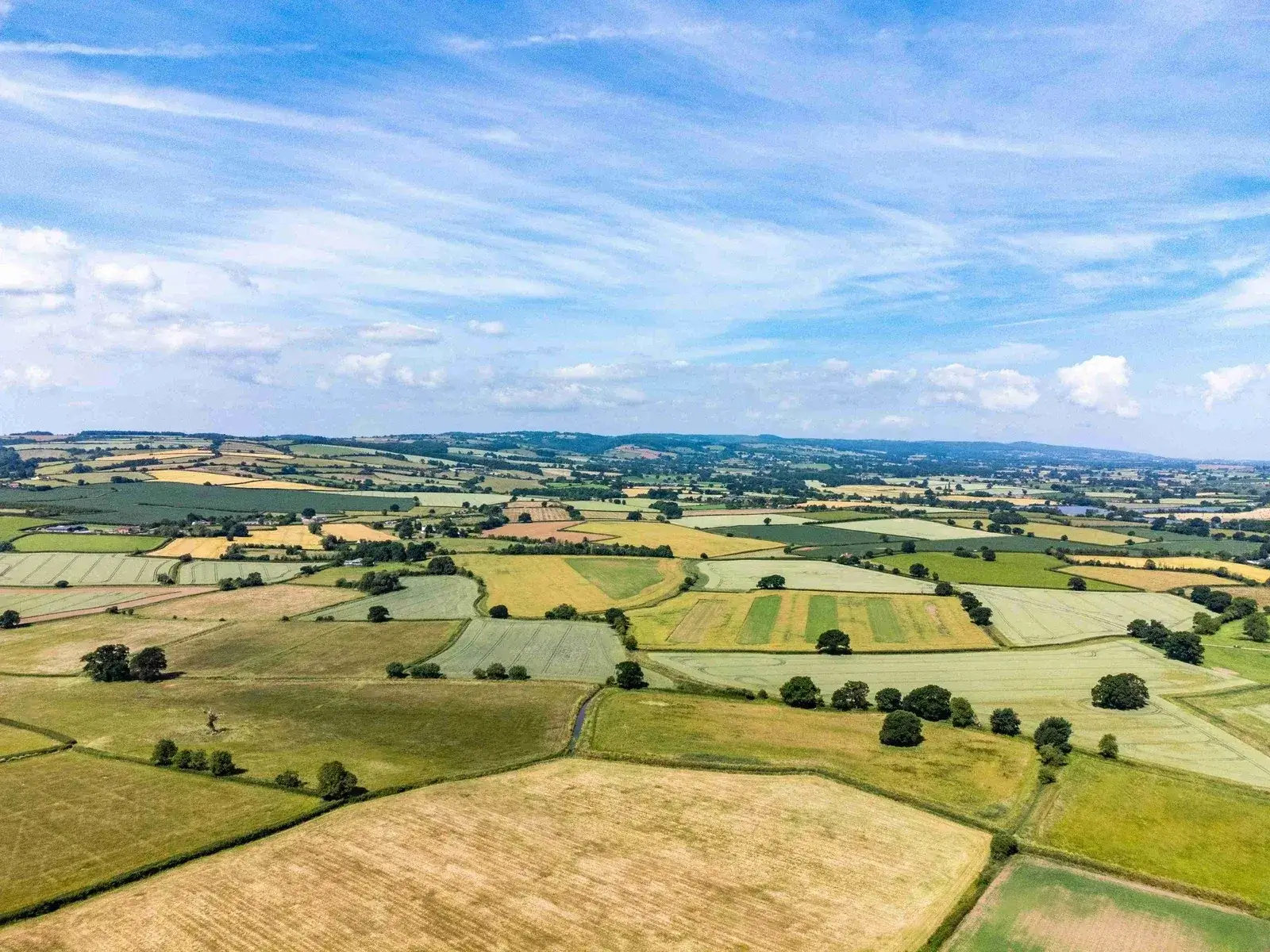
Many farmers assume their land is worth only its agricultural value. In reality, land with development potential may be worth significantly more than its existing farming use suggests.
If part of a farm has realistic development prospects, it may attract hope value, strategic land value or development land value. The difference between agricultural value and development value can be substantial, making it important to understand whether your land has potential beyond its current use.
A professional assessment can help identify opportunities, assess planning prospects and determine whether your land may be worth more than agricultural value alone.
The phrase “worth more than agricultural value” should not be taken to mean that every farm near housing has development value. A genuine uplift normally depends on identifiable planning or market evidence: the relationship with a settlement, a credible access, Local Plan activity, infrastructure, a realistic alternative use, developer interest supported by due diligence, or another factor capable of changing what a rational purchaser would pay.
The purpose of an early review is to test whether those signals are strong enough to justify action. Farmers can then distinguish a speculative approach from an opportunity that merits monitoring, development-potential assessment, Local Plan promotion or a carefully structured sale.
Value My Land helps farmers understand whether their farm could be worth more than its current farming use.
Find out whether your farmland may have development potential.
Understanding the valuation basis
Agricultural value reflects what land is worth for its existing farming use. That may be the correct basis of value for some land, but it is not always the whole story. Where land has realistic prospects for housing, employment, commercial, renewable energy, care, roadside or mixed-use development, the value can be influenced by more than crop production, grazing quality or farm income.
A field that appears ordinary from a farming perspective may be strategically important from a planning perspective if it adjoins a town or village, has frontage to a suitable road, sits close to services, benefits from existing infrastructure or lies in an area where the council needs to identify future growth land.
This is why farmers and landowners should take advice before selling land based only on existing use value. A free development potential assessment can identify whether there may be a better route to maximising value, whether only part of the farm has potential, and whether a longer-term planning strategy could produce a stronger outcome.
Key value types for farmers and landowners include:
The value of the land for its current agricultural use, based on farming quality, location, size, access and market demand from agricultural buyers.
Additional value reflecting the possibility that planning permission may be achieved in the future, even where permission is not currently in place.
Value linked to longer-term development prospects, Local Plan promotion, settlement expansion or future allocation potential.
The value that may arise where land is suitable for new homes, affordable housing, self-build plots, retirement living or mixed residential development.
Some farmland may have value for storage, logistics, employment space, roadside uses, farm diversification or commercial development.
Where land is sold before planning, carefully drafted overage may allow the seller to share in future value uplift if development occurs later.
Understanding the valuation basis
A farm may be worth more than agricultural value where the land has characteristics that make it attractive for future development. This does not mean the whole holding is developable. In many cases, the strongest value may sit in one field, a parcel adjoining a settlement, land with road frontage, or land close to existing services.
The important question is whether the land has a credible planning route. That route may involve a planning application, promotion through the Local Plan, responding to a Call for Sites, securing allocation, or preparing the land for a future sale with value protection.
When assessing whether farmland may have development potential, several factors are commonly considered:
Land located next to an existing village, town or city is often viewed more favourably than isolated countryside. Sites that provide a logical extension to an existing settlement or help create a more defensible settlement edge may have stronger planning prospects.
Suitable access is a fundamental planning consideration. Road frontage, visibility splays, highway capacity, pedestrian connections and the ability to create a safe access point can all influence whether a site is capable of being delivered.
Many councils are under pressure to identify sufficient land for housing. Where there is a recognised need for additional homes, farmland in sustainable locations may become more attractive for future allocation or planning permission.
Land prospects can change over time. Local Plan reviews, settlement boundary amendments, five-year housing land supply shortfalls, emerging allocations and changes to national planning policy can all influence development potential and value.
Proximity to schools, shops, employment areas, public transport, utilities and drainage infrastructure can help demonstrate that development would be sustainable and capable of supporting future residents.
Housebuilders and developers typically focus on sites that are deliverable, well-located and capable of obtaining planning permission. Edge-of-settlement land with a credible planning strategy often attracts the greatest interest.
Planning and future use
The difference between agricultural value and development value is largely influenced by planning potential. As planning risk reduces and the likelihood of obtaining planning permission increases, land may become more attractive to developers, investors and promoters. This can lead to a significant increase in value compared to agricultural use alone.
At this stage, the land is valued primarily for its existing use, whether for farming, grazing, equestrian purposes, amenity use or long-term investment. While there may be some speculative interest, the site's development potential has not yet been established through the planning process.
The land is being actively assessed or promoted for future development. This may involve Local Plan representations, Call for Sites submissions, technical studies or planning strategy work. As evidence is gathered and planning prospects improve, the land may begin to attract a premium above its existing agricultural value.
Once planning permission has been secured, a significant element of planning risk has been removed. This often makes the site substantially more attractive to developers and can result in a materially higher land value than would be achieved through agricultural use alone.
Before you sell at agricultural value
We can review the location, planning context, access and known constraints before you decide whether an offer reflects the farm’s wider potential.
Key value drivers
Assessing the value of farmland involves far more than measuring acreage. While size is important, the true value of land is often influenced by a combination of planning, technical, legal and market factors that may affect its future potential.
A comprehensive land value review should consider whether there are opportunities or constraints that could increase or reduce the land's attractiveness to developers, investors, promoters or neighbouring landowners.
Landowner decision-making
There is no single approach that suits every landowner. The most appropriate strategy will depend on your objectives, financial circumstances, timescale and the planning prospects of the land.
For some farmers and landowners, an immediate sale may provide certainty and access to capital. However, where there is a realistic prospect of future development, selling too early could mean missing out on a significant increase in value.
Before making any decision, it is often sensible to understand the planning position and assess whether there are opportunities to enhance or protect future value.
A sale may provide certainty and speed, but it can also transfer future planning upside to the buyer unless value protection is included.
Best where speed and certainty matter most.
A promotion route may allow the landowner to pursue planning value without funding the full planning process themselves.
Best where land has genuine planning potential.
Some land may need time before its prospects improve, especially where Local Plan reviews, infrastructure or policy changes are relevant.
Best where potential is longer-term.
Understanding the valuation basis
Farmers often ask whether their whole farm could be worth more than agricultural value. In practice, the answer may be more focused. A single field, paddock, access strip, frontage parcel or edge-of-village area may hold most of the development potential, while the remainder of the holding continues to operate as agricultural land.
This distinction matters. It may be possible to release part of the farm while retaining the wider holding, protect future access, keep operational farm buildings, reserve services, maintain field access and structure the transaction so that the landowner benefits from future planning uplift.
Value My Land can help identify whether the value opportunity relates to the whole holding or a specific parcel, and whether the land should be promoted, sold, retained or reviewed again as planning policy changes.
A field adjoining existing homes on the edge of a village.
Land with direct frontage to a road capable of providing safe access.
Land close to schools, shops, bus routes and local facilities.
A logical settlement extension or rounding-off parcel.
Land near utilities, drainage, employment areas or existing infrastructure.
A proportionate first review
At Value My Land, we look beyond existing agricultural value and assess the wider factors that may influence a farm's future worth. Rather than focusing solely on acreage, we consider whether there are opportunities to enhance value through planning, promotion or future development potential.
Our review examines the planning position of the land, including relevant planning policies, settlement boundaries, Local Plan reviews, housing and employment land requirements, and any emerging growth strategies that could affect the site's prospects. We also consider practical matters such as access, infrastructure, environmental constraints and the overall suitability of the land for future development.
Alongside planning considerations, we assess local market conditions and developer demand to understand how attractive the land may be to promoters, housebuilders or investors. This helps provide a more complete picture of both current value and potential future value.
Following our assessment, we provide a practical view on whether the land may have development potential, the planning routes that could be available, and the strategies that may help maximise value. Whether the opportunity lies in an immediate planning application, long-term land promotion or simply monitoring future policy changes, our aim is to help landowners make informed decisions about their land.
How We Help Farmers Maximise Land Value
Practical considerations
The value of farmland can be significantly affected by decisions made before its planning potential and development prospects have been properly assessed. While some opportunities can be recovered later, others may result in a permanent loss of value or reduce the options available to future buyers and developers.
One of the most common mistakes is selling land without first understanding whether it may have development potential. A parcel that appears to have only agricultural value today may, in fact, have a realistic route to planning permission or be located within an area identified for future growth.
Landowners can also unintentionally reduce value by disposing of strategic parcels separately, failing to retain access rights, overlooking overage provisions, or entering into agreements without fully considering the long-term implications. In some cases, decisions relating to boundaries, access arrangements or land ownership structures can affect future development opportunities.
Obtaining professional planning, valuation and legal advice at an early stage can help identify potential opportunities, protect future value and ensure that important strategic decisions are made with a full understanding of the land's potential.
The Most Common Mistakes Are:
A quick sale before checking planning prospects may mean the future uplift is captured by a purchaser rather than the farmer or landowner.
Retaining or reserving access can be critical. Losing control of access land can reduce future development value or create a ransom issue.
Where land is sold without planning, overage or uplift provisions may be needed to protect the seller if permission is later obtained.
Call for Sites exercises and Local Plan consultations can be important opportunities to promote land for future development.
Evidence of a genuine premium
The strongest indicators tend to work together. Land may adjoin the built edge of a settlement, connect to an adopted or emerging growth direction, have a feasible highway access and avoid the constraints that make development inherently difficult. A council may be reviewing its Local Plan, inviting sites, assessing the land through a HELAA or considering settlement-boundary changes. None of those events guarantees permission, but together they can create a more credible basis for market interest.
A premium above ordinary farmland value is most persuasive where it can be linked to evidence rather than a general suggestion that “housing might come here one day”.
A developer approach can be relevant evidence, but the terms need to be understood. A party willing to spend money on planning and technical work may have formed a view that the land has potential; an unsolicited low-cost option covering a very large area may reveal much less. Before granting control, farmers should compare the commercial structure with the promotion agreement vs option agreement guide for farmers and consider whether the proposed boundary is wider than the land actually needed.
The difference between a plausible premium and full development value is also crucial. Land without permission may carry hope value, but the price should still reflect uncertainty, time, costs and the risk that planning is not achieved. Conversely, once land is allocated or permission is secured, the valuation exercise moves closer to development economics and the deductions a purchaser must make for infrastructure, policy obligations and abnormal costs.
Farmers should therefore ask what specific event is expected to create the uplift. If the answer is a Local Plan review, planning application, change of use, infrastructure scheme or settlement expansion, that event can be investigated. If the answer is simply that the area “looks good for development”, the evidence may be too weak to justify a major long-term decision.
Additional value is strongest when the reason for the premium can be identified, tested and linked to a realistic planning or market event.
Test new market signals
More approaches do not automatically mean more value, but changing market interest can be a reason to review the evidence again.
Where several parties show interest, competition can itself reveal that the site deserves closer scrutiny, but farmers should still compare the rights being requested as well as the headline payment. Exclusivity, option periods, extension rights, minimum prices, deductions, promotion fees and control over planning strategy can affect the eventual outcome. A new approach should therefore be tested against the latest policy and technical position rather than simply compared with the last offer. The best commercial structure is not always the one with the largest initial payment; it is the one that reflects the planning evidence and protects an appropriate share of any future value.
The offer is only one signal
A farmer who receives several approaches should record which land each party wants, what planning route they expect to pursue and what level of expenditure they are proposing to commit. Consistent interest in the same settlement-edge parcel can be more informative than a broad speculative approach over the whole holding. It may justify an independent review before exclusivity or option rights are granted.
Interest from developers can be useful, but it is the reason for that interest that helps determine whether the farm genuinely carries additional value.
The agricultural land planning permission guide can help distinguish a direct application opportunity from a longer-term policy route. Where the council is reviewing future growth, the Call for Sites guide for farmers explains how land may enter the plan-making process. Those routes have different timescales, costs and levels of certainty, which should be reflected in commercial expectations.
County farm valuation guidance
These county guides consider the value of a whole farm alongside buildings, occupation, planning policy and the development potential of individual parcels.
August 2026 National Policy
The question is not whether the whole farm should be given a development-land rate. It is whether a defined part has a credible alternative use that can be promoted, accessed and delivered without undermining the remainder of the holding.
Identify the frontage, buildings, access route and relationship with the settlement or station. A small, well-related parcel may have a different planning prospect from backland fields or the wider agricultural unit.
Test whether development can obtain safe access, services and drainage while preserving farm movements, retained buildings and field access. A policy opportunity can be commercially weak if the development parcel cannot function independently.
Apply S4, S5 or the appropriate Green Belt route to the mapped parcel and review flood risk, landscape, ecology, heritage and infrastructure. The strongest national policy route still needs site evidence.
A promotion, option, conditional sale or direct disposal can affect control, deductions and future uplift. The agreement should define the land included and avoid unnecessarily restricting the agricultural value or flexibility of the retained farm.
The August 2026 NPPF may improve the prospects of a particular farm parcel, but the uplift should be assessed separately from the agricultural holding. A focused site review is more reliable than applying a speculative premium across every acre.
Read the National Planning Policy Framework published on 17 August 2026.
Explore practical guides for farmers and rural landowners who want to understand whether their farm could be worth more than its current agricultural value. Learn how farmland is valued, the difference between existing use value, hope value and development value, which site and planning factors can increase value, how development potential is assessed, and how land promotion, sale timing and a clear value-maximisation strategy may help unlock the strongest possible return.
Understand how location, acreage, land quality, buildings, access, tenancy and market demand influence the current value of a farm.
Click hereCompare agricultural existing use value with the potentially higher value created where farmland has realistic prospects of development.
Click hereLearn how future planning prospects can create hope value before land is allocated or granted planning permission.
Click hereUnderstand the principal factors affecting agricultural land value, including use, quality, location, access and planning prospects.
Click hereDiscover how planning policy, settlement relationships, infrastructure and constraints are assessed when considering farmland for development.
Click hereReview the key suitability tests for housing or other development, including access, sustainability, flood risk and environmental constraints.
Click hereUnderstand how a land promoter can fund and manage the planning process at its own risk to help unlock development value.
Click hereConsider whether selling at agricultural value, retaining hope value or pursuing planning first could produce the best outcome.
Click hereExplore practical strategies for improving saleability, protecting future uplift and securing the strongest possible return from farmland.
Click hereAgricultural value is the value of land based on its current or realistic farming use. It usually reflects location, soil quality, field size, access, productivity, tenancy position and demand from agricultural buyers.
Development value is the value land may achieve if it can be used for a higher-value purpose, such as housing, employment, commercial development or mixed-use growth. It is normally heavily influenced by planning prospects and market demand.
Yes. Often only one field, frontage parcel or settlement-edge area has realistic development potential. The rest of the holding may remain agricultural land, but the developable parcel could still materially affect overall strategy.
Hope value is additional value linked to the possibility of future planning permission. It is not the same as full development value, because planning risk remains, but it can mean land is worth more than purely agricultural value.
Strategic value is more likely where land relates well to a settlement, could help meet housing or employment needs, has a realistic access solution and can be promoted through the planning system. A site-specific review is usually needed.
Yes. Farmers should understand both existing use value and possible development value before agreeing terms. This is especially important if the land is near a village, town, road, allocation, development boundary or growth area.
Yes. Land can sometimes attract more than agricultural value where buyers believe there is a realistic chance of future development. The level of uplift will depend on planning risk, timing, constraints and market appetite.
Land that is allocated in a Local Plan may have stronger planning prospects than unallocated land, but allocation alone does not remove every risk. Access, infrastructure, viability, technical constraints and market demand still matter.
Land outside a settlement boundary can be more difficult, but it may still have potential through Local Plan review, settlement boundary change, allocation, rural exceptions, employment use or other policy routes depending on the circumstances.
Value My Land offers a free initial review. Where land has suitable development potential, a promotion route may allow the planning process to be funded and managed without the landowner paying the main planning costs upfront.
Overage can be useful where land is sold before planning permission and the seller wants to share in future uplift. It needs careful legal drafting, clear triggers and appropriate title protection.
Usually a postcode, plan or title boundary, approximate acreage and any known information about access, ownership, tenancies, constraints or previous planning history is enough to begin an initial review.
Free initial assessment
A concise review can identify which parcel, if any, deserves further work and whether selling, holding, promoting or monitoring is the more proportionate next step.
Understanding planning potential could be the first step towards maximising the value of your farmland.
Phone
0800 061 4006Office
13 Ensign Business Centre
Westwood Way
Coventry
CV4 8JA