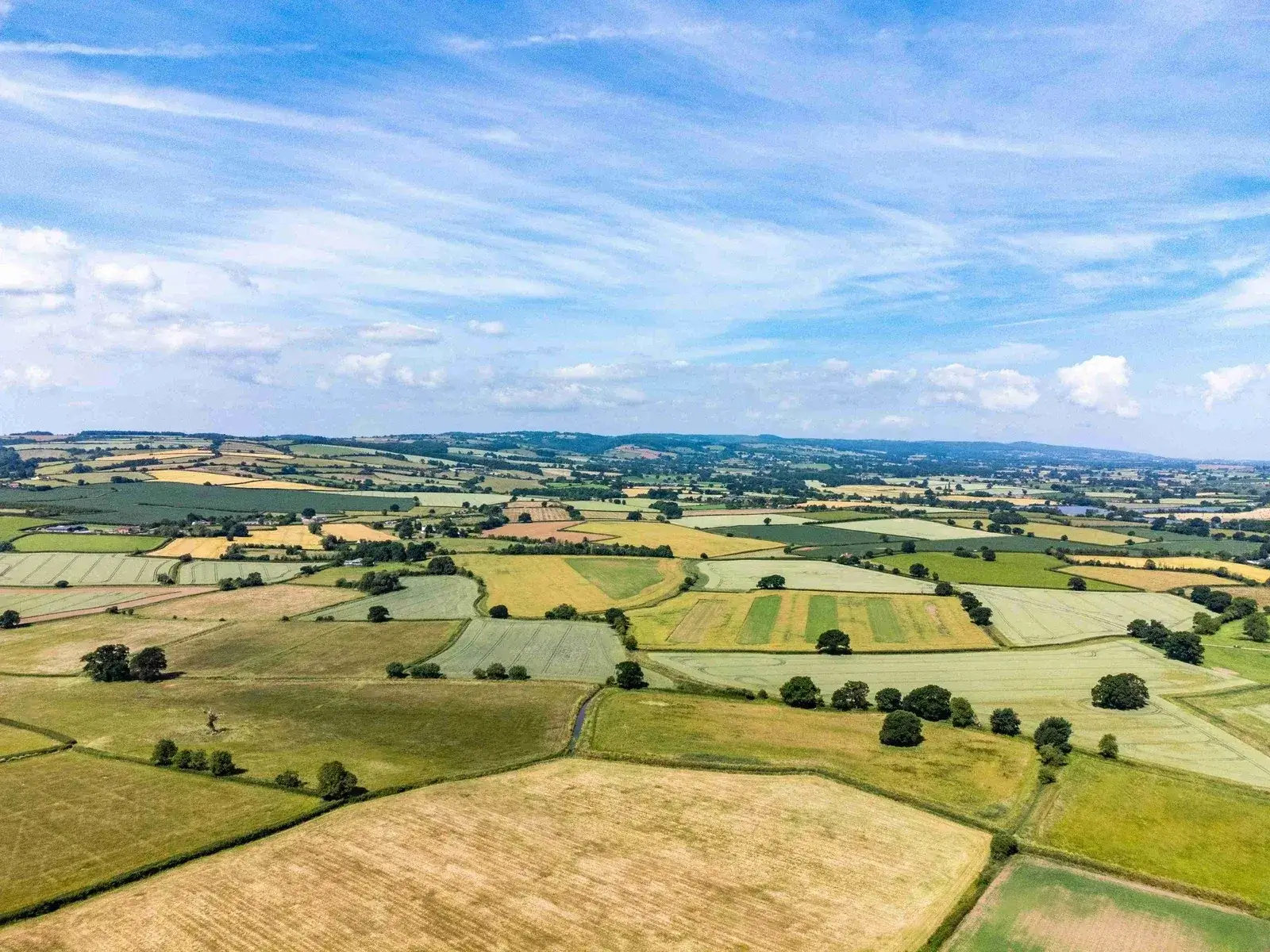
Farmers often own land that may have future development potential, particularly where fields adjoin a town, village, settlement boundary or existing built-up area.
Suitability depends on more than the current agricultural use. Councils will usually consider planning policy, access, local services, flood risk, landscape, ecology, infrastructure, housing need and whether the land could form a logical and sustainable extension to an existing settlement.
Value My Land helps farmers assess whether land may be suitable for housing, employment, mixed-use development, Local Plan promotion or longer-term strategic land opportunities before important decisions are made.
Before selling, signing an agreement or spending money on reports, a clear review can help identify whether your farm has realistic planning prospects and what route may maximise value.
Get a free, no-obligation farmland suitability review from Value My Land.
Find out whether your farmland has development potential
A farm may be suitable for development where the land is well related to an existing settlement, capable of safe access and not affected by constraints that cannot be mitigated. Councils will look at the site as a whole rather than one factor in isolation.
Land on the edge of villages and towns can be especially important where councils need to identify additional housing or employment land. Even where land is currently outside a settlement boundary, future Local Plan reviews may create opportunities.
Farmers should not assume that agricultural use prevents development. Many successful sites were formerly working farmland, grazing land or paddocks before being promoted through the planning system.
When assessing whether farmland may be suitable for future development, councils, developers and land promoters will often review a number of key factors:
Land adjoining towns and villages is often more attractive because it relates better to existing development and services.
Development normally requires safe access to the public highway, with suitable visibility and capacity.
Schools, shops, healthcare, public transport and employment opportunities can support sustainability.
Where councils need more housing or employment land, well-located farmland may become strategically important.
Flood risk, ecology, landscape, heritage and utilities must be capable of being addressed through design or mitigation.
Land is stronger where it is available, under clear ownership and capable of being brought forward within a realistic timescale.
Farmland can have more than one type of value. Existing agricultural value reflects its current use, but development potential can create hope value or, if planning permission is achieved, a substantially different level of value.
The more suitable a site appears from a planning perspective, the greater the interest it may attract from developers, promoters and investors. Factors such as location, access, policy support and deliverability can all influence how the market views future development opportunities.
For farmers, the most important step is understanding whether there is a realistic planning route before selling, signing an agreement or spending money on surveys.
Value My Land helps farmers understand the planning and development potential of their land before important decisions are made. We can assess the site, review planning policy, consider constraints, identify Local Plan opportunities and advise whether land promotion or a planning application may be suitable.
Where appropriate, we can help farmers explore routes that avoid upfront planning risk, including land promotion arrangements where planning work is funded and managed by the promoter.
How We Help Farmers Maximise Land Value
Good agricultural land is not automatically good development land, and lower-grade farmland is not automatically suitable for housing. Planning suitability depends on a wider set of factors including settlement pattern, policy support, access, infrastructure, environmental constraints and market demand.
A productive field in an isolated countryside location may have limited planning prospects, while a smaller parcel next to an existing village may have stronger long-term development potential. This is why farmers should not rely solely on agricultural value, acreage or soil quality when considering future land value.
Value My Land can help by separating ordinary agricultural value from development potential. We can review whether part of the farm may have strategic value, hope value or a realistic route towards planning permission.
Fields adjoining existing housing or a village edge
Land close to a settlement boundary or built-up area
Paddocks, redundant yards or underused farm buildings
Land with road frontage and potential highway access
Farmland in an area with housing need or Local Plan review activity
A farm’s suitability for development is heavily influenced by the planning policy position in the relevant local planning authority area. Value My Land can review the current and emerging policy context to identify whether the site has a stronger short-term or long-term route.
Planning policy can play a significant role in determining whether farmland may have future development potential. Understanding the current policy position, emerging planning documents and future growth strategies can help identify whether a site has a realistic route through the planning system.
Land inside or adjoining a settlement boundary may have a different planning position from open countryside land. Even if your farm is currently outside the boundary, a Local Plan review may provide an opportunity to promote it for future inclusion. Value My Land can assess how your land relates to the existing settlement pattern.
Where a council cannot demonstrate enough deliverable housing land, some sites may have stronger planning prospects. This does not guarantee permission, but it can change the planning balance. Value My Land can review whether housing supply issues may be relevant to your farm.
Local Plan reviews decide where future growth should go. Farmland that is available, suitable and deliverable can sometimes be promoted for allocation. Value My Land can identify whether your council is reviewing its plan and whether your site should be put forward.
Councils often use Call for Sites, HELAA or SHELAA assessments to identify possible development land. A strong submission can explain why farmland is suitable, available and achievable. Value My Land can help prepare and submit a planning-led case.
Most farmland is affected by some form of technical constraint. The key issue is not whether constraints exist, but whether they can be understood, managed or mitigated as part of a future development strategy. Early identification of potential issues can help farmers make informed decisions and avoid unnecessary costs.
Value My Land can help farmers identify potential constraints and determine whether further technical investigations may be required before pursuing development opportunities.
The Main Technical Considerations Are:
Flood zones, surface water, drainage outfalls and sustainable drainage requirements can affect layout and developable area. We can help identify whether flood risk is likely to be a significant constraint.
Hedgerows, trees, habitats, protected species and biodiversity net gain requirements may influence development design. Value My Land can advise when ecological input may be needed.
Landscape sensitivity, settlement character, conservation areas, listed buildings and archaeology can affect whether a site is appropriate. We can help assess whether specialist evidence may be needed.
Road access, visibility splays, traffic impact, public rights of way and pedestrian links are often critical. Value My Land can help identify access options and the likely need for transport advice.
Water, foul drainage, electricity, broadband and local infrastructure capacity can affect deliverability and viability. We can review whether infrastructure issues may affect the strategy.
Tenancies, access rights, restrictive covenants, ransom strips and boundary issues can reduce deliverability. Value My Land can help flag issues for your solicitor to consider.
If a farm appears suitable for development, the next question is which route gives the landowner the best chance of maximising value while managing risk. The answer depends on policy timing, site constraints, ownership objectives, appetite for cost and the level of developer interest.
Some land may be best promoted through the Local Plan. Other land may justify an outline planning application, while more strategic sites may require a longer promotion period. Value My Land can help compare these options and explain the likely benefits and risks of each route.
Suitable where land needs to be allocated or recognised through plan-making before planning permission is realistic. Value My Land can monitor consultations and prepare promotion material.
An important first step when councils are looking for land. Value My Land can help present your farm as suitable, available and achievable.
May be appropriate where planning policy, access and constraints support an application. Value My Land can advise whether this route appears realistic before major costs are incurred.
Can allow a promoter to fund and manage the planning process, with the landowner avoiding upfront planning costs. Value My Land can explain whether promotion may be suitable for your farm.
Before agreeing terms with a developer, agent or promoter, it is important to understand whether the land has hidden development value. Value My Land can help farmers answer the key questions before decisions are made.
Explore practical guides to assessing whether farmland is suitable for residential or other development, including planning constraints, site access, Local Plan allocation, Call for Sites submissions and development potential. Learn how Green Belt policy, planning permission and strategic land promotion can affect whether a farm site is deliverable and how farmers can take the next steps towards unlocking land value.
Learn which planning, location, access and market factors influence the development potential of agricultural land.
Click hereUnderstand how planning policy and site constraints affect applications to develop agricultural land.
Click hereReview how part of a farm may be assessed for housing or other development while retaining the wider holding.
Click hereExplore how farmland can be promoted through the Local Plan process for potential allocation.
Click hereLearn how farmers can submit land through a council Call for Sites and improve its allocation prospects.
Click hereUnderstand how land is assessed, promoted and considered for allocation through the Local Plan process.
Click hereUnderstand the planning requirements, constraints and opportunities involved in developing farmland for housing.
Click hereExplore when development may be possible on Green Belt farmland and which policy tests apply.
Click hereFollow the principal routes available to farmers, including Local Plan promotion, Call for Sites submissions and planning applications.
Click hereValue My Land can review your farmland and advise whether there may be a planning, promotion or development value opportunity.
Find out whether your farmland could have development potential and what steps may help maximise its future value.
Understanding your farm’s planning and development potential could be the first step towards unlocking its future value.
Phone
0800 061 4006Office
13 Ensign Business Centre
Westwood Way
Coventry
CV4 8JA