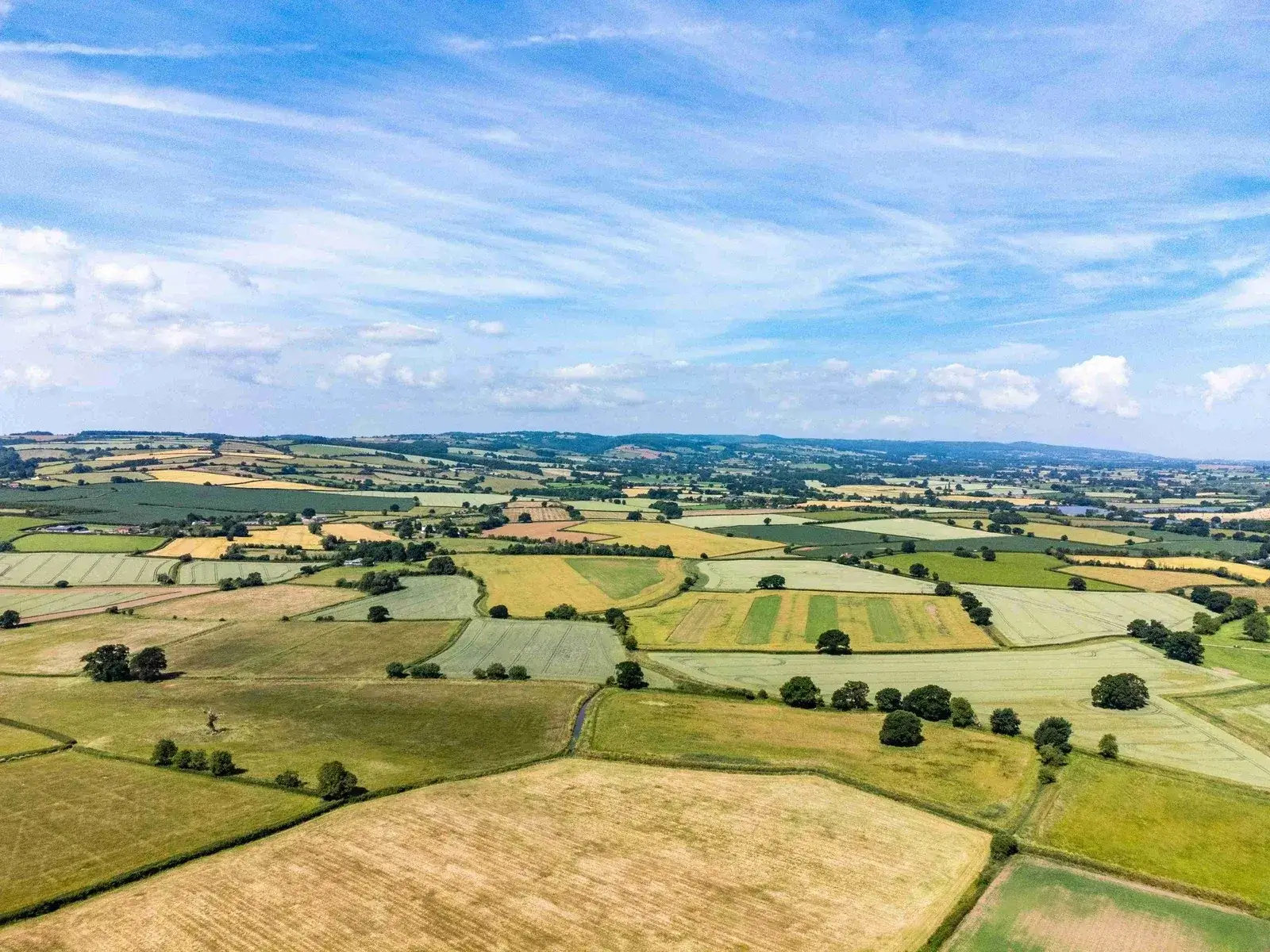
Farmer reviewing a development parcel while retaining the wider agricultural holding

Can I Develop Part of My Farm?

How to Identify a Workable Parcel, Protect the Retained Holding and Choose the Right Planning Route

Many farms contain one parcel with stronger development prospects than the remainder of the holding. It may be a settlement-edge field, redundant yard, paddock, former building group or land with independent highway access. The opportunity should be assessed parcel by parcel rather than assuming that the whole farm must be promoted, sold or taken out of agricultural use.

Developing part of a farm can release capital while allowing the farmhouse, core buildings and productive land to remain in the family. It can support reinvestment, diversification, debt reduction, succession or retirement. However, a poorly chosen boundary can interrupt livestock or machinery movements, remove essential access, split services, create drainage problems or limit the future use and value of the retained farm.

The planning question is only one part of the decision. The landowner also needs to understand ownership, title, access, utilities, tax, valuation, delivery and the agreement proposed by any developer or promoter. A realistic strategy identifies the smallest coherent parcel that can meet planning and market requirements without surrendering more land or control than the development actually needs.

At Value My Land, we can provide a free initial review of farmland in England, identify which part may justify further investigation and explain whether monitoring, a Local Plan submission, a planning application, a sale or a funded promotion strategy appears proportionate. The review can also highlight whether a proposed boundary would interrupt the working farm, whether a neighbouring ownership is needed and what information should be obtained before the farmer allows another party to undertake surveys or register rights against the title. It can then set a proportionate sequence for planning, professional advice and negotiations without committing the family to a sale or a full consultant programme.

Review the Right Farm Parcel

Send the land location for a free initial parcel and planning review

Start with the parcel, not the acreage

Developing One Part of a Farm Is Different From Developing the Whole Holding

A partial development strategy should begin by defining the land that can function as a coherent site and the land the farm must continue to use. The planning boundary, ownership boundary and eventual sale boundary do not have to be identical.

A council will assess the proposed site in its planning context: how it relates to a town or village, whether the location is sustainable, what use is proposed, whether safe access is available and how environmental effects would be addressed. The fact that the wider ownership is a large farm does not make every field equally suitable. A smaller parcel may form a logical extension to existing development while land further into the holding remains open countryside with a weaker relationship to services.

The farm business creates a second set of questions. The selected parcel may contain the only practical route between fields, a water supply, drainage outfall, livestock handling area, grain access, yard circulation or land needed for environmental management. Removing it could reduce the efficiency or value of the retained holding. These consequences should be mapped before a developer is allowed to draw a broad red line around the easiest land to control.

The development scheme also needs enough land to work. A gross field area is reduced by access, visibility, landscaping, sustainable drainage, biodiversity, open space, buffers and other constraints. A boundary that is too tight may not accommodate a deliverable layout; one that is too broad may unnecessarily sterilise or control productive farmland. The objective is a proportionate boundary supported by planning and operational evidence.

A high-level review can establish whether the opportunity is likely to be immediate, plan-led or longer term. That distinction helps the farmer decide whether to monitor policy, make a Call for Sites submission, investigate a planning application or consider a funded promotion agreement.

A successful partial-development strategy should create a deliverable site while leaving the retained farm with clear access, workable services, sensible boundaries and the flexibility to continue operating.

Identify the strongest land first

Six Parts of a Farm That May Merit Separate Development Review

These are common starting points rather than automatic development sites. Each parcel still requires a site-specific policy, access, constraint and deliverability assessment.

Settlement-Edge Field

Land adjoining existing homes or a defined settlement may form a more logical growth opportunity than isolated acreage. The relationship with streets, services, walking routes and the shape of the settlement matters more than simple distance on a map.

Redundant Yard or Building Group

A former yard, underused buildings or previously developed area may justify a conversion or redevelopment review. Existing structures can help define the opportunity, but access, design, heritage, contamination and continuing farm activity still need consideration.

Paddock or Small Enclosure

A paddock closely contained by existing development may be visually and functionally different from the wider open farm. Its prospects will depend on policy, character, access and whether development would represent a coherent infill or extension rather than an isolated intrusion.

Land With Independent Access

A parcel with realistic access to the public highway can be easier to separate from farm traffic and day-to-day operations. Road frontage alone is not enough: junction position, visibility, gradients, pedestrian movement and land ownership must still be tested.

A Parcel Outside the Main Constraints

Flood risk, ecology, landscape, heritage, trees and utilities can affect different parts of the same farm in different ways. The strongest boundary may be the area that avoids the most sensitive land while retaining enough space for mitigation and infrastructure.

Land Needed for a Wider Scheme

A field may be strategically important because it provides access, drainage, open space or a connection for neighbouring land. That can create value, but the farmer should understand dependency, collaboration and equalisation issues before granting rights or agreeing a price.

Protect the farm before drawing the red line

Choose a Boundary That Works for the Development and the Retained Holding

The best development parcel is not always the easiest field to sell. It is the area that can support a credible scheme while preserving the practical and commercial integrity of the land that remains.

Begin with a farm plan showing ownership, tenancies, registered titles, field access, gateways, tracks, yards, drainage, water, electricity, telecoms and any private rights. Overlay the planning opportunity and the likely infrastructure needs. This often shows that a small additional strip is needed for access or drainage, while another apparently convenient area should remain outside the site because it is essential to the farm.

The retained land may require express rights over the development site, or the development may need rights over the farm. Those rights should be limited, clearly drawn and compatible with future agricultural use. Vague rights for services, construction access or drainage can burden the holding long after the original planning strategy has changed. A title and boundary review can help expose discrepancies before heads of terms are agreed.

Consider temporary as well as permanent effects. Construction traffic, compounds, soil storage and utility works may occupy more land than the completed scheme. Livestock, harvest and seasonal operations may need protected routes during the works. Where the family intends to retain a farmhouse or buildings, separation, privacy, noise and the future relationship with new residents also need to be designed rather than left to the end.

The boundary should be reviewed as evidence develops. Highway advice, drainage work, ecology surveys or landscape appraisal may justify reducing, extending or reshaping the site. Retaining flexibility at the beginning is safer than fixing an overconfident boundary in a long-term agreement.

FREE INITIAL REVIEW

Review the Parcel Before a Developer Defines It

A developer may seek control over more land than the first scheme requires, particularly where access, drainage or future phases are still uncertain.

An independent initial review can help identify the credible parcel, the land the farm should retain and the questions that need resolving before exclusivity or heads of terms.

Free initial review No obligation England-wide

Match the route to the planning position

Which Planning Route Is Appropriate for the Selected Parcel?

A partial-development opportunity can be progressed in several ways. The right route depends on the proposed use, current policy support, the strength of the evidence, the farmer’s objectives and the amount of cost and risk the family is prepared to carry.

A conversion or change of use may be relevant where existing agricultural buildings meet the applicable requirements. These routes are highly fact-sensitive and should not be assumed merely because a building is redundant. Structural condition, lawful use, transport, contamination, flood risk, design and the relationship with the working farm can all affect the route. The farm-building conversion guide explains the initial questions separately.

A planning application may be proportionate where the principle of development has policy support, the site is allocated, the proposal is small and well related to a settlement, or there is another clear decision-making route. The application should be built around the decisive planning questions rather than commissioning every possible report at the outset. Our planning application types guide explains the difference between full, outline and other routes.

Where current policy does not support development, the parcel may need to be promoted through a Local Plan. This can involve land availability assessment, consultation representations, technical evidence and engagement over the proposed spatial strategy. A submission is not an allocation, and an allocation is not planning permission, but each favourable step can reduce uncertainty and strengthen the planning and valuation position.

A landowner can fund and manage the work directly, enter an option, agree a conditional contract or use a promotion arrangement. These structures create different incentives and levels of control. A promoter normally seeks to improve the planning position and market the land competitively, while an option holder normally has the right to buy on agreed terms. The farmer agreement comparison should be considered before any long-term commitment.

The planning route should follow the evidence. Choosing an agreement first and trying to make the parcel fit it afterwards can transfer control before the farmer understands the opportunity.

Constraints shape the net developable area

Six Technical and Ownership Matters to Resolve Early

Each issue can alter the parcel boundary, capacity, cost and relationship with the retained farm. Early screening should identify the points that need specialist evidence before major expenditure is authorised.

Access and Farm Traffic

Test the proposed junction, visibility, pedestrian connections and highway effects alongside the routes needed by agricultural vehicles. A development access should not leave the retained farm dependent on an impractical shared arrangement.

Title, Boundaries and Rights

Check registered titles, possessory boundaries, covenants, easements, tenancy interests and third-party rights. The land shown in a developer plan should match what can lawfully be controlled and transferred.

Flood Risk and Drainage

Understand river and surface-water risk, levels, outfalls and the land needed for sustainable drainage. Development drainage should not increase risk to the retained fields, buildings or downstream land.

Ecology and Biodiversity

Hedgerows, trees, habitats and protected species can affect layout and survey timing. Biodiversity requirements and exemptions should be checked against the current proposal rather than assumed from gross acreage.

Landscape and Heritage

Topography, views, settlement character, historic assets and field pattern may support a smaller or differently shaped site. A proportionate boundary can be more credible than promoting every available field.

Utilities and Infrastructure

Electricity equipment, water, sewers, telecoms and reinforcement costs can affect capacity and value. Service routes should avoid creating unnecessary burdens across the retained farm.

Consider the farm after the development

How Partial Development Can Affect Farm Operations, Value and Future Flexibility

Development can create a substantial capital opportunity, but the result should be assessed across the whole holding. A high price for one parcel can be undermined if the retained farm becomes less accessible, fragmented or restricted.

The selected parcel may currently contribute more to the holding than its agricultural rental or cropping return suggests. It may provide shelter, water, yard expansion, manure storage, grazing close to buildings, road frontage or a route to other land. The farmer should value the function being lost and the cost of replacing it. Where the development removes an operational asset, the scheme or price may need to provide an alternative.

The planning and market value of the parcel should be separated from the value of the wider farm. Existing use value, hope value and development value represent different levels of planning certainty. A planning-led figure should account for net developable area, infrastructure, obligations, abnormal costs, market demand, time and risk rather than applying a residential price to every acre inside the ownership.

Retained land can also gain or lose value. A well-designed edge may create clear new boundaries and improved access. Conversely, new housing beside livestock buildings or intensive operations may generate amenity conflict and constrain future change. The planning layout should recognise lawful farm activities and provide suitable separation rather than assuming the retained business will alter to suit the development.

Partial development can affect borrowing, partnership accounts, succession, tax and ownership arrangements. These matters require advice from the farmer’s solicitor, accountant, tax adviser and valuer. The planning review does not replace that advice, but it should provide a realistic description of the opportunity so professional decisions are based on the correct parcel and level of certainty.

The relevant comparison is not simply “development price versus agricultural price”. It is the net development opportunity after costs and risk, considered alongside the operational and long-term value of the retained farm.

Choose how the opportunity will be controlled

Develop the Parcel, Sell It or Promote It First?

The landowner does not have to choose between doing nothing and selling immediately. Several routes can preserve ownership while the planning position is tested, although each creates different cost, control, timing and valuation consequences.

Self-funded planning gives the farmer direct control over consultants and decisions, but the family carries the cost and the risk of refusal or delay. It may be appropriate for a defined, policy-supported parcel where the likely evidence programme and commercial outcome justify the expenditure. A staged budget with decision gates is safer than committing to a full programme before access, policy and major constraints have been screened.

An immediate sale can provide certainty, but a buyer will normally discount for planning risk and seek terms that protect its own opportunity. If the sale takes place before the planning position matures, the landowner may consider whether the price, an overage mechanism or a conditional structure adequately reflects future uplift. The overage guide explains the concept, while specialist legal drafting remains essential.

An option gives a developer the ability to buy if agreed conditions are met. The valuation mechanism, deductions, minimum price, extent of the option land, longstop and obligations require careful negotiation. A promotion agreement instead usually aligns the promoter with maximising the open-market sale price after improving the planning position, subject to the agreed fee and recoverable costs.

The best route depends on the evidence and the farmer’s objectives. A small near-term site may justify an application or conditional sale. A strategic settlement-edge parcel may need years of plan promotion. A weak or remote opportunity may be better monitored while access and title are protected. The farmer should understand the likely next planning event before giving another party long-term control.

A clear route identifies who funds the work, who controls decisions, what land is included, how value will be established and what happens if the planning strategy changes.

A proportionate first stage

How Value My Land Can Help Assess Part of a Farm

The initial review is designed to identify whether the parcel merits further work and what information is needed next, without assuming that the whole farm should be included.

Parcel and Location Review

We identify the land, its relationship with the settlement and whether another part of the holding presents a more coherent opportunity.

Policy and Constraint Screening

We review adopted and emerging policy, Local Plan activity, access and the principal environmental and infrastructure constraints.

Retained-Farm Strategy

We consider access, services, operations and boundaries that should be protected before a red line or agreement is fixed.

Planning and Commercial Next Step

We explain whether monitoring, further evidence, an application, a sale or a funded promotion route appears proportionate.

August 2026 National Policy

Rural and Agricultural Development Under the August 2026 NPPF

Policy S5 now lists the forms of development that should be approved outside settlements unless adverse effects substantially outweigh the benefits. The correct category and evidence should be identified rather than treating countryside policy as either a blanket prohibition or a general permission.

Agriculture, Forestry and Rural Operations

Development for agriculture, horticulture and forestry is expressly listed, alongside specified recreation, minerals and infrastructure uses. The operational need, siting, design, access and environmental effects still need to be proportionate and credible.

Rural Businesses and Services

Rural business, service and tourism development can be supported where a location outside settlements is shown to be necessary. The case should explain why the activity cannot reasonably operate from an existing settlement or suitable allocated site.

Buildings, Previously Developed Land and Infill

S5 contains separate routes for qualifying reuse, extension, alteration or replacement of lawful substantial buildings, redevelopment of previously developed land and limited infilling within groups of houses. Each term has a specific policy meaning.

Green Belt and Permitted Development Remain Separate

Where rural land is in the Green Belt, GB6 to GB8 provide the relevant route. Class Q and other permitted-development rights arise under separate legislation and should not be confused with the S5 planning-application test.

The strongest rural development case identifies the precise S5 or GB7 route, explains why the location is necessary or sustainable, and tests access, landscape, ecology, flood risk, heritage, infrastructure and effects on the retained holding before commercial terms are agreed.

Read the National Planning Policy Framework published on 17 August 2026.

Farm parcel, planning and value resources

Related Guides

These guides address the related planning, valuation, access, title and agreement questions that arise when only one part of a farm may be suitable for development.

Frequently Asked Questions About Developing Part of a Farm

Can I obtain planning permission for just one field?

Yes, an application or plan-promotion boundary can cover one field or another defined parcel. The land must still form a coherent site with a realistic use, safe access, sufficient infrastructure and acceptable environmental effects. Ownership of a larger farm does not require the entire holding to be included.

Do I need to sell the whole farm if a developer is interested?

No. A developer may initially seek a wide area to preserve flexibility, but the farmer can negotiate a smaller parcel or exclude essential land. The boundary should be informed by planning capacity, access, drainage, services and the operation of the retained farm.

Can the farm continue operating beside the development?

Often, but the scheme must address access, noise, odour, dust, lighting, livestock, machinery and the relationship with future occupiers. Existing lawful operations should be identified early so the layout provides suitable separation and avoids preventable conflict.

What if the proposed access crosses the retained farm?

Any temporary or permanent right should be precisely drawn and limited. The farmer should understand construction traffic, maintenance, liability, surfacing and interference with agricultural use. An alternative independent access may be more valuable even if it requires additional technical work.

Is a redundant farmyard easier to develop than a field?

Not automatically. A yard may benefit from existing buildings or previous development, but contamination, heritage, access, active farm uses, structural condition and policy can affect the route. A site-specific review is needed before assuming redevelopment or conversion is available.

How much of the parcel will be developable?

The gross red-line area is normally reduced by roads, drainage, landscaping, biodiversity, open space, buffers and constraints. Capacity should be estimated from a concept informed by evidence rather than by multiplying the field acreage by a standard housing density.

Do I need to pay for all planning reports myself?

Not necessarily. A landowner can self-fund work, agree a conditional or option structure, or use a promotion agreement under which the promoter normally funds the agreed planning programme. The legal and commercial terms should be independently reviewed.

Should I sign exclusivity when a developer first approaches?

Caution is sensible. Exclusivity can restrict the farmer while the opportunity, parcel and agreement structure are still unclear. Obtain advice on duration, obligations, costs and the land covered before preventing discussions with other parties.

Can I retain land for a later phase?

Yes, if the planning and infrastructure strategy permits it. Access, drainage, utilities and obligations for the first phase should not sterilise the retained opportunity. The agreements should address future connections and prevent one party from controlling later land unintentionally.

What information is useful for a free initial review?

Provide the land location or postcode, approximate acreage, a boundary plan if available, current use, ownership details, any developer approach and known planning history. A high-level review can then identify the main questions before detailed surveys are commissioned.

CLEAR NEXT STEP

Find Out Which Part of the Farm May Work Without Compromising the Holding

Send us the land location, approximate acreage and any developer plan for a free initial review of the parcel, planning context and retained-farm issues.

You remain under no obligation to proceed or sell. The aim is to identify whether a coherent opportunity exists and what should be protected before the next step.

Free initial review No obligation England-wide

Contact Us to Review a Potential Farm Parcel

We can consider the land, the retained farming operation and the available planning routes before you define a sale boundary or commit to an agreement.

Free Initial Farm Parcel Review

What We Can Consider Initially

The first review focuses on whether a particular parcel can be separated, promoted and delivered without creating avoidable problems for the retained farm.

  • The relationship between the parcel, the settlement edge and nearby services
  • Access, title, boundaries, drainage, utilities and third-party land requirements
  • Which parts of the holding should remain outside any promotion or sale boundary
  • Current and emerging planning policy, Local Plan activity and application prospects
  • Whether monitoring, promotion, an application or a sale appears proportionate

Contact Information

Office

13 Ensign Business Centre
Westwood Way
Coventry
CV4 8JA