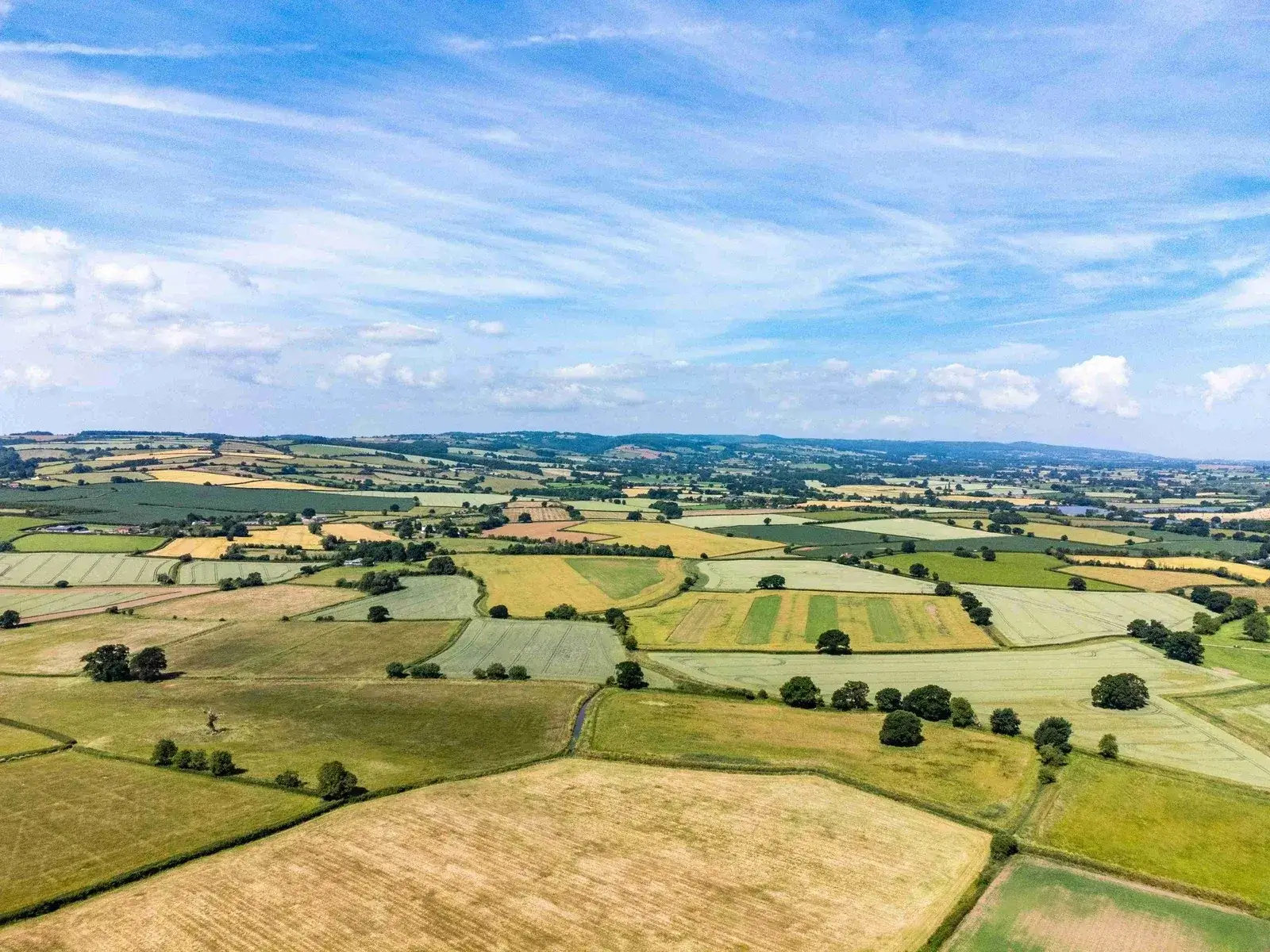
Northamptonshire farmland reviewed for agricultural and development value
Northamptonshire Farm Value & Development

How Much Is My Farm Worth in Northamptonshire?

Whole-farm valuation for Northamptonshire: assess the farmhouse, buildings, farmland, occupation and diversified income first, then review any individual parcel with separate strategic or development potential.

This Northamptonshire farm guide provides an integrated review of farm value, planning potential and development-sale options. It assesses the holding as a collection of assets, identifies whether a defined parcel warrants planning work and compares the available sale or promotion routes before terms are signed.

Northamptonshire farms sit within a market influenced by productive agriculture, strong road and rail connectivity and substantial residential and employment demand. Land near Northampton, Kettering, Wellingborough, Corby, Daventry or Brackley can have a different buyer profile from a larger rural holding further from the main growth corridors.

That does not mean development value should be assumed. It means a farm should be broken into its constituent assets before a figure is reached. Value My Land considers the agricultural block, farmhouse, cottages, yards, modern and traditional buildings, income streams and any parcel whose access and relationship with a settlement justify separate planning scrutiny.

For owners considering succession, retirement or a sale of part, this distinction can be critical. The best agricultural land may be central to the retained business, while a smaller road-frontage parcel or redundant yard could be the asset capable of releasing capital with less damage to the farm’s long-term operation.

Request a free, no-obligation review of your Northamptonshire farm, its planning potential and the available development-sale options

Get Your Free Farm Review

Tell us where the farm is, its approximate size and what you would like reviewed

This guide focuses on the value of a whole farm as an agricultural and property asset. If your question is specifically about the development value of a separate parcel of land, use our Northamptonshire land-value guide for the county-wide planning and development context.

Complete Northamptonshire Farm Guide

Farm Value, Planning Potential and Development-Sale Options in One Place

This guide addresses three of the questions most frequently asked by Northamptonshire farmers and landowners: what the farm may be worth, whether part of it has planning potential, and whether development land should be sold or promoted. Use the links below to move directly to the part of the review that matters to you.

Northamptonshire Valuation Lens

Northamptonshire Farm Value Is Shaped by Agriculture and Connectivity

Northamptonshire combines a substantial agricultural base with some of the Midlands’ strongest strategic transport links. The M1, A14, A43, A45 and major logistics and distribution locations can influence the market for buildings and land, while proximity to rail connections and larger towns can support residential demand for farmhouses and smaller holdings.

A valuation must nevertheless start with the farm as a farming asset. Land quality, block size, field shape, drainage, access and the availability of buildings can determine what neighbouring farmers or commercial agricultural buyers will pay. The residential element may need a separate assessment, particularly where the farmhouse has privacy, character, useful paddocks or good connections to Northampton, Milton Keynes, Oxfordshire or the wider commuter network.

Planning opportunity is a third layer rather than a substitute for those existing values. North Northamptonshire and West Northamptonshire have different planning strategies and settlement patterns, so a parcel’s authority, settlement relationship and infrastructure context matter. A strong review identifies those layers separately and avoids allowing an uncertain strategic premium to distort the value of the entire holding.

Existing Agricultural Value

Benchmark the productive land and operational holding first, using the characteristics that matter to genuine agricultural buyers rather than a headline regional average.

Residential and Building Value

Separate the farmhouse, cottages, yards and buildings where their buyer market or income potential differs from the agricultural acreage.

Strategic or Hope Value

Only attribute an additional strategic layer where location, planning context and technical deliverability provide evidence that a parcel deserves further investigation.

Retained-Farm Impact

Test whether selling an asset removes access, services, buildings or productive land that materially reduces the value and efficiency of what the family intends to keep.

Different Measures of Value

Agricultural Value, Farm Value, Hope Value and Development Value

Agricultural value reflects the land and agricultural buildings in their existing use, taking account of productive capacity, local demand and occupation. It is normally the appropriate starting point for fields that are expected to remain in farming use.

Farm value considers the holding as a broader property and business asset. It can include the farmhouse, cottages, buildings, yards, diversified income, leases, rights, environmental agreements and the benefit or burden created by the way the individual assets operate together.

Hope value is additional value attached to the possibility of a more valuable future use. It may apply to a settlement-edge field, a redundant farmyard, a traditional building or land affected by future infrastructure. It is not the same as full development value and depends on the strength, timing and risk of the opportunity.

Development value generally becomes relevant once a site's planning position has been materially improved. The gross headline value must still be reduced for affordable housing, infrastructure, professional fees, abnormal costs, finance, developer profit and other scheme-specific deductions.

Compare Existing Use Value and Development Value

Why a Single Price Per Acre Can Be Misleading

The farmhouse and cottages may need separate residential or investment evidence.

Different fields may vary in soil quality, access, drainage, shape and agricultural demand.

The farmyard may be essential to the business or capable of a higher-value alternative use.

Only one defined parcel may have a realistic planning or infrastructure opportunity.

Tenancies, licences, covenants and rights can affect timing, control and vacant-possession value.

Lotting the farm differently can widen the buyer pool and materially change the overall result.

The more useful question is not simply “what is the average price per acre?” but “which assets should be valued together, which should be separated and which may have a different future use?”

Northamptonshire Development Value Context

How One Field Could Change the Value of an Entire Farm

Most farms will not have development potential across the entire holding. The important task is to identify whether one field, a road-frontage parcel, a farmyard or land adjoining a settlement may justify a separate planning and value assessment.

A relatively small parcel can sometimes account for a significant share of the farm's potential value, while the remainder continues to be used and valued for agriculture. This is why a farm should be reviewed parcel by parcel before any whole-holding sale, family transfer or long-term agreement is completed.

MHCLG Residential Land Value Estimates for Northamptonshire

The latest land value estimates for Northamptonshire, published by the Ministry of Housing, Communities and Local Government (MHCLG), indicate that residential development land with planning permission could be worth between £800,000 and £2 million per acre. These figures highlight the significant uplift in value that can be achieved when suitable land secures planning consent. Residential development land values can vary significantly across Northamptonshire depending on location, planning status, density, infrastructure costs, abnormal development costs and market demand. However, land with planning permission for housing can be worth substantially more than land used for agriculture, grazing, equestrian or amenity purposes. These potential value differences highlight why it is important to obtain a professional assessment before deciding whether to sell or promote land.

1

The 180-Acre Holding

Most of the holding may continue to be valued primarily for agricultural production, together with the farmhouse, buildings and income-producing uses. Applying a development rate across the full acreage would be unrealistic and could distort decisions about succession, borrowing or sale.

2

The Five-Acre Edge Parcel

A small field adjoining a town or village may have a different planning profile from the rest of the farm. If it has suitable access, a logical relationship with existing development and manageable constraints, it may justify Local Plan promotion, a planning application or longer-term strategic retention.

3

The Retained Farm

Any sale or promotion strategy must protect the remaining business. Machinery access, livestock routes, water, drainage, services, field connections, future buildings and biosecurity should be considered before boundaries or rights are agreed. Unlocking one parcel should not unnecessarily reduce the value or usability of everything retained.

Do You Own a Field That Adjoins a Northamptonshire Town or Village?

Send us the location of the farm and we will carry out a free initial review to identify whether any defined parcel may warrant closer planning assessment. We can consider settlement relationship, access, Local Plan context, nearby development and obvious constraints before explaining whether the land appears principally agricultural or may justify further promotion work.

Component Values

Northamptonshire Components That Can Pull Value in Different Directions

The following components can attract different buyers and should be understood before deciding whether the best strategy is a whole-farm sale, a selective disposal or retention with longer-term planning work.

Efficient arable and mixed land

Large, workable fields with good road access and sensible block shape can attract established agricultural buyers and should be benchmarked against genuinely comparable land.

Farmhouses with commuter appeal

Residential value may be influenced by access to Northampton, market towns, rail stations and the wider M1 corridor, particularly where the house can function independently from the commercial farm.

Yards and modern sheds

Good-quality buildings near strategic roads can be valuable to the farming operation and may also support diversification, subject to planning and access.

Traditional farmsteads

Character buildings can add residential or conversion interest but condition, heritage status, services and separation from active agricultural uses all affect the realisable value.

Growth-edge fields

Parcels around Northampton, Kettering, Wellingborough, Corby, Daventry, Brackley and larger villages merit individual planning screening where their relationship with the built edge is coherent.

Rights and access corridors

Because access can unlock or sterilise land, ownership of frontage, tracks, easements and service routes should be mapped before any part of a Northamptonshire farm is sold.

Farm Valuation Evidence

How Is the Value of a Northamptonshire Farm Assessed?

A reliable farm valuation should draw together evidence from several markets rather than treating the holding as one uniform block. Comparable farm sales, bare land transactions, residential property evidence, building and yard values, income, tenancy terms and alternative-use prospects may all be relevant.

The weight given to each source depends on what is being valued and why. A whole working farm offered with vacant possession will not necessarily be assessed in the same way as a tenanted holding, a residential farm with lifestyle appeal or a property divided into separate lots.

Comparable Farm Sales

Recent sales of farms with a similar location, acreage, land quality, farmhouse, buildings and occupation position can provide useful evidence. However, apparently similar holdings can achieve different prices where one has stronger residential appeal, better infrastructure, diversified income, valuable sporting rights or additional strategic potential. Sale circumstances and lotting also need to be understood.

Bare Agricultural Land Evidence

Local arable and pasture sales provide context, but soil quality, field size, drainage, access, topography and neighbouring farmer demand can materially alter the price. A county or regional average should therefore be treated as a broad benchmark rather than a valuation of a particular field. Equestrian and amenity demand may also create a separate market.

Compare UK Agricultural Land Values

Residential and Lifestyle Value

The farmhouse, gardens, privacy, views, access and proximity to towns or villages can attract buyers who are not solely motivated by agricultural returns. In some cases the residential element contributes a substantial share of the overall value. Agricultural occupancy conditions, shared yards, intensive uses and the condition of the dwelling can significantly alter that contribution.

Buildings and Yard Evidence

Modern livestock buildings, grain stores, workshops, hardstanding and yards may support the agricultural business, while traditional or redundant buildings may have residential, commercial, storage or tourism potential. Condition, services, access, planning status, adaptability and liabilities such as asbestos or contamination affect whether the asset adds value or requires costly work.

Income and Investment Value

Rental income from cottages, commercial units, storage, telecoms, renewables, sporting rights or other agreements may increase investment appeal. The value depends on the amount and security of the income, lease duration, rent review, tenant covenant, repairing obligations and liabilities retained by the owner. Informal income may be given limited weight until documented.

Hope and Strategic Value

A defined parcel may attract additional value where there is a credible prospect of planning permission, allocation, settlement expansion, infrastructure development or another higher-value use. The allowance should reflect probability, timescale, costs and risk. Strategic value should be assessed separately and should not automatically be applied across the whole farm.

Read Our Hope Value Guide

Why the Purpose of the Valuation Matters

A valuation prepared for an open-market sale may not be the same as one required for secured lending, partnership accounts, probate, matrimonial proceedings, tax planning or an internal family transfer. Different assumptions, reporting standards and professional requirements may apply.

Our free review is intended to identify the holding's principal value drivers and any overlooked planning or strategic potential. It is not a formal valuation prepared in accordance with the RICS Red Book.

Where a formal valuation is required, the landowner should instruct an appropriately qualified rural valuer and provide clear instructions about the valuation date, purpose, ownership, occupation and assets to be included.

Our review can help frame those instructions by identifying whether particular fields, buildings or rights require separate treatment instead of being absorbed into a single average figure.

Read How Land Is Valued in the UK

Agricultural and Environmental Factors

Farm Characteristics That Can Increase or Reduce Agricultural Value

Even where no development potential exists, the agricultural characteristics of a holding can create significant differences in value. Buyers will consider productive capacity, ease of management, environmental obligations and the cost of maintaining or improving the farm.

Land Quality and Soil

Agricultural Land Classification, soil type, depth, drainage, stone content and the ability to support arable cropping or productive grassland can influence demand. Past cropping, compaction, contamination and soil-management requirements may also matter. The most productive land is not always the land with the strongest alternative-use potential, so agricultural and strategic value should be considered separately.

Field Size, Shape and Layout

Large, regular fields with efficient access may appeal to commercial farmers, while small or fragmented parcels can be more expensive to manage. Awkward boundaries, steep slopes and long travel distances reduce efficiency. Conversely, smaller paddocks near settlements may attract lifestyle, equestrian or amenity purchasers and command a different price from conventional agricultural evidence.

Water, Drainage and Flooding

Reliable water supplies, effective field drainage and manageable flood risk support productivity. Defective drainage, waterlogging or dependence on uncertain private supplies can reduce value and lead purchasers to price in improvement costs. Where the holding is divided, water and drainage rights must be protected so that both sold and retained land remain usable.

Read Our Flood Risk and Drainage Guide

Environmental Schemes and Obligations

Countryside Stewardship, Sustainable Farming Incentive agreements and other environmental commitments may provide income but can also impose management obligations. The payment terms, duration, transferability, penalties and effect on future land use should be understood. A buyer may value secure income positively but discount restrictions that conflict with their intended farming or development strategy.

Woodland, Hedgerows and Trees

Woodland may have timber, amenity, sporting, carbon or biodiversity value. Mature trees and hedgerows can enhance character, shelter and residential appeal, but may also increase management obligations or constrain access, layout and alternative uses. Protected trees, ancient woodland and important hedgerows require particularly careful consideration where development is being explored.

Explore Ecology and Development Considerations

Location and Buyer Competition

Competition from neighbouring farmers, lifestyle buyers, investors and developers can create a premium. Farms close to Northampton, Kettering, Corby, the M1 and A14 corridors or attractive Northamptonshire market towns may appeal to a wider buyer pool than remote holdings. However, urban influence can also create trespass, traffic, neighbour and management pressures that some agricultural purchasers will price into their offer.

Why Location Matters When Assessing Land

No Obvious Development Potential?

A farm can still have several value drivers beyond residential development, including agricultural demand, residential appeal, commercial buildings, diversified income, renewable agreements, woodland or alternative rural uses. Our initial review can help establish whether the holding is principally an agricultural and residential asset or whether any part warrants a separate strategic assessment.

Ask Us to Review Your Farm
Local Farm Market Context

Northamptonshire Farm Value Context

Farm values vary significantly across Northamptonshire because the county includes productive arable and pasture land, major logistics corridors, expanding towns, rural villages and a strong network of country estates and residential lifestyle holdings. Buyer demand can be influenced by the M1, A14, A43, A45 and A1, as well as proximity to Northampton, Milton Keynes and the wider Midlands and South East markets.

The same acreage can therefore have a different buyer pool and value profile depending on whether it is an operational commercial holding, a residential lifestyle farm, land close to a growing settlement or a property with buildings and diversified income.

The relevant planning authority is either North Northamptonshire Council or West Northamptonshire Council. Identifying the correct authority and former district geography still matters because settlement roles, Local Plan policies, infrastructure issues and development opportunities differ across the county.

Northampton and the Urban Fringe

Farms around Northampton, Moulton, Brixworth, Roade and surrounding villages may be influenced by urban-edge demand, strategic infrastructure, employment growth and strong residential markets. Fields and yards close to existing development may require separate review before being sold with the wider holding.

Daventry and Western Northamptonshire

Land around Daventry, Long Buckby, Weedon Bec and the western village network may have different values depending on M1 access, settlement role, landscape, nearby employment areas and infrastructure capacity. Productive commercial farmland can sit close to logistics and strategic growth demand.

Towcester, Brackley and the South

Farms near Towcester, Brackley, Silverstone and southern Northamptonshire may be influenced by the A43, proximity to Milton Keynes and Oxfordshire, motorsport and employment markets, landscape setting and settlement-edge demand. Access and infrastructure can create substantial differences between neighbouring parcels.

Kettering and Central North Northamptonshire

Holdings around Kettering, Burton Latimer, Rothwell and Desborough may be affected by A14 accessibility, housing growth, employment demand and changing settlement patterns. Agricultural land, farmyards and edge-of-town parcels may each require different valuation evidence.

Corby and the Northern Growth Corridor

Farms around Corby and the northern settlements can be influenced by regeneration, strategic employment land, rail and road connections, landscape and former industrial uses. Well-located buildings or settlement-edge fields may attract interest beyond their existing agricultural use.

Wellingborough, Rushden and the Nene Valley

Land around Wellingborough, Rushden, Higham Ferrers, Irthlingborough, Earls Barton, Raunds, Thrapston and the Nene Valley may be influenced by housing and employment growth, A45 and A6 accessibility, flood risk and infrastructure capacity. River corridors and settlement relationships can materially affect both agricultural and strategic value.

Northamptonshire farm planning

Planning Permission for Farms and Agricultural Land in Northamptonshire

Northamptonshire planning opportunities range from major urban extensions and logistics parks to modest market-town edges and farm-building conversions. A single holding can contribute access, drainage or utilities to a wider strategic area even where only one field is initially proposed for development. That enabling role should be identified before the boundary and commercial terms are fixed.

West Northamptonshire completed a Regulation 18 consultation in March 2026 and is analysing responses. North Northamptonshire completed scoping and a Call for Sites in July 2026, with further content and evidence consultation scheduled later in the year. These different stages create different tasks for landowners and promoters.

The initial assessment should combine the settlement and boundary position with highway capacity, public transport, school and health provision, utilities, drainage, landscape, ecology and the ownership of any connecting land. A corridor site may have several possible uses, but each will create a different infrastructure and valuation case.

Value My Land uses that evidence to compare strategic Local Plan promotion, a smaller allocation, an application, employment-led work, building reuse or a monitored hold. The recommended route should preserve competition and future phases rather than allowing one approach to control the whole farm by default.

Parcel-specific review

Key Planning Considerations for Northamptonshire Farms

West and North Northamptonshire Plan Areas

The two unitary authorities are preparing separate Local Plans. West Northamptonshire covers Northampton, Daventry, Towcester, Brackley and surrounding rural areas; North Northamptonshire covers Kettering, Corby, Wellingborough, Rushden and former East Northamptonshire. A county description cannot substitute for the plan and settlement hierarchy applicable to the parcel.

The review should identify which existing policies remain in force, what the emerging plan proposes and how the site was treated in previous Calls for Sites or land-availability assessments. The Local Plan allocation guide explains how the evidence changes by stage.

M1, A14, A45, A43 and A5 Growth Corridors

Strategic roads create strong housing, logistics and employment markets, but access to the corridor often depends on local junctions, village roads and constrained urban networks. National Highways interests, junction capacity, freight routing, noise and air quality may affect the use and scale.

A corridor location should be tested against the actual movement pattern and public-transport network. See the access and highways guide before assuming that proximity to the M1 or A14 creates residential or logistics suitability.

Schools, Healthcare and Strategic Infrastructure

Large Northamptonshire developments can require schools, transport upgrades, utilities, open space and community facilities. A farm parcel may be asked to carry infrastructure serving several ownerships or phases, substantially reducing the net developable area and land receipt.

The promotion should identify shared and site-specific infrastructure, phasing and cost allocation. The utilities and infrastructure guide helps frame the early questions.

Ownership Assembly and Future Phases

Strategic growth areas frequently cross several farms or titles. Access, drainage and utilities may need to pass through the first parcel to unlock later land. A planning strategy must therefore map ownership, easements, ransom strips and collaboration requirements before deliverability is claimed.

Where several owners are involved, governance and cost-sharing can be as important as policy. The multiple landowners guide explains why equal acreage does not necessarily mean equal contribution or value.

Market Towns, Villages and Proportionate Growth

Daventry, Towcester, Brackley, Kettering, Corby, Wellingborough and Rushden perform different roles from smaller rural service centres and villages. A site must match the settlement’s facilities, transport and planned growth rather than rely only on road frontage or county-wide need.

The concept should show a coherent edge, safe walking and cycling links and a scale that can be integrated. A large field may need a smaller first phase or landscape boundary to avoid creating an isolated projection.

Housing, Logistics and Alternative-Use Control

A strategically located farm may attract competing residential, logistics, industrial or mixed-use proposals. Those uses can produce very different traffic, building scale, infrastructure and land values. The owner should not grant broad use flexibility without clear approval and price-review mechanisms.

The planning screen should identify the strongest realistic use and test alternatives separately. The commercial and employment guide can be read alongside residential planning guidance.

Planning position checked:

Northamptonshire Local Plan and Growth Context

Northamptonshire is now divided between West Northamptonshire and North Northamptonshire, while legacy plans and site assessments remain relevant during transition. This summary was checked on 22 August 2026. Verify the unitary authority documents and the England Local Plan Tracker before relying on a stage or deadline.

West Northamptonshire

West Northamptonshire is preparing a Local Plan to 2043. Its Regulation 18 consultation and associated Call for Sites ran from 29 January to 27 March 2026 and are now closed; the council is analysing responses. Farms around Northampton, Daventry, Towcester and Brackley should be checked against the emerging settlement strategy, legacy plans and strategic infrastructure. See the official West Northamptonshire plan page and the West Northamptonshire guide.

North Northamptonshire

North Northamptonshire’s scoping consultation and Call for Sites ran from 20 May to 1 July 2026. The council says the next consultation on proposed plan content and evidence is scheduled for October to November 2026. Land around Kettering, Corby, Wellingborough, Rushden, Thrapston and Oundle should be monitored for the next evidence and strategy stage. See the official North Northamptonshire plan page and the North Northamptonshire guide.

Northampton, Daventry, Towcester and Brackley

The western unitary area contains the county’s largest urban area, strategic growth locations, market towns and extensive villages. A farm parcel should be tested against legacy allocations, neighbourhood plans, committed infrastructure and whether it forms a contained extension or an isolated rural projection. See the Northampton, Daventry and Brackley guides.

Kettering, Corby and Wellingborough

The northern unitary area includes major committed growth, former strategic urban extensions, employment corridors and rural service centres. Access, infrastructure phasing and relationship with existing commitments can matter as much as the field’s physical condition. See the Kettering, Corby and Wellingborough guides.

Strategic Transport Corridors

The M1, A14, A45, A43, A5 and A6 create strong regional connectivity but also introduce junction, freight, noise, air-quality and severance issues. Employment and residential proposals require different access and sustainability evidence, and motorway proximity alone does not establish a deliverable local route.

Nene Valley and Rural Constraints

The Nene and its tributaries create flood and ecological corridors, including effects associated with the Upper Nene Valley Gravel Pits SPA. Landscape, heritage, agricultural land, minerals, strategic gaps and village identity can also shape site selection. Early work should combine landscape, heritage, ecology and drainage evidence.

Monitor Call for Sites Opportunities and Published Site Assessments

West and North Northamptonshire run separate plan and site-submission processes. The Call for Sites Tracker can flag a future window, but the correct unitary form, previous reference and resubmission rules must be checked.

Legacy SHLAA, HELAA and site-selection material remains important. Use the HELAA and SHLAA Tracker and read the underlying assessment to identify whether access, settlement strategy, infrastructure, availability or another issue controlled the result.

Where a farm forms part of a wider strategic area, monitor junction, school, drainage, utilities and collaboration evidence. A change to one of those shared components can alter whether the parcel is independently developable, enabling land or a later phase.

How the evidence changes the route

Three Northamptonshire Farm Planning Scenarios

These examples show why location, constraint, plan stage and parcel role must be assessed together before an owner commits to a planning or commercial strategy.

Farm Within a Wider Strategic Growth Area

The ownership sits beside other promoted land and a proposed new junction, school and drainage network. Only part of the farm is shown for housing, while another field carries infrastructure serving the wider area.

The owner should require a parcel schedule, infrastructure apportionment and future-phase rights before joining the promotion. Planning potential may be strong, but an unfavourable masterplan can transfer value from the farm to adjoining land.

Independent Market-Town Edge Site

A field beside Daventry, Towcester, Kettering or another service centre has road frontage, nearby facilities and a defensible boundary. It may provide a smaller deliverable alternative to a large strategic site if drainage and highway effects can be addressed.

The route could be Local Plan promotion or an application depending on policy and housing supply. The concept should demonstrate independent delivery and avoid relying on infrastructure outside the owner’s control.

M1 or A14 Farm with Housing and Logistics Interest

Different developers propose residential and logistics uses. The farm’s corridor position creates market appeal, but each use has different access, utilities, landscape and value implications.

The landowner should commission an independent planning screen before granting exclusivity. A broad option allowing the buyer to choose the least valuable use can undermine both planning strategy and sale value.

Planning Routes for Farmland in Northamptonshire

There is rarely one universal route. The appropriate strategy depends on the Local Plan stage, policy position, site constraints, likely timescale and the landowner's objectives. An early review should compare the available routes rather than assume that an immediate planning application is always the best option.

Local Plan Promotion

The land is promoted as a future allocation and supported through the relevant consultation stages with proportionate evidence on suitability, availability and deliverability. This can be appropriate where current policy does not support an immediate application.

Local Plan guide

Call for Sites

A submission identifies the parcel, proposed use, ownership, availability, access and known constraints so the council can assess it through its evidence base. A clear boundary and realistic capacity are particularly important where only part of a farm is offered.

Farmer's Call for Sites guide

Planning Application

An application may be realistic where the development plan, housing supply position or site-specific circumstances create a credible case. The likely reports, obligations, refusal risk and possible appeal position should be understood before substantial costs are incurred.

Planning permission guide

Land Promotion

A promoter can fund and manage the planning strategy in return for an agreed share of sale proceeds following a successful sale. The agreement should protect the landowner's control, minimum price position and objective of maximising the net return.

What is land promotion?

Where a developer has already approached you, compare the structures in our guide to Promotion Agreements and Option Agreements for farmers. The planning route and commercial agreement should support the same strategy.

We Can Help You Choose and Deliver the Right Planning Route

You do not need to decide between a Call for Sites submission, Local Plan promotion, planning application or Promotion Agreement before speaking to us. We can compare the options, explain the likely evidence, cost, risk and timescale and identify the route that best reflects the planning position and your objectives as a farmer or landowner.

Request Planning Route Advice

Treat infrastructure and phase value as part of the transaction

A Northamptonshire Farm Sale Can Be About Strategic Connections as Much as Acreage

West Northamptonshire and North Northamptonshire have different planning frameworks, growth locations and evidence. A proposal near Northampton, Daventry or Brackley should not be assessed in the same way as land near Kettering, Corby, Wellingborough, Rushden or a rural market town. The agreement must match the authority, scale and realistic programme for the actual parcel.

Transport corridors can create several buyer markets. Housing, logistics and employment developers may apply different densities, infrastructure packages and residual values to the same land. The owner should avoid a clause that gives the buyer freedom to select the use while retaining a price mechanism based on the least valuable assumption.

Where the farm forms part of a larger strategic area, boundary and rights mapping is essential. The first sale should not sterilise adjoining acreage, transfer a future access ransom or leave one parcel carrying infrastructure that serves several phases without a fair contribution.

Identify the Correct Planning Framework

Confirm whether the land lies in West or North Northamptonshire and how the particular settlement or growth area is treated. County-wide assumptions are not sufficient.

Test Housing and Logistics Markets

Near the M1, A14, A45, A43 or A5, compare uses, traffic impacts and service needs. A buyer should not control alternative markets without a corresponding price review.

Schedule Strategic Infrastructure

List schools, highways, utilities, drainage and community infrastructure, then distinguish site-specific works from costs shared by adjoining ownerships or later phases.

Value Future Phases

Map land that could follow the first parcel. Reserve access and service connections and agree how value created for later family ownership is protected or shared.

Keep the Working Farm Connected

Preserve machinery routes, field entrances, water, drainage and access to buildings. A masterplan should not divide the retained holding for the convenience of the first phase.

Create a Comparable Bid Process

Assess price, funding, conditions, infrastructure deductions, planning capability and timescale together. The highest gross figure may not deliver the strongest net outcome.

Free Initial Review

Define the Sale Strategy Before the Buyer Defines It for You

We can review the parcel, planning route, proposed use, price mechanism, deductions and retained-farm requirements before you enter exclusivity or accept detailed commercial terms.

Request Free Sale Review

Compare timing, control and net value

When Is the Right Point to Sell Northamptonshire Development Land?

A landowner should compare the value created by allocation, permission or infrastructure certainty with the need for an earlier receipt. Strategic sites may justify promotion and coordinated marketing, while smaller market-town parcels or firm unconditional offers can support a different route.

Sell at the Current Stage

This can suit a defined site where the owner wants certainty and the purchaser accepts the present planning and infrastructure risk without relying on wide future deductions.

Potential benefit: A clearer timetable and reduced exposure to complex delivery risk.

Main caution: The owner may transfer phase, access or alternative-use value before it has been tested.

Promote and Coordinate Delivery

This can suit land within a credible Northampton, Kettering, Corby, Wellingborough or corridor growth opportunity where planning and infrastructure work could attract several purchasers.

Potential benefit: A coordinated strategy can expose the land to stronger competition after risk is reduced.

Main caution: The agreement must control infrastructure allocation, expenditure, ownership collaboration, fee and sale procedure.

Retain While the Framework Matures

This can suit land where the relevant unitary strategy, highway solution, utilities or adjoining ownership assembly remains too uncertain for fair long-term terms.

Potential benefit: The farmer retains control and avoids premature infrastructure assumptions.

Main caution: Monitoring and timely plan promotion remain essential, particularly where competing sites are also being advanced.

Read our detailed guide on whether to sell farmland now or wait.

Compare control, risk and price testing

Principal Routes for Selling a Farm for Development

The label placed on an agreement does not tell the whole story. The detailed drafting determines who controls planning, whether the land must be purchased, how the price is established, what can be deducted and whether the land will be exposed to competition.

Unconditional Sale

The land is sold without a planning condition, usually at the value supported by its current status and market demand.

Check: price, completion, title, vacant possession, retained rights and any overage.

Conditional Contract

The buyer is normally required to complete if defined conditions, often planning-related, are satisfied or waived.

Check: conditions, planning standard, buyer obligations, appeals, longstop and price adjustment.

Promotion Agreement

A promoter funds and manages the planning strategy and the land is ordinarily marketed after planning success.

Check: promotion fee, recoverable costs, approvals, minimum return, marketing and sale obligations.

Option Agreement

The developer receives a contractual right, but not normally an obligation, to purchase the land during the option period.

Check: option term, trigger, discount, valuation assumptions, deductions and challenge procedure.

Hybrid Agreement

The structure combines promotion features with purchase rights or other mechanisms tailored to the parties.

Check: which party benefits from each feature and whether open-market competition is preserved.

Sale After Allocation

The land is marketed after it has been allocated or otherwise supported through the plan-making process.

Check: remaining planning risk, infrastructure requirements, policy obligations and delivery timetable.

Sale After Planning Permission

The land is marketed with the benefit of permission, allowing purchasers to price a more defined development opportunity.

Check: conditions, obligations, reserved matters, abnormal costs and implementation requirements.

Sale With Overage

The land is sold now with a contractual right to additional payment if a future value-trigger occurs.

Check: trigger, duration, calculation, deductions, security, disposals and anti-avoidance wording.

Put every offer onto the same schedule

Compare Northamptonshire Proposals Through a Phase and Infrastructure Matrix

The strongest offer is not necessarily the one with the highest gross acreage rate. A proposal can become materially weaker after strategic roads, schools, utilities, drainage, affordable housing, biodiversity and professional costs are applied, especially if the parcel is charged for works serving a wider growth area.

Every bidder should therefore complete the same matrix covering use, capacity, infrastructure, cost sharing, agreement term, minimum return, later phases and market testing. This exposes where one proposal transfers more risk or strategic control to the purchaser.

Planning area and programme

Does the strategy reflect the correct unitary authority, plan stage and realistic sequence for evidence, allocation, application and delivery?

Use flexibility

Can the buyer move between housing, logistics, employment or mixed use, and how is the land revalued if the planning outcome changes?

Infrastructure schedule

Which roads, schools, drainage and utilities are required, who benefits from them and what approval and apportionment controls apply?

Ownership and collaboration

Does the scheme depend on adjoining land, and are equalisation, access, service and cost-sharing arrangements addressed rather than left to future negotiation?

Term, milestones and longstop

Are submissions, technical work, applications and appeals tied to dates, with release of land or termination if the strategy stops progressing?

Minimum net return

Does the owner have protection after infrastructure, promoter fee, abnormal costs and professional expenditure rather than only a gross per-acre promise?

Marketing and purchaser selection

Will national, regional and specialist bidders compete on consistent information, and will deliverability and conditionality be assessed alongside price?

Retained farm and later phases

Are machinery access, drainage, utilities, boundary treatment and future road or service connections expressly reserved?

Allocate Shared Infrastructure Fairly

A road or school serving several ownerships and phases should not be charged disproportionately to the first farmer’s parcel. The agreement should contain an evidence-based allocation method and review mechanism.

Do Not Give Away the Route to the Next Phase

Where the sale land controls access or services to retained acreage, those rights should be reserved or valued expressly before the first disposal completes.

Compare the Likely Net Outcome, Not One Headline Term

Price, conditions, funding, planning obligations, deductions, timing, market exposure and retained-land protections should be considered together before a preferred counterparty is selected.

Discuss the Proposals

Northamptonshire transaction context

Local Factors That Can Change a Farm Sale Strategy in Northamptonshire

The same agreement should not be used without adjustment for every farm. Local market influences, infrastructure, constraints and the likely purchaser pool can change the appropriate sale route, agreement period, price mechanism and protections required by the landowner.

Major Growth and Strategic Infrastructure

Large development areas around Northamptonshire’s principal towns can involve schools, highways, utilities and other strategic infrastructure. A high gross land figure may therefore produce a much lower net receipt. The agreement should explain how infrastructure is apportioned between the land, adjoining ownerships and later phases, with evidence and owner approval for recoverable costs.

M1 and A14 Logistics Demand

The M1, A14, A45, A43 and A5 can attract logistics and employment developers as well as residential interest. Different uses create different values, traffic impacts and service requirements. The owner should avoid a price mechanism that allows the buyer to select the lowest-value assumption after securing control over land capable of supporting several markets.

West and North Northamptonshire Frameworks

The two unitary areas have separate planning strategies, evidence bases and growth locations. A developer’s confidence in one area should not be applied automatically to another. The proposed route, authority engagement and programme should be clearly explained before the farmer accepts a long agreement period or grants extensions.

Large Holdings and Future Phases

Northamptonshire farms can form part of larger strategic growth opportunities involving several fields or ownerships. The first phase may create access, drainage or infrastructure value for later land. The agreement should protect future connections, define how phase value is shared and prevent the initial buyer from obtaining an unpriced ransom over retained acreage.

Market Town and Village Opportunities

Smaller sites around towns and sustainable villages may attract local and regional builders who can compete differently from national developers. A proportionate planning and marketing strategy can be more effective than placing a broad holding under a long option. Site scale, agreement period and professional expenditure should match the realistic opportunity.

Highway Capacity and Deliverability

Road frontage does not itself establish that development can be served. Junction capacity, pedestrian connections, visibility and strategic highway works may influence both planning and price. Any deduction should be tied to a defined access strategy, and the farmer should retain control over land needed for alternative accesses or later phases.

Protect what is not being sold

Protecting a Northamptonshire Holding Through Phased Development

Large Northamptonshire opportunities can be delivered in stages. The first phase may contain the highway access, drainage basin, utility corridor or open-space connection needed by land the family intends to retain. Those future rights should be designed into the agreement and planning strategy rather than negotiated after the first parcel has been sold.

The retained farm must continue to function during a long promotion period and through construction. Machinery routes, field entrances, water, drainage and access to buildings should be mapped, with alternative routes provided before any existing connection is interrupted.

Infrastructure cost-sharing should also reflect benefit. The initial parcel should not carry expenditure that primarily unlocks later developer land or adjoining ownerships without a contribution or value-sharing arrangement.

Where new housing or employment uses adjoin continued agriculture, buffers and operational protections should address harvesting, spraying, livestock, lighting, dust and construction traffic while avoiding unnecessary restrictions on normal farm activity.

Future road connections reserved
Drainage and service corridors
Machinery access throughout phases
Later family land protected
Shared infrastructure contributions
Access ransom avoided
Buffers beside active farming
Farmyard and building access

For a fuller review of parcel boundaries, access, services and the continuing operation of the holding, read our guide to selling part of a farm for development.

Our Review Process

How We Carry Out an Initial Farm and Development Review

Our free initial review is designed to identify the principal value drivers and whether further specialist valuation, planning, legal or tax advice may be appropriate. It is a practical first step rather than a formal Red Book valuation.

1

Locate the Holding

We review the farm boundaries, approximate acreage, access points, surrounding settlements, neighbouring uses and wider location using the information and mapping you provide.

2

Separate the Assets

We identify the agricultural fields, farmhouse, cottages, buildings, yards, woodland, diversified uses and any parcel that may need to be considered independently.

3

Review Occupation

We ask about tenancies, grazing arrangements, leases, licences, vacant possession, access and other rights that could affect value, timing or future flexibility.

4

Identify Opportunities

We consider building, diversification and strategic land potential, including whether any field should be checked against planning policy and settlement growth.

5

Explain Next Steps

We outline whether the farm appears principally agricultural, whether specialist formal valuation is required and whether retention, sale, diversification or promotion should be explored.

What Do We Need From You?

A postcode, Google Maps pin or what3words reference, approximate acreage and a brief description of the farmhouse, buildings and current use are enough to begin. It is also helpful to tell us about any tenancies, diversified uses, previous planning history or approaches from developers, agents or promoters.

How Value My Land Can Help Northamptonshire Farmers and Landowners

Value My Land provides a free initial assessment to identify whether there is a credible planning opportunity before a farmer or landowner commits to planning fees, technical surveys or a long-term agreement. Where land is suitable for promotion, we can coordinate the planning, technical and commercial work for the opportunity parcel while allowing the remainder of the holding to continue operating.

1

Free initial farm review

We identify the farm, acreage, planning authority, settlement relationship and obvious constraints and clarify whether the enquiry concerns open farmland, a particular field, existing buildings or a wider strategic opportunity.

2

Parcel-by-parcel opportunity check

We focus on the parts of the holding with the strongest planning relationship rather than treating every field equally, helping protect productive land and the continued operation of the farm where only part of the ownership needs to be promoted.

3

Planning and technical strategy

Where appropriate, we assemble the planning, highways, landscape, ecology, drainage and other evidence needed for the chosen route and keep the scope proportionate to the stage reached so that unnecessary work is not commissioned too early.

4

Funding and management of promotion work

For land we accept under a Promotion Agreement, we fund and manage the promotion and planning process at our own cost and risk. Our fee is an agreed percentage of the sale proceeds and is payable only when the land is successfully sold with the benefit of planning permission, aligning the promotion strategy with the objective of maximising the landowner's net return.

5

Competitive marketing following planning success

Following planning success, the land can be marketed competitively to suitable housebuilders or developers with the objective of securing the strongest deliverable offer and maximising the net return to the landowner rather than being tied to a single buyer's valuation.

Start With a Free, No-Obligation Farm Planning Assessment

Send us the location and approximate size of your farm or opportunity parcel. We will explain what appears realistic, which planning route may be appropriate and what information would be needed next. There is no obligation to enter into a Promotion Agreement or sell your land.

You can also read more about Promotion Agreements for farmers and maximising farmland value.

August 2026 National Policy

How the August 2026 NPPF Affects Farm and Rural Land in Northamptonshire

The final framework provides clearer national routes for specified development outside settlements. Those routes can be relevant to a farm in Northamptonshire, but they must be separated from permitted-development rights, Local Plan promotion and any Green Belt policy that applies.

Agriculture and Necessary Rural Businesses

Policy S5 supports development for agriculture, horticulture and forestry. It also supports rural businesses and services where the need for a location outside settlements is demonstrated. The scale, design, access, landscape and operational justification still require evidence.

Existing Buildings and Previously Developed Land

S5 separately addresses the reuse, alteration, extension or replacement of lawful permanent and substantial buildings and the redevelopment of previously developed land. Agricultural buildings do not automatically make every adjoining field brownfield land, and Class Q remains a separate legal route.

Settlement and Green Belt Position

The exact farm boundary should be tested against the settlement definition and adopted policies map. Where land is in the Green Belt, policies GB6 to GB8 apply instead of treating the general S5 countryside list as the permission route. Grey-belt status is only one part of that assessment.

Planning Probability Is Not Present Development Value

A supportive policy route can introduce or strengthen hope value, but the appraisal must allow for evidence, promotion time, affordable housing, infrastructure, abnormal costs, retained-farm impacts and the probability of securing a deliverable consent.

Farm valuation in Northamptonshire should distinguish agricultural value, whole-farm value, hope value and consented development value. The August 2026 NPPF may justify a fresh planning review, but it does not justify valuing an unconsented field as development land.

Read the National Planning Policy Framework published on 17 August 2026.

Northamptonshire Farm FAQs

Frequently Asked Questions About Farm Value, Planning and Development in Northamptonshire

These questions cover the value of the whole farm, the planning potential of individual parcels and the commercial choices available where land may be sold or promoted for development in Northamptonshire.

Review Your Northamptonshire Farm Before You Value, Promote or Sell It

A single initial review can separate the value of the working farm from the planning potential of individual parcels and identify the commercial route that best protects the landowner and retained holding.

Request Your Free Northamptonshire Farm Review

Contact Us Today for a Free Northamptonshire Farm Value and Development Review

Tell us where the farm is and whether your main concern is current value, planning potential, a developer approach or the best route to sell or promote part of the holding.

Free Northamptonshire Farm Value and Development Review

Contact Information

Office

13 Ensign Business Centre
Westwood Way
Coventry
CV4 8JA