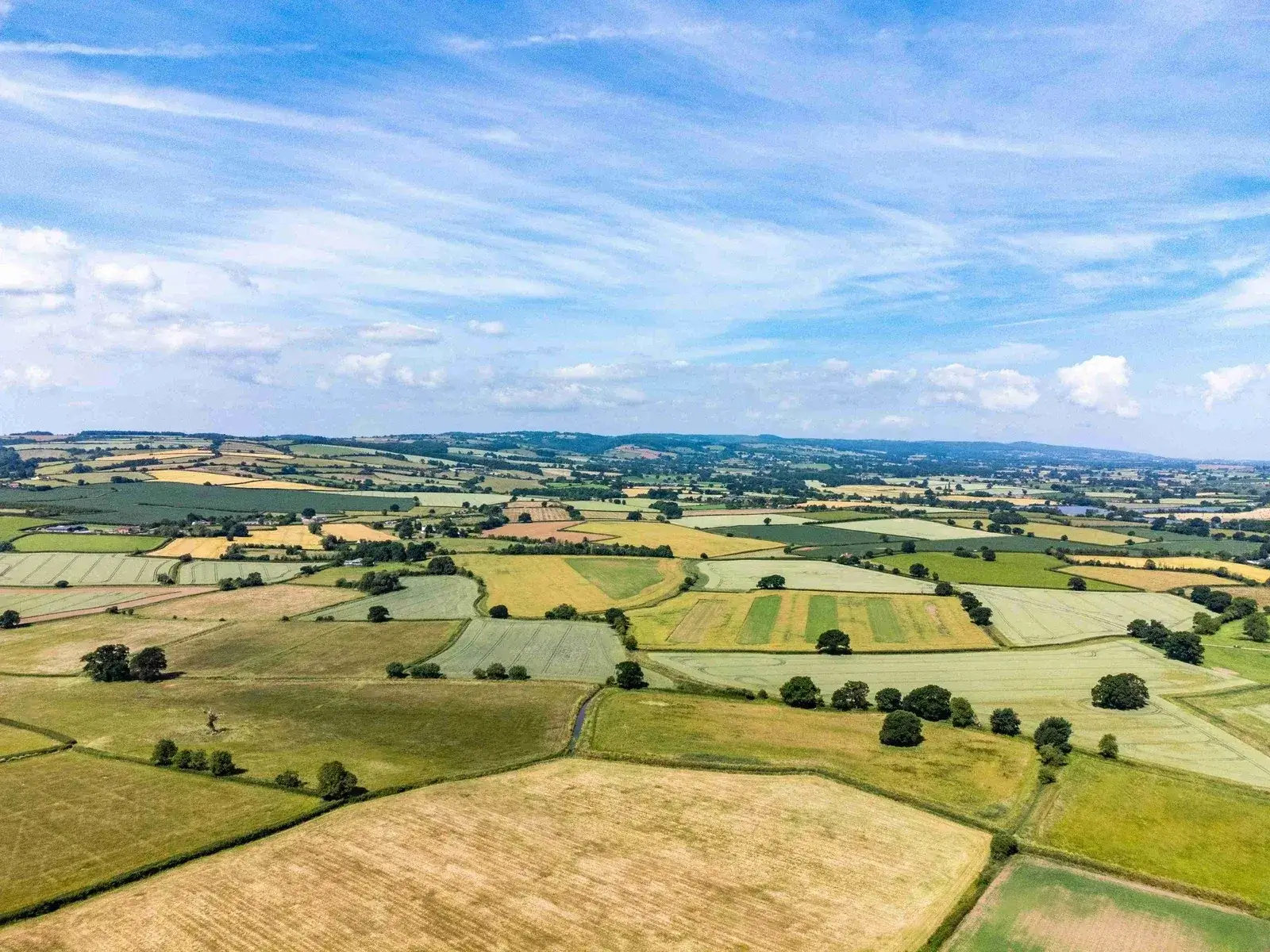
Choosing a farm agreement
Promotion Agreement vs Option Agreement for Farmers
Farmers approached about development land are often offered either a promotion agreement or an option agreement. Both can provide a funded planning route while the farmer retains ownership during the initial period. The difference is what happens after planning and how the specialist party earns its return.
Under a promotion agreement, the promoter normally secures the agreed planning outcome and markets the site to competing purchasers. Its fee is commonly linked to the sale proceeds. Under an option agreement, the option holder normally has the right to buy the land itself, often at market value subject to an agreed discount or another price formula. That difference affects who controls the purchase decision, how value is tested and whether the farming family can compare buyers after planning.
For a working farm, the decision cannot be separated from access, drainage, livestock, buildings, tenancies, retained land, family ownership, tax and the future shape of the holding. This guide compares the two structures through that farm-specific lens. The separate Promotion Agreement guide for farmers and Option Agreement guide for farmers explain the individual terms in greater detail.
Both can avoid major upfront planning spend
The promoter or option holder will normally fund the work it is contractually required to undertake.
Promotion usually creates market competition
The consented site is ordinarily offered to third-party developers after the agreed planning outcome.
An option identifies the potential buyer
The option holder normally decides whether to acquire the land on the contractual price basis.
The retained farm matters under both
Access, drainage, utilities, construction and future phases require express protection whichever route is selected.
The farm business must continue meanwhile
Cropping, grazing, tenancies, biosecurity, environmental schemes and finance should be addressed during the agreement period.
Family objectives should guide the decision
Maximum price, certainty, timing, succession, reinvestment and continued farming may point toward different structures.
Farm comparison at a glance
How the Agreements Usually Affect the Farmer
The table sets out the common position. The final legal documents can change the balance, so farmers should compare the clauses rather than rely on the title.
| Farm decision factor | Promotion agreement | Option agreement |
|---|---|---|
| Who normally buys the land? | A third-party developer selected through the agreed marketing process. | The option holder, its assignee or nominee if the option is exercised. |
| How is the price established? | Competitive bids test the market after planning, subject to the sale and minimum-price provisions. | The price is determined by the contractual formula, which may include market value, a discount, fixed amounts or deductions. |
| How is the specialist rewarded? | The promoter receives an agreed fee, often linked to sale proceeds or net proceeds. | The option holder may benefit from buying below unrestricted value and retaining the development profit. |
| Who pays for planning? | The promoter normally advances approved costs, commonly recoverable as agreed from a successful sale. | The option holder normally funds the planning work it chooses or is required to undertake. |
| Can the farm continue operating? | Usually yes, subject to farming, access and planning restrictions in the agreement. | Usually yes, subject to similar restrictions and the need to deliver possession if the option is exercised. |
| Who chooses the eventual developer? | The agreement normally allows comparison of market bids before selection. | The farmer commits at the outset to the option holder’s right to become purchaser or nominate one. |
| What happens after planning? | The land is marketed, bids are assessed and a sale contract is completed with the successful purchaser. | The option holder decides whether to exercise, the price is determined and the sale completes directly under the option terms. |
| Principal farm-specific concern | Cost recovery, sale controls and protecting the farm through a later purchaser process. | Valuation formula, exercise discretion, part-site selection and the buyer’s permanent rights over retained land. |
A farm-focused decision process
How Farmers Should Compare the Two Routes
A structured review helps prevent the headline option payment or promoter percentage from dominating the decision.
Map the whole farm
Identify the proposed development parcel, farm buildings, dwellings, tracks, drainage, water, utilities, tenanted land, environmental commitments and potential future phases.
Assess the planning opportunity
Consider settlement policy, Local Plan timing, access, constraints, likely scale and whether the route is strategic, application-led or dependent on other ownerships.
Set family and business objectives
Agree priorities around continued farming, sale timing, certainty, maximum net proceeds, succession, debt, reinvestment and retention of land or buildings.
Compare the financial mechanics
Model the promotion fee and recoverable costs against the option discount, valuation assumptions, deductions, minimum price and option payments under several outcomes.
Compare whole-farm control
Review surveys, cropping, tenancies, buildings, environmental schemes, refinancing, possession, access, drainage and permanent development rights.
Assess each counterparty
Consider planning experience, funding, reporting, farm awareness, competing sites, assignment model and delivery record, not just the agreement proposed.
Review failure and exit
Confirm the maximum term, milestones, extensions, default remedies, release of title protection and access to planning material if the site is not sold.
Coordinate independent advice
Planning, legal, valuation and tax advisers should review the same plans and heads of terms before the farming family commits the land.
The price question
Open-Market Sale or a Developer’s Option Formula?
The way price is established is often the clearest commercial distinction, but farmers should compare the net result and the effect on the retained holding.
Compare net proceeds and whole-farm consequences
A higher headline price may not be better if the proposal imposes costly access changes, retains liabilities or damages the long-term value of the remaining farm.
Promotion and competitive bids
After a satisfactory planning outcome, a promotion agreement normally requires the site to be marketed. Housebuilders and other developers can bid using their own construction costs, sales assumptions and appetite for the location. Competition can reveal value that a single formula or buyer may not capture.
The farmer’s net receipt is not the headline bid. Approved promotion costs, the promoter’s fee, agency and legal expenses and other agreed deductions must be considered. Bid certainty, conditions, payment timing and purchaser obligations also affect the true value.
Option valuation and discount
An option may use market value with the benefit of planning, less an agreed developer discount. It may instead contain a fixed price, residual formula, minimum price or phased rates. The valuation assumptions and deductions determine how closely the result reflects what another developer might have paid.
Farm-specific value may arise from access across retained land, buildings, service capacity, infrastructure land and the way the parcel fits a larger ownership. Those elements should not disappear within a generic per-acre or residual calculation.
Certainty versus competition
The option holder is already engaged with the site and may be able to move directly from planning to purchase. That can appear more certain, but the holder normally retains the right not to exercise if its commercial requirements are not met.
Promotion creates a later market process and therefore more purchaser choice, but the selected bidder can still seek due diligence, conditions or price changes. The sale provisions should reward deliverable bids rather than simply the highest opening offer.
Do Not Compare a Promoter Fee Directly With an Option Discount
They apply to different structures. Cost recovery, market exposure, valuation assumptions, planning obligations, permanent rights and retained-farm impacts must be modelled together.
Whole-farm financial outcome
Compare the Net Whole-Farm Outcome, Not Just the Land Price
The figure paid for the development parcel is only one part of the family’s result. Each route should be modelled after promoter costs or the option formula, tax, debt repayment, operational disruption and the investment needed to keep the retained holding workable.
Replacement access and facilities
Development may require a new farm entrance, internal track, drainage connection, water supply, fencing, livestock handling area or replacement building. Under promotion, bidders can be asked to price or deliver those requirements. Under an option, the obligation or compensation must be secured before the holder acquires.
Possession and business interruption
Crop loss, tenant compensation, relocation, staged possession and any licence-back can alter both cashflow and the practical sale date. A higher nominal price may be less attractive if the farm must vacate quickly or fund essential replacement works before sale proceeds are available.
Tax, borrowing and reinvestment
The family should compare realistic net scenarios with its legal, valuation and tax advisers. Debt release, tax timing, promoter fee or option discount, professional costs and reinvestment plans can affect which agreement provides the stronger whole-farm outcome, even where the headline land value appears similar.
Farming during the agreement
Which Route Gives More Freedom to Operate the Farm?
Both agreements can preserve ordinary farming, but the detail of restrictions and the route to possession can produce different practical consequences.
Cropping and grazing
Both agreements should permit normal rotations, grazing and harvesting. The farmer should retain flexibility while giving sufficient notice of long-term changes that could prejudice planning.
Farm buildings and diversification
A promoter or option holder may seek consent rights over new buildings, renewable projects, storage, events or other diversification. The test should be whether the proposal materially affects the development route.
Environmental commitments
Long-term stewardship, biodiversity, woodland, nutrient or carbon arrangements can restrict future development. Existing schemes should be disclosed and consent for new commitments should be dealt with fairly.
Tenants and graziers
Both structures must account for statutory and contractual occupation. Promotion may allow a longer transition before a third-party sale; an option may require possession shortly after exercise. The actual notice provisions matter.
Survey access
Both parties need access. Notice, biosecurity, insurance, intrusive-work approval, crop compensation and reinstatement should be equally robust under either route.
Mortgages and restructuring
The agreement may restrict charging or transfer. Farmers should retain reasonable ability to refinance, reorganise ownership and implement succession, subject to protection of the agreement.
Vacant possession
Promotion typically requires possession for the selected purchaser after marketing. An option ties possession to the option holder’s exercise and completion timetable. Seasonal and business notice should be built into either structure.
Farm management input
Those running the holding should be consulted on access, livestock, drainage and construction regardless of whether they are the registered owners or formal parties.
Planning control
How the Planning Strategy May Differ
The specialist’s commercial role can influence the scheme pursued, although well-drafted obligations and landowner approvals can narrow the difference.
| Planning issue | Promotion agreement approach | Option agreement approach |
|---|---|---|
| Local Plan promotion | The promoter’s business is commonly focused on allocation and marketable planning outcomes across a strategic period. | The option holder may also promote through the Local Plan, often with the intention of adding the site to its own pipeline or assigning the option. |
| Scheme design | The promoter generally seeks a consent attractive to a range of purchasers and capable of competitive sale. | The option holder may shape the scheme around its own product, viability and development model. |
| Minimum planning outcome | The agreement can require a minimum consent before marketing and sale obligations arise. | The exercise trigger can require a satisfactory permission, but the option holder often has discretion over whether to buy even when the trigger exists. |
| Appeal decision | Promotion agreements often contain a duty to consider or pursue an appeal where reasonable and commercially justified. | Option holders may seek wider discretion because they bear expenditure for a prospective acquisition. The obligation must be reviewed. |
| Landowner approvals | Approvals commonly cover planning obligations, retained land, sale material and purchaser selection. | Approvals commonly focus on applications, title obligations, retained rights and material changes, while the option holder controls exercise. |
| Competing sites | A specialist promoter may manage several sites in the same plan area and should disclose or manage conflicts. | A developer may prioritise sites across its pipeline according to build programme and commercial requirements. Milestones and reporting remain important. |
The retained holding
Access, Drainage, Utilities and Future Development
The agreement type does not automatically protect the farm. The safeguards must be written into the planning, sale and transfer process.
The agreement should preserve options for the retained farm
Access, utility capacity and a logical future boundary can be worth as much to the family as minor improvements to the immediate sale price.
Agricultural access
Under either route, the development access may replace or cross existing farm access. The family should secure routes suitable for machinery, livestock, deliveries and emergency vehicles, together with maintenance and safety arrangements.
Promotion offers an opportunity to include retained-farm requirements in the marketing pack and compare purchaser responses. Under an option, those requirements must be firmly embedded before the option holder exercises and acquires.
Drainage and water
Development can alter field drainage, runoff, private water, irrigation and ditch maintenance. The planning strategy should identify existing systems and allocate future responsibility to the purchaser or an appropriate management body.
Where attenuation, biodiversity or nutrient land remains with the farmer, long-term management, access, payment and liability must be defined. Neither agreement should leave development infrastructure as an unfunded farm burden.
Services and construction
Utility routes, compounds, haul roads and working space can extend beyond the sale parcel. Temporary and permanent rights should be separated and controlled, with compensation, insurance and reinstatement.
The farmer should reserve service capacity and connection rights where useful for retained buildings or future phases. Construction obligations must bind the actual developer, not only the promoter or option holder.
Future phases
A promotion structure may allow the promoter to plan a coherent wider site and market phases, but the fee and cost allocation across phases must be clear. An option may give the buyer selective exercise rights, which can create a fragmented remainder if not controlled.
In both cases, the first scheme should not unnecessarily sterilise adjoining land, consume all access or drainage capacity or impose restrictive planning obligations on land that may have separate potential.
Time, certainty and transition
Which Route Better Fits the Family’s Timescale?
Planning periods are uncertain under both structures. The relevant comparison is the realistic maximum term, progress obligations and the transition required after success.
Promotion timetable
Promotion may continue through Local Plan preparation, an application, appeal and marketing. The extra sale stage can take time, but it allows purchasers to compete after the value-creating planning work is complete.
The agreement should include milestones, reports, planning-event extensions and a final longstop. A farmer should not accept indefinite control merely because strategic planning is inherently slow.
Option timetable
An option may move directly from planning success to valuation, exercise and purchase, which can shorten the post-planning stage. The option holder may nevertheless have a lengthy exercise window or choose not to buy.
Extensions for Local Plan delay, appeal, legal challenge, conditions or infrastructure can make the maximum term much longer than the initial period. Repeated option payments or milestone conditions may be appropriate.
Farm business transition
Promotion gives the family notice that a marketing process will follow planning and may allow the possession and construction terms to be compared across bids. An option provides a known prospective buyer but may create a concentrated transition once exercise occurs.
The family should plan crops, tenants, livestock, replacement access, buildings, relocation, tax and reinvestment well before the final sale stage under either route.
Matching the structure to the farm
When Might Promotion or an Option Be More Suitable?
The following examples illustrate how objectives may influence the choice. They do not replace review of the actual terms.
Promotion may be more suitable where…
The farming family wants the consented site marketed to several developers; the planning route is strategic and requires sustained policy work; the family wants the promoter’s reward linked to sale proceeds; or the identity and terms of the eventual purchaser should be decided after planning.
It may also suit land where a flexible marketable scheme is more important than one developer’s house type or pipeline, provided the promotion costs, fee and sale obligations are controlled.
An option may be more suitable where…
A particular developer controls adjoining land, access or infrastructure and is the natural buyer; the farmer is comfortable with that party acquiring; the price formula and minimum return are defensible; or a direct transition from planning to purchase is commercially valuable.
An option may also support substantial developer investment in site-specific work, but the period and discount should remain proportionate and the farmer should not grant unnecessary rights over the wider holding.
A different structure may be preferable where…
A shorter conditional contract may suit a near-term application with a clearly defined condition. A farmer who can tolerate the cost and risk may fund planning and then sell openly, retaining more of the uplift. Overage may preserve a share of future value where land is sold early.
Multiple ownerships may require collaboration, equalisation or a land-pooling arrangement before either a promotion or option agreement can deliver a coherent scheme and fair distribution.
Family and ownership issues
The Agreement Must Fit the People Behind the Farm
The preferred commercial structure may change when ownership, occupation, debt, succession and tax are considered.
Multiple owners
Promotion may allow joint decision-making through the planning and sale stages; an option requires all owners to commit to the exercise mechanism. Deadlock and authority should be addressed in either case.
Partnerships and companies
The entity farming the land may differ from the legal owner. Business interruption, use of proceeds and internal approvals should be considered separately from the land agreement.
Tenants
Promotion and option agreements can both be undermined by unresolved occupational rights. The route to vacant possession, compensation and continued farming must be planned.
Secured lending
Lender consent and release are likely to be needed. An option valuation and a promotion sale may affect repayment and security differently, so early engagement is important.
Succession
A long agreement may outlive a generation. Replacement decision-makers, trusts, wills, death, incapacity and the intended destination of retained land should be reviewed.
Tax planning
Fee structures, ownership changes, timing, phasing and reinvestment can affect tax outcomes. Advice should be taken before the choice is fixed.
Family expectations
Some members may prioritise immediate certainty while others prefer maximum long-term value or continued farming. The objectives should be discussed before negotiations become advanced.
Independent representation
The promoter or developer’s advisers do not act for the family. Specialist independent legal, valuation and tax advice should be coordinated with planning advice.
Before choosing
Questions the Farming Family Should Resolve
The answers should be agreed internally and reflected in the heads of terms rather than left for the sale stage.
Do we want to choose the purchaser after planning?
Promotion generally provides that opportunity; an option commits to the option holder’s purchase right.
How important is open-market price testing?
Compare competitive bidding with the option valuation definition, discount, deductions and minimum price.
Can the farm operate throughout the maximum term?
Review cropping, livestock, buildings, tenancies, environmental schemes, refinancing and succession.
What land and rights might be lost?
Map the purchase parcel, roads, drainage, services, ecology, construction areas and future phases.
How will net proceeds be calculated?
Model promoter costs and fee against the option formula under several planning, market and phasing scenarios.
Who controls the planning scheme?
Check minimum outcome, application scope, appeal, section 106 and retained-land approvals.
What is the counterparty’s real business model?
Understand whether it promotes, builds, assigns, trades rights or controls competing sites.
What happens if no sale occurs?
Secure a clean exit, title release and use of reports, applications and technical evidence.
Have all advisers reviewed the same proposal?
Planning, legal, valuation and tax advice should use the same site plan, ownership information and heads of terms.
How Value My Land can help
Compare the Agreements Against the Whole-Farm Opportunity
Value My Land can provide a free initial planning assessment and consider how the proposed development parcel interacts with the retained holding. We can explain the practical difference between promotion and option routes before the family instructs independent advisers on final terms.
Planning assessment
We review policy, settlement context, access, constraints and the likely scale and route to development.
Whole-holding context
We consider farm buildings, tracks, drainage, utilities, occupation and possible future phases.
Agreement comparison
We explain how price, planning control, marketing and risk differ between promotion and option structures.
Heads of terms review
We identify planning and farm-operation issues that should be addressed before the documents become binding.
Funded promotion model
Where appropriate, we explain how Value My Land funds the promotion process at its own cost and risk.
Free first step
Send a postcode, title plan, Google Maps pin or what3words reference for an initial no-obligation review.
Free Promotion Agreement vs Option Agreement Review for Farmers
Send the farm location, the proposed site plan and any heads of terms. We will provide an initial planning-led comparison of the routes and the whole-farm issues that should influence the decision.
Related Guides
Explore our practical guides for farmers and rural landowners considering promotion agreements, option agreements and other routes for unlocking development value. Learn how land promotion works, how farmland may be assessed for planning and development and the key issues to consider before selling or entering into an agreement.
Promotion Agreements for Farmers
See how a promoter can fund and manage planning at its own risk in return for an agreed share of sale proceeds.
Click hereOption Agreements for Farmers
Understand how option agreements work and the commercial points farmers should consider before granting an option.
Click hereWhat Is Land Promotion?
Learn how land promotion can secure planning permission and help achieve the best price through an open-market sale.
Click hereCan I Sell My Farm for Development?
Explore the planning, promotion and sale routes available where a farm may have development potential.
Click hereSelling Part of a Farm for Development
Consider how to release development land while protecting access, retained farmland and the wider farming business.
Click hereAgricultural Land Development Potential
Learn which location, access, policy and constraint factors may give farmland realistic development potential.
Click hereHope Value Explained
Understand how the prospect of future planning permission can influence farmland value before allocation or consent.
Click hereMaximising the Value of Farmland
Review the planning and commercial steps that may help protect and maximise the future value of farmland.
Click hereCan I Get Planning for My Farm?
Discover the main planning routes and site factors that determine whether farmland may be suitable for development.
Click hereQuestions farming families ask
Frequently Asked Questions
These answers highlight general decision points for farmers and farming families. The preferred structure should be tested against the specific holding, parties, planning opportunity, tax position and succession objectives.