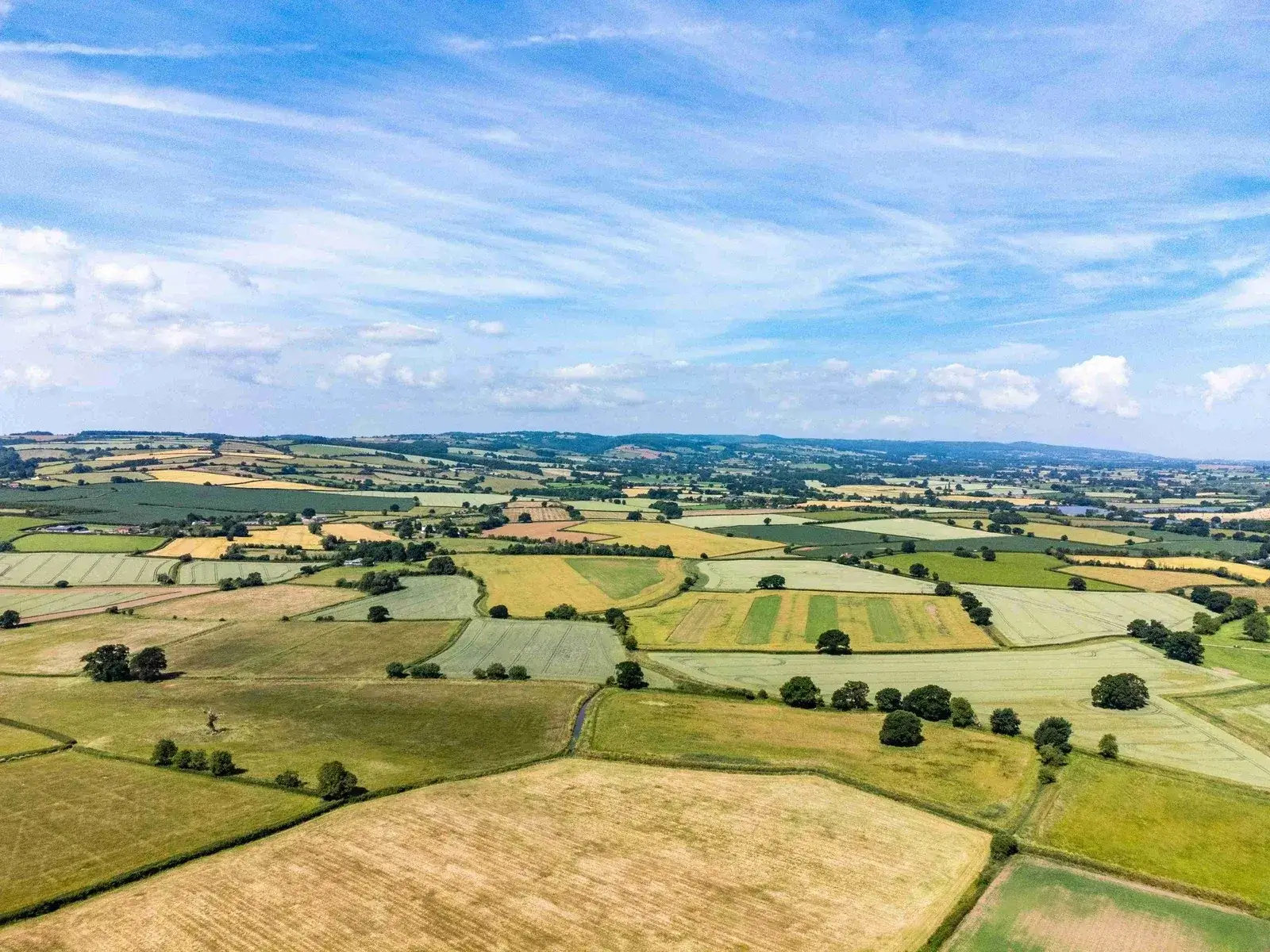
The farming context
What Does an Option Agreement Mean for a Farmer?
An Option Agreement for farmland gives a developer or other option holder the right to purchase an identified part of the farm during an agreed period. The option may be linked to planning permission, Local Plan allocation, assembly of adjoining land or another trigger. The farmer ordinarily remains the owner and continues farming until exercise and completion, but the agreement can restrict how the land and the wider holding are used for many years.
The effect on a working farm is wider than the future sale parcel. Survey access, crop rotations, grazing, drainage, livestock movement, agricultural tenancies, farm tracks, utilities, biosecurity, mortgages, partnership arrangements and succession plans may all interact with the option. Permanent development rights may also cross retained land or alter the way the remaining holding operates after a sale.
For that reason, a farmer should not assess an option only by the option payment or developer discount. The boundary, planning obligations, access arrangements, valuation assumptions, phased purchase rights and protection of the retained farm should be reviewed against the actual farm business and the site’s planning potential.
The farm remains operational
The agreement should permit normal agricultural use while preventing activities that would materially prejudice planning or development.
Only defined land should be controlled
The plan must distinguish the potential sale parcel from land needed temporarily or permanently for access, drainage, services and mitigation.
The developer decides whether to buy
Even after years of planning work, the option holder normally retains the choice of whether to exercise.
The price formula controls the outcome
Agricultural value, development value, hope value, abnormal costs, discounts and assumptions must be addressed carefully.
The retained holding needs protection
Access, water, utilities, drainage, privacy, stock movement and future development potential can be affected by the scheme.
Farm ownership may be complex
Partnerships, companies, trusts, co-owners, lenders, tenants and succession arrangements should be identified before terms are agreed.
Typical farm option journey
How an Option Agreement for Farmland Usually Progresses
The planning route varies, but a farm-specific agreement should connect each stage to the continued operation and long-term shape of the holding.
Farm and ownership review
The relevant titles, farm boundary, business occupation, tenancies, mortgages, rights, subsidies or environmental schemes and family ownership arrangements are identified. The development parcel and all land that may be affected are mapped.
Planning potential assessment
Policy, settlement relationship, access, landscape, ecology, heritage, flooding, drainage, infrastructure and likely development capacity are considered. This establishes whether the option terms reflect a credible opportunity or merely speculative control.
Heads of terms agreed
The parties set the option period, fee, planning obligations, price formula, discount, access rights, crop and disturbance arrangements, retained-land protections, assignment rights and treatment of professional costs.
Legal agreement and title protection
The option is negotiated and completed with appropriate involvement from owners, trustees, partners, lenders and occupiers. The option holder may protect its interest against the registered title.
Surveys and planning promotion
The option holder carries out technical work and pursues the agreed policy or application route. Farm operations continue subject to notice, access, biosecurity, reinstatement and consultation requirements.
Exercise and valuation
If the contractual trigger is achieved, the price is fixed or valued under the agreement. The option holder decides whether to serve an exercise notice over the whole site, a phase or an agreed part.
Sale and farm transition
Completion arrangements deal with vacant possession, crop and grazing timetables, access changes, retained rights, tax, relocation of affected operations and the practical transition from agricultural to development use.
Defining the land
The Option Boundary Should Not Be Treated as a Simple Red Line
A development proposal may need more land than the eventual housing or employment parcel. Farmers should separate land that may be sold from land required for supporting rights or temporary works.
Review the whole holding
The value of the sale parcel should not be considered separately from the agricultural function, amenity and future potential of the land and buildings that will remain.
The purchase parcel
The option plan should show the land that the option holder can acquire. Where the final scheme is uncertain, the agreement should set the maximum extent, minimum purchase area and objective criteria for selecting any smaller parcel.
A right to choose “such part as the developer requires” can leave the farmer with a severed or awkward remainder. The selection mechanism should consider field shape, access, drainage, viable agricultural use and the relationship with farm buildings.
Access and infrastructure land
Road improvements, visibility splays, footways, drainage basins, foul-water routes, utilities, biodiversity mitigation and construction access may fall outside the main development area. The agreement should identify whether those areas can be purchased, burdened by rights or used temporarily.
The farmer should consider whether the proposed route interferes with machinery, livestock, harvesting, irrigation, private water, slurry systems or access between blocks of land. Alternative alignments may need to be protected at the planning stage.
Future phases and adjoining parcels
The option may cover only the first phase of a larger opportunity. The farmer should avoid granting rights or accepting a layout that sterilises a second phase, removes an essential access point or allows all infrastructure capacity to be used by the initial development.
Where neighbouring land is needed, the agreement should not assume that the farmer will secure third-party cooperation. Collaboration, equalisation or infrastructure agreements may be required before the option can deliver the intended scheme.
Temporary Construction Land and Reinstatement
A developer may need compounds, soil storage, haul routes, wheel-washing areas or temporary drainage on land that is not being sold. The option should distinguish temporary occupation from permanent acquisition and identify the maximum area, duration, access, rent or compensation, insurance and reinstatement standard.
Topsoil condition, field drainage, fencing, gateways and biosecurity should be recorded before entry. The farmer should not be left with compacted or contaminated land, redundant apparatus or a route that cannot return to productive agricultural use after construction ends. Any post-construction monitoring period and responsibility for latent drainage failure should also be defined.
Continued occupation
Farming the Land During the Option Period
Option periods can extend through several seasons and, for strategic sites, several planning cycles. The agreement must allow the farm business to operate while preserving a genuine route to development.
Ordinary agricultural use
The farmer should be able to cultivate, graze, harvest, maintain hedges and drains, undertake routine repairs and comply with legal and environmental obligations without repeated consent.
New buildings and improvements
The option holder may wish to control permanent buildings, slurry stores, tracks, drainage works, renewable-energy projects or environmental commitments that could affect development. Consent should not be unreasonably withheld where the proposal does not prejudice the option.
Cropping and possession
The exercise and completion timetable should account for standing crops, seasonal grazing, livestock, contractor commitments and the notice needed to give vacant possession. Compensation and harvest rights may be required.
Environmental schemes
Countryside Stewardship, Sustainable Farming Incentive arrangements, biodiversity commitments, woodland grants or restrictive management agreements can affect availability and planning. The option should address existing commitments and proposed entries during the term.
Farm business tenancies and licences
Existing occupiers must be identified. New short-term arrangements may be permitted if they can be terminated in time for surveys, planning or completion and do not acquire unintended security.
Mortgages and refinancing
The farmer may need lender consent to the option and any title entry. Future refinancing should remain possible subject to protection of the option holder’s valid rights and a clear deed-of-priority or consent process.
Compliance and emergencies
The farmer should retain the ability to respond to animal welfare, pollution, flooding, disease, safety and statutory requirements without risking breach of the option.
Site investigations
Survey Access, Biosecurity and Disturbance
Agricultural land is a workplace and, in many cases, the basis of a livestock or food-production business. Survey rights should be practical, safe and accountable.
Notice and coordination
The option holder should give sufficient notice, identify the people attending, explain the work and coordinate with the farmer or farm manager. Timing may need to avoid lambing, calving, spraying, harvesting, livestock movements, shoot days or other sensitive operations.
Emergency or short-notice access should be limited to genuine circumstances. The farmer should have a named contact with authority to resolve access issues quickly.
Intrusive work and reinstatement
Trial pits, boreholes, monitoring equipment and archaeological trenches can damage crops, compaction, drains and field surfaces. The agreement should require method statements, location approval, reinstatement, compensation and removal of equipment when it is no longer needed.
Liability should extend beyond visible surface damage. Broken drainage, soil contamination, rutting and loss of yield may emerge later and should be covered by an appropriate claims process.
Livestock and disease control
Visitors should follow farm biosecurity requirements, including vehicle and footwear cleaning, gate discipline, livestock separation and restrictions during disease outbreaks. Contractors unfamiliar with the holding should be supervised where necessary.
The option holder should maintain adequate insurance and indemnify the farmer for loss arising from negligent access. The farmer should not be expected to accept uncontrolled entry by prospective purchasers or multiple consultant teams.
Data and survey results
The farmer should receive copies of material reports affecting the land, particularly contamination, drainage, ecology and ground information that may create legal, management or value implications. Confidentiality provisions should allow disclosure to advisers, lenders and insurers.
If the option expires, the landowner should be able to use relevant work product when appointing another party, subject to intellectual-property and third-party-reliance arrangements.
The Farm Must Remain Workable While the Option is in Place
Access rights, cropping, tenancies, environmental commitments and the exercise timetable should be designed around the real operation of the holding—not left to informal cooperation.
Farm value and price
How an Option Price Can Affect the Farmer’s Return
The price mechanism should capture the development opportunity while recognising legitimate costs. A formula written before planning should be tested against realistic farm and development scenarios.
| Price issue | Typical option treatment | Farm-specific point to review |
|---|---|---|
| Agricultural and existing-use value | A minimum price may be linked to agricultural value, existing-use value or a fixed amount per acre. | The minimum should reflect buildings, access, location, non-agricultural uses and the value of any rights or operational disruption, not assume all acres are identical. |
| Development market value | The land may be valued with the benefit of the agreed planning permission and subject to contractual assumptions. | The valuation should address the actual developable area, infrastructure land, retained rights, severance and any value contributed by access across the wider farm. |
| Developer discount | An agreed percentage may be deducted from market value to reward planning cost and risk. | The farmer should consider the discount alongside the term, option fee, planning obligations and any separate cost deductions. |
| Abnormal costs | Access, utilities, remediation, drainage, biodiversity and section 106 requirements may reduce residual value. | Costs attributable to the wider farm, adjoining owners or the developer’s preferred specification should not automatically reduce the option price. |
| Part-site or phased exercise | Separate parcels may be valued and purchased at different times. | Minimum phase size, indexation, crop timing, infrastructure delivery and the effect on the agricultural remainder should be reflected. |
| Access and easement value | Rights over retained land may be included within the main price or valued separately. | The agreement should not grant valuable development access or service rights without considering compensation and the effect on future land opportunities. |
Planning strategy
The Option Holder’s Planning Obligations Should Fit the Farm Site
A farmer may grant many years of control because the option holder promises to pursue planning. The contract should explain what that promise means for the particular site.
Local Plan promotion
Strategic farmland may require repeated Call for Sites submissions, Local Plan representations, evidence-base engagement and participation through examination. The agreement should identify the expected policy work, reporting and circumstances in which the promoter will challenge an unfavourable assessment.
Where the option holder controls several competing sites, the farmer should understand how priorities are set and how conflicts will be disclosed or managed.
Planning application route
For a site capable of a near-term application, the option can require pre-application work, technical surveys and submission by a target date. It should address the scale and use sought, the minimum acceptable permission and whether an appeal must be considered following refusal.
The farmer should be consulted on layouts or obligations affecting the farmhouse, farm buildings, retained fields, access, drainage and environmental management.
Planning obligations and land transfers
A section 106 agreement, highway agreement or planning condition may impose restrictions on land beyond the sale parcel. The farmer should not be required to enter obligations, dedicate land or accept liabilities without seeing the final terms and understanding their effect.
Any biodiversity, open-space or drainage land retained by the farmer needs a funded management and transfer strategy. Long-term liabilities should not remain with the agricultural business by default.
Minimum planning outcome
The trigger should specify whether the permission must meet minimum unit, floorspace, use, value or developable-area requirements. A small or heavily burdened permission may be commercially viable for the option holder but may not justify the loss or disruption to the farm.
The agreement can distinguish an initial permission from a satisfactory permission and can allow the parties to review whether a better outcome should be pursued before exercise becomes available.
Protecting the retained farm
Access, Drainage, Services and Agricultural Operations After Sale
The planning permission and transfer documents will shape how the remaining farm operates for decades. These issues should be addressed before the option holder controls the scheme design.
Secure the rights before the sale
Promises about farm access, drainage or boundary treatment are difficult to enforce if they are not reflected in the planning documents, transfer and purchaser obligations.
Farm access and machinery
Existing gateways and tracks may be altered to create the development access. The farmer may need a separate agricultural access suitable for large machinery, deliveries, livestock and emergency vehicles. Weight, width, turning and maintenance arrangements should be practical.
Shared residential and agricultural access can create conflict, safety and maintenance issues. Where separation is possible, it should be considered during the masterplanning stage rather than after permission.
Drainage and water
Development can interrupt field drains, change runoff and affect ditches, ponds, water supplies and irrigation. The option holder should survey existing systems and design permanent works that protect the retained land from flooding, waterlogging and contamination.
Rights to discharge onto retained land, access attenuation features or maintain sewers should be precisely located. Long-term maintenance costs and liability should pass to an appropriate purchaser, management company, authority or utility provider.
Utilities and capacity
Electricity, water, gas, telecommunications and foul drainage may cross the holding. The farmer should protect existing supplies and consider reserving capacity or connection rights for buildings, diversification or future phases.
Construction compounds and temporary services should be controlled by licence, time limits, reinstatement and compensation rather than being assumed within general survey rights.
Amenity, security and management
New development may affect noise, lighting, trespass, dogs, fly-tipping, privacy and livestock security. Boundaries, buffers, fencing, planting and public-right-of-way design should be considered with the farmer’s operational knowledge.
The farmer may also need commitments regarding construction hours, dust, haul routes, wheel washing and communication during the development phase, even though the option holder may sell to another developer before construction starts.
Ownership and people
Farm Partnerships, Tenants, Family Members and Succession
A farm may be operated by different people from those shown as registered owners. All relevant interests and future plans should be identified before exclusivity is granted.
Registered ownership
Confirm whether land is held personally, jointly, by a company, partnership or trustees and whether all owners have capacity and authority to enter the agreement.
Partnership property
Land used by a partnership is not always partnership property. The partnership agreement, capital accounts and intended allocation of sale proceeds may need separate advice.
Farm business tenants
A tenant’s rights, compensation, security and ability to give vacant possession can affect planning and completion. The option holder should not assume that the owner can terminate occupation immediately.
Grazing and licences
Informal arrangements should be documented and reviewed so that access, surveys and future possession can be managed without unnecessary dispute.
Lenders and charges
Secured lenders may need to consent to the option, title notice, planning obligations and eventual release of the sale parcel. Early engagement can prevent delay.
Succession and estates
The option may continue after death or transfer. Wills, trusts, succession plans and authority of personal representatives should be considered with specialist advisers.
Tax and business planning
Capital gains tax, inheritance tax, rollover relief, business structure, timing and reinvestment can influence the preferred route. Tax advice should be taken before binding terms, not only before sale.
Family communication
Where several family members depend on the farm, expectations about control, timing, retained land and distribution of proceeds should be discussed early and documented appropriately.
Choosing an agreement
Option Agreement vs Promotion Agreement for Farmers
This page focuses on farm options. Read our farmer comparison guide for a decision-led review of both structures.
| Farm issue | Option agreement | Promotion agreement |
|---|---|---|
| Ultimate buyer | The option holder normally buys or nominates the purchaser if it exercises. | The consented site is normally marketed to competing purchasers. |
| Price route | The contract determines the price through a fixed amount, market-value formula, discount or hybrid. | The market sale tests purchaser demand, after which agreed costs and the promoter fee are deducted. |
| Effect on farm planning | The option holder may design the scheme around its own development model and acquisition requirements. | The promoter generally seeks a marketable scheme and benefits from a stronger sale result. |
| Continued farming | Both can allow farming to continue, but the option may culminate in a direct purchase by the party controlling planning. | Both can allow farming to continue, followed by a separate marketing and purchaser-selection stage. |
| Typical farmer priority | May suit where the identified developer is the natural buyer and the price formula and retained-farm terms are acceptable. | May suit where the farmer wants market competition and closer alignment around net sale value. |
Before the farm is tied up
Questions Farmers Should Ask Before Granting an Option
The agreement should be reviewed against the whole farm business, not only the potential development acreage.
Which exact land can be bought?
Confirm the purchase boundary, part-site selection rights, infrastructure land and any future phases.
Can normal farming continue?
Protect cropping, grazing, buildings, maintenance, environmental compliance, tenancies and emergency actions.
How will surveys be managed?
Agree notice, biosecurity, intrusive-work approval, reinstatement, insurance and crop or yield compensation.
What planning work is mandatory?
Require a credible strategy, milestones, reporting and consequences for inactivity or competing priorities.
Does the price capture the development opportunity?
Review the minimum price, valuation assumptions, discount, deductions, access value and treatment of phases.
How will the retained farm operate after development?
Secure machinery access, drainage, services, boundaries, security, construction controls and future capacity.
Who else must agree?
Identify co-owners, partners, trustees, tenants, lenders, occupiers and third-party rights before legal work is advanced.
What happens on expiry?
Require title release, reinstatement, access to reports and clear treatment of planning permissions and statutory reporting.
Has independent professional advice been coordinated?
The farmer should obtain legal, valuation and tax advice informed by a planning and whole-holding review.
How Value My Land can help
Review the Farm and Planning Opportunity Before Signing
Value My Land can assess the planning potential and the relationship between the proposed development parcel and the wider holding. This helps farmers understand whether the option structure reflects the opportunity and which farm-specific issues should be taken into specialist legal, valuation and tax advice.
Planning potential assessment
We review policy, settlement context, access, constraints and likely promotion route.
Whole-farm review
We consider retained fields, buildings, tracks, drainage, services and potential future phases.
Agreement route comparison
We explain how an option differs from promotion, conditional sale or a landowner-led planning route.
Heads of terms issues
We identify the planning and operational matters that should be addressed before detailed drafting.
Free location review
A postcode, title plan, Google Maps pin or what3words reference is enough to begin.
Funded promotion alternative
Where appropriate, we can explain a promotion structure under which we fund the planning process at our own cost and risk.
Free Farm and Option Agreement Review
Send the farm location, a plan of the proposed option land and any heads of terms. We will provide an initial view of the planning opportunity and the whole-holding issues that should be explored.
Related Guides
Explore practical guides for farmers and rural landowners considering option agreements, land promotion and the sale of farmland for development. Learn how contractual structures, planning potential, hope value and development value can influence negotiations, timescales and the price ultimately achieved for agricultural land.
Promotion Agreement vs Option Agreement for Farmers
Compare the structure, risks and potential returns of promotion and option agreements before choosing a development strategy.
Click herePromotion Agreements for Farmers
Understand how a land promoter can pursue planning permission and market farmland on a landowner's behalf.
Click hereWhat Is Land Promotion?
Learn how strategic land promotion works and how it can unlock development opportunities without an upfront land sale.
Click hereCan I Sell My Farm for Development?
Explore the planning, market and site factors that determine whether a farm could attract development interest.
Click hereSelling Part of a Farm for Development
Discover the practical considerations when releasing part of a farm while protecting the remaining agricultural business.
Click hereExisting Use Value vs Development Value
See how agricultural use value differs from development value and why the distinction matters in option negotiations.
Click hereHope Value Explained
Understand how future planning prospects can add hope value to farmland before permission or allocation is secured.
Click hereHow Much Is My Farm Worth?
Review the agricultural, location and development factors that can influence the current value of a farm.
Click hereMaximising the Value of Farmland
Explore planning-led strategies that may strengthen negotiating leverage and increase the long-term value of farmland.
Click hereQuestions farmers ask about options
Frequently Asked Questions
These answers address recurring farmland option issues in broad terms. The agreement should be reviewed against the ownership, occupation, tax position and operating needs of the individual farm.