
City-Centre and Waterside Regeneration
Underused urban land may support housing or mixed use where flood risk, heritage, access, public realm and viability can be reconciled.
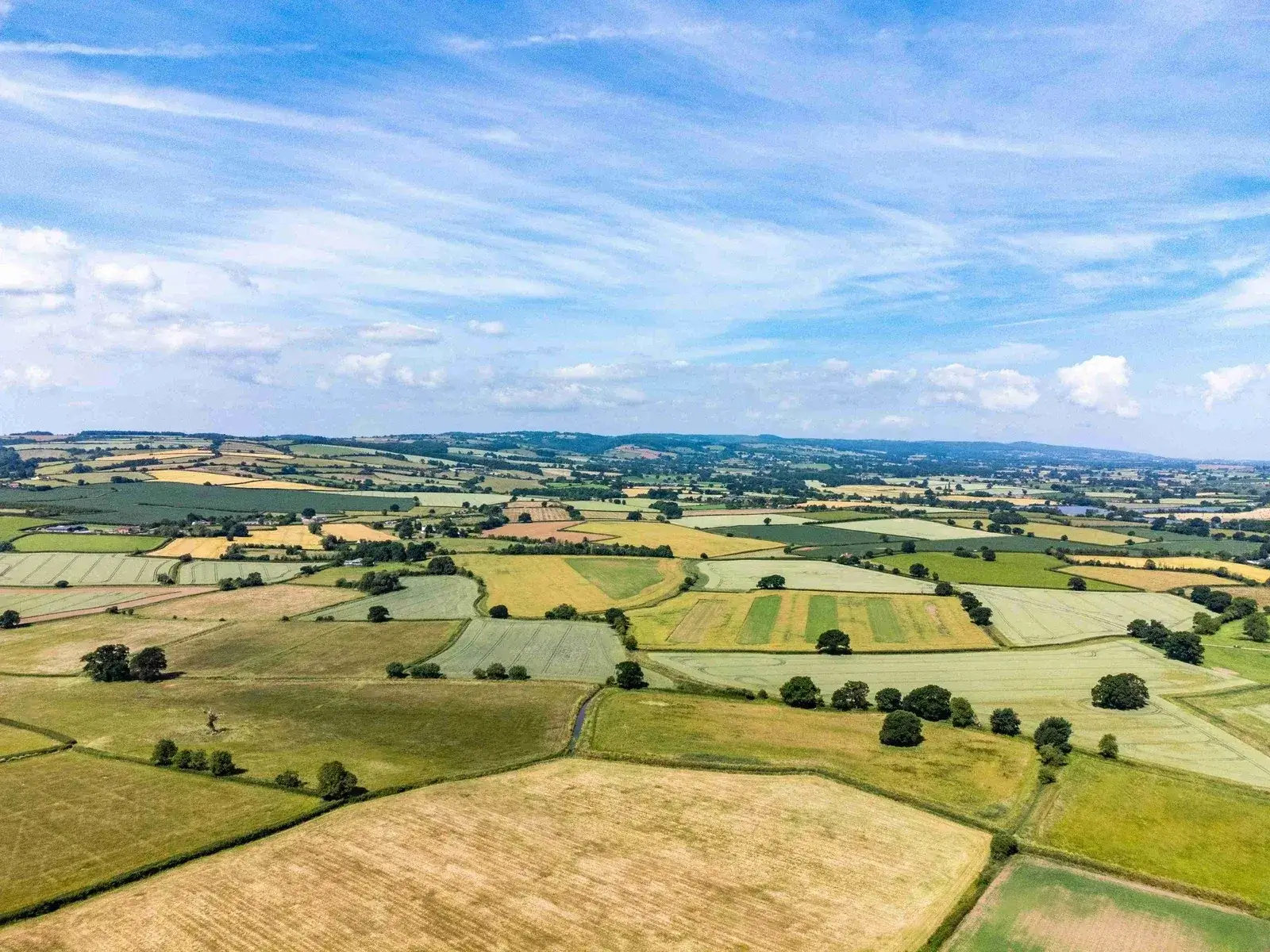
Planning Potential in Worcester
The South Worcestershire Development Plan Review 2021–2041 was adopted on 26 March 2026. It now provides the principal strategic framework for Worcester City, Malvern Hills and Wychavon alongside relevant detailed policies and national planning guidance.
The councils have started the new South Worcestershire Local Plan process. A Call for Sites is open from 19 August to 30 October 2026, with formal plan preparation expected to commence on 31 October. Landowners therefore need to distinguish the adopted 2026 plan, which carries current weight, from the new plan process, which may create longer-term policy and site opportunities.
Worcester's compact city boundary, River Severn floodplain, historic core, urban-edge relationships and close links with surrounding villages make authority and environmental checks especially important.
Value My Land can review the adopted-plan position, the correct South Worcestershire authority and whether an application, the current Call for Sites, future plan promotion or a monitoring strategy appears realistic.
Send the location for an initial site assessment
Planning Potential
Planning permission may be possible where land accords with the adopted South Worcestershire strategy, supports an identified allocation or satisfies development-management policies for windfall, redevelopment or another suitable use. Adoption provides certainty about the current starting point but does not remove the need for an application and technical evidence.
The new plan process may create a future route for land that is not supported today, particularly if revised housing requirements alter the scale or distribution of growth. The current Call for Sites is an evidence-gathering opportunity, not a change to planning status; a site remains unallocated unless and until the later plan process changes it.
Land near Worcester can fall within Worcester City, Malvern Hills or Wychavon. The River Severn and surrounding rural setting also mean that sites with similar postcodes can have very different flood, landscape, settlement and transport considerations.
Which South Worcestershire council controls the land?
Is it allocated in the adopted 2026 plan?
Could the current Call for Sites or new plan create a future route?
How does River Severn flood risk affect it?
Are heritage and landscape settings sensitive?
Can access and infrastructure be delivered?
A planning review should establish the most realistic route before substantial expenditure is committed. Read our Is My Land Suitable for Development? guide for the wider site checklist and our Planning Policy and Development Land guide for the policy principles that sit behind a local assessment.
Current Position
The review was adopted on 26 March 2026 and carries full development-plan weight. A separate new South Worcestershire Local Plan process is now under way, with its Call for Sites open until 30 October 2026.
Worcester City Council, Malvern Hills District Council and Wychavon District Council adopted the South Worcestershire Development Plan Review on 26 March 2026. The plan covers 2021 to 2041 and replaces or updates the strategic framework for homes, jobs, settlements, infrastructure and environmental protection across the three council areas.
Applications and land strategies should now use the adopted policies, maps and allocation requirements rather than describing the review as emerging. An allocated site still requires planning permission and must demonstrate compliance with infrastructure, design, affordable housing, biodiversity, flood and other policy requirements.
The councils have published the programme for a new South Worcestershire Local Plan in light of revised housing requirements. A Call for Sites opened on 19 August and closes on 30 October 2026, with formal plan preparation expected to commence on 31 October. The adopted plan remains the current statutory framework until it is replaced, even while the new plan considers additional growth.
For unallocated land, the current Call for Sites provides a formal evidence route from 19 August to 30 October 2026. A submission should follow the prescribed format and explain suitability, availability, achievability, infrastructure and constraints. It does not itself create an allocation or planning permission.
South Worcestershire planning is inherently cross-boundary. Worcester's needs and infrastructure can influence land in Malvern Hills or Wychavon, but the proposal must still respond to the settlement, landscape and policy context of the district in which the land lies.
Landowners should also check whether existing options, promotion agreements or conditional contracts define the effect of adoption, immediate review, allocation and planning permission. A change in plan stage can affect obligations, milestones and commercial expectations.
Local Development Context
Worcester is a historic riverside city with a compact administrative boundary and close physical relationships with settlements and countryside in Malvern Hills and Wychavon. Development potential must be assessed at the correct authority and settlement scale.
The River Severn is both an asset and a major constraint. Floodplain, tributaries, surface water, safe access and drainage can affect city-centre regeneration, waterside land and edge growth. Heritage and important views can be equally influential near the cathedral and historic approaches.
Strategic growth may depend on highways, schools, wastewater, utilities and sustainable transport beyond the individual parcel. Smaller sites can avoid some strategic costs but still need to respect established neighbourhoods and the adopted plan's distribution of development.
Underused urban land may support housing or mixed use where flood risk, heritage, access, public realm and viability can be reconciled.
Adopted allocations provide policy support but require applications that deliver the specified infrastructure, design and environmental outcomes.
Smaller sites within neighbourhoods may support homes where access, amenity, trees, parking, drainage and local character are protected.
Edge sites require authority, settlement, landscape, access and infrastructure analysis and may depend on the next plan review.
Accessible land may support jobs uses where road capacity, flood risk, landscape, utilities and neighbour compatibility are acceptable.
Unallocated land may be submitted through the current Call for Sites where it can respond to revised need and a sustainable spatial strategy.
The same acreage can have very different prospects depending on its relationship with the built-up area, services, neighbouring uses and policy boundaries. The purpose of an early review is to identify the role the land could realistically perform, rather than applying a standard development assumption.
Site Assessment
The adopted plan defines the current policy position, while Worcester's flood, heritage and cross-boundary conditions determine what can actually be delivered on the ground.
Planning officers begin with the development plan, national policy and any material considerations. The decisive question is not simply whether the land is greenfield or previously developed, but whether the proposed use and form of development can be justified against the policies that apply at the time of decision.
In Worcester, the adopted SWDPR policy and allocation wording should be applied now, with the current Call for Sites and new plan treated as a separate plan-making process.
A credible site normally needs a lawful and technically achievable connection to the public highway. Visibility, road width, junction capacity, pedestrian links, public transport and the effect on nearby streets can all influence how much development the land can support.
In Worcester, the A44, A449, A4440, city bridges, constrained streets and cross-boundary journeys can make network capacity and sustainable travel important.
The assessment should distinguish river flooding, surface-water risk, groundwater and drainage capacity. Sustainable drainage often requires land for attenuation and maintenance access, so the developable area may be smaller than the title area shown on a plan.
In Worcester, the River Severn, tributaries and surface-water routes can affect the sequential test, vulnerable uses, safe access and drainage design.
Habitats, protected species, mature trees, hedgerows, topography and important views can affect both principle and layout. Early work should identify what needs to be retained, buffered or enhanced rather than treating environmental matters as a final-stage survey exercise.
In Worcester, river corridors, ancient trees, hedgerows and the transition to open countryside can require strong green infrastructure and landscape buffers.
Listed buildings, conservation areas, archaeology, local character and residential amenity can determine the appropriate scale and arrangement of development. A well-designed scheme responds to these constraints instead of forcing an unsuitable standard layout onto the land.
In Worcester, the cathedral, listed buildings, conservation areas, archaeology and important views can influence height, massing, access and materials.
Planning potential is stronger where drainage, electricity, water, digital connections and other infrastructure can be provided at a proportionate cost. Ownership, easements, abnormal ground conditions and the timing of infrastructure upgrades also affect whether a site is realistically deliverable.
In Worcester, wastewater, power, schools, highways and cross-boundary infrastructure may affect phasing and the net developable area on strategic sites.
Planning Strategy
An allocated or policy-compliant site should generally focus on preparing the application and satisfying the adopted requirements. Using the new plan process is not automatically beneficial where a current application route already exists.
Unallocated strategic land can now engage with the new plan through the Call for Sites closing on 30 October 2026. The promotion case should explain why the site contributes to revised needs and a sustainable South Worcestershire strategy.
An outline or full planning application may be appropriate where the policy position is sufficiently supportive and the main technical issues can be addressed. The scope of supporting information should be proportionate to the site, proposal and risks.
An application should use the adopted allocation and policy wording and provide the technical evidence needed for its scale and sensitivity.
Where immediate permission is unlikely, the land may need to be promoted through plan-making. This normally involves evidence on suitability, availability, achievability, infrastructure and the role the site could play in meeting future needs.
Promotion should respond to the current Call for Sites and new-plan timetable and should not describe the site as supported by the adopted plan if it is not.
A council invitation can provide a formal route for putting land forward, but submission does not guarantee allocation. A clear boundary, ownership position, proposed use and realistic explanation of constraints usually produce a stronger assessment record.
A previous HELAA or Call for Sites entry should be checked against the final adopted map and any reasons for omission or reduction.
A land promoter may fund and manage planning work at its own cost and risk in return for an agreed share of sale proceeds if the land is successfully sold. The agreement should align incentives, protect the landowner and define the promotion strategy.
Promotion can fund cross-boundary policy, flood, heritage, highways and infrastructure work over the new review and application stages.
A site submission is an evidence and plan-making step. It should explain why the land can contribute to future needs, but it does not itself grant permission. Read the Call for Sites Guide and What Is a HELAA or SHLAA? guides before relying on an assessment entry as evidence of consent.
Risks and Constraints
Worcester's strongest opportunities often sit close to sensitive river, heritage or landscape settings. A planning strategy must show how development responds to those qualities instead of treating them as matters to be conditioned later.
For edge sites, the administrative boundary can be as important as the physical relationship with the city. A proposal in Malvern Hills or Wychavon must be justified under that authority's adopted policies even where it serves Worcester.
Floodplain, safe access, floor levels and drainage can restrict vulnerable uses and significantly reduce the developable area.
The cathedral, conservation areas, listed assets and historic approaches can require careful scale, massing and landscape design.
Development may affect open countryside, settlement form and views towards the Malvern Hills or other sensitive landscapes.
Cross-city movement, river crossings and strategic junctions can create transport and phasing requirements beyond the site frontage.
The new plan process creates future opportunity but does not suspend the adopted plan or turn unallocated land into current development land.
The important question is whether the effect can be avoided, reduced or accommodated through the choice of use, developable area, access point, layout, landscaping, drainage or infrastructure. Some constraints alter capacity rather than eliminating development in principle.
Conversely, a site with few obvious physical constraints can still perform poorly where it conflicts with the development strategy or lacks a defensible relationship with the settlement. Planning potential must therefore be assessed as a whole rather than by counting positive and negative features.
Planning and Value
An adopted allocation can improve certainty, but the value depends on the allocation's net capacity and its infrastructure, affordable housing, flood, biodiversity and design requirements. Land reserved for drainage, roads, schools or open space should not be valued as developable acreage.
Unallocated land may gain hope value from the new plan process only where a credible future role and realistic timetable can be evidenced. Submission through the Call for Sites does not by itself establish that a particular Worcester-edge site will be selected.
For a fuller valuation discussion, use the separate How Much Is My Land Worth in Worcester? page. That guide considers market evidence, development costs, sale structure and valuation methodology in more detail. This page concentrates on the planning position and the route by which permission might be pursued.
Local Coverage
We assess land within Worcester City and surrounding South Worcestershire locations, while clearly identifying whether Worcester, Malvern Hills or Wychavon is the decision-maker.
This includes land in or near City Centre, Barbourne, Claines, St John's, Battenhall, Warndon, Blackpole, Northwick, Rainbow Hill, Red Hill, Lower Wick, Diglis, Tolladine, Perdiswell. The precise authority and policy designation should always be confirmed from the title plan and site boundary rather than from the postal address alone.
Nearby locations may include Kempsey, Powick, Hallow, Fernhill Heath, Droitwich Spa, Whittington, Norton, Rushwick. Some are administered by a neighbouring council, so their Local Plan, evidence base, settlement policies and application process may be different even where they share a Worcester postal or market identity.
Our Approach
Our Worcester review separates what the adopted 2026 plan supports now from what may be submitted through the current Call for Sites or promoted through the new South Worcestershire Local Plan.
We begin with a postcode, title plan, site plan, Google Maps pin or What3Words reference so that the correct boundary and planning authority can be identified.
We consider the development plan, emerging policy, allocations, evidence-base records and relevant applications affecting the site and surrounding land in Worcester.
The initial review considers access, settlement relationship, flood risk, ecology, landscape, heritage, utilities, ownership and other issues that may change the planning route or developable area.
The result may point towards an application, the current Call for Sites, Local Plan promotion, further technical work, monitoring or no immediate action. The advice should reflect the evidence rather than a predetermined route.
Where land has credible potential, a promotion agreement may allow the planning process to be funded and managed without the landowner paying the professional costs upfront.
The purpose is to identify whether the land warrants closer investigation and which next step is proportionate. Planning outcomes remain dependent on policy, evidence, consultation, decision-making and, where relevant, appeal.
August 2026 National Policy
The final framework now provides a location-based national decision route. A planning strategy for land in Worcester should identify the exact settlement, Local Plan and constraint position before deciding whether an application, allocation or longer-term promotion route is appropriate.
Development within settlements should be approved unless its benefits are substantially outweighed by adverse effects assessed against the national decision-making policies. This is a strong starting point, not an automatic consent, and the adopted development plan remains the statutory starting point.
Outside settlements, only the listed S5 categories receive the policy’s positive direction. Relevant routes can include previously developed land, limited infilling, qualifying building reuse, land near a well-connected station, allocated land and development addressing evidenced unmet need.
Policies DM1 to DM4 emphasise proportionate evidence, a concise planning statement for major schemes, positive determination and carefully limited prematurity arguments. The weight of an emerging plan continues to depend on its stage, unresolved objections and compliance with national plan-making policy.
A supply shortfall or Housing Delivery Test below 75% can evidence unmet need for S5(1)(j), subject to location and infrastructure. It does not cancel flood, heritage, ecology, design or access policy and does not replace the separate GB7 route for land in the Green Belt.
For Worcester, the correct national route should be combined with the latest adopted and emerging local policies, current housing evidence and a proportionate technical review. The new NPPF can strengthen some cases, but the site still needs a credible and deliverable planning solution.
Read the National Planning Policy Framework published on 17 August 2026.
Continue Your Research
These guides explain the plan, flood, heritage and infrastructure issues most relevant to Worcester landowners and help you examine the next planning stage in more detail.
How national and local policy influences whether land is suitable for development.
Read GuideHow land can be assessed and promoted for possible allocation through a Local Plan.
Read GuideTrack Local Plan preparation and identify where plan-making may create land promotion opportunities.
Read GuideHow councils assess the suitability, availability and achievability of potential sites.
Read GuideHow flood zones, surface water and sustainable drainage affect development land.
Read GuideHow listed buildings, conservation areas and archaeology can influence site design.
Read GuideThe access, visibility, capacity and transport issues that often shape a planning strategy.
Read GuideWhy power, water, drainage, education and other infrastructure can affect deliverability.
Read GuideWhy planning status, sale terms and development costs influence land value.
Read GuideFrequently Asked Questions
These answers reflect adoption on 26 March 2026 and the separate new-plan Call for Sites running from 19 August to 30 October 2026.
Assess the Opportunity
Send the location and approximate boundary for an initial review of the planning position, development context and most proportionate next step. No planning outcome can be guaranteed, but an early evidence-led assessment can help avoid pursuing the wrong route.
Send us the land postcode, site plan, Google Maps pin or What3Words reference. Value My Land will undertake an initial review of the local planning position, site context and proportionate next step. We will also explain which further policy, valuation or technical information may be useful before you commit to additional work.
Phone
0800 061 4006Office
13 Ensign Business Centre
Westwood Way
Coventry
CV4 8JA