
A Metric-Based Requirement
The calculation compares the pre-development habitat value with the proposed post-development value. The result is expressed in biodiversity units and must use the applicable statutory metric and rules.
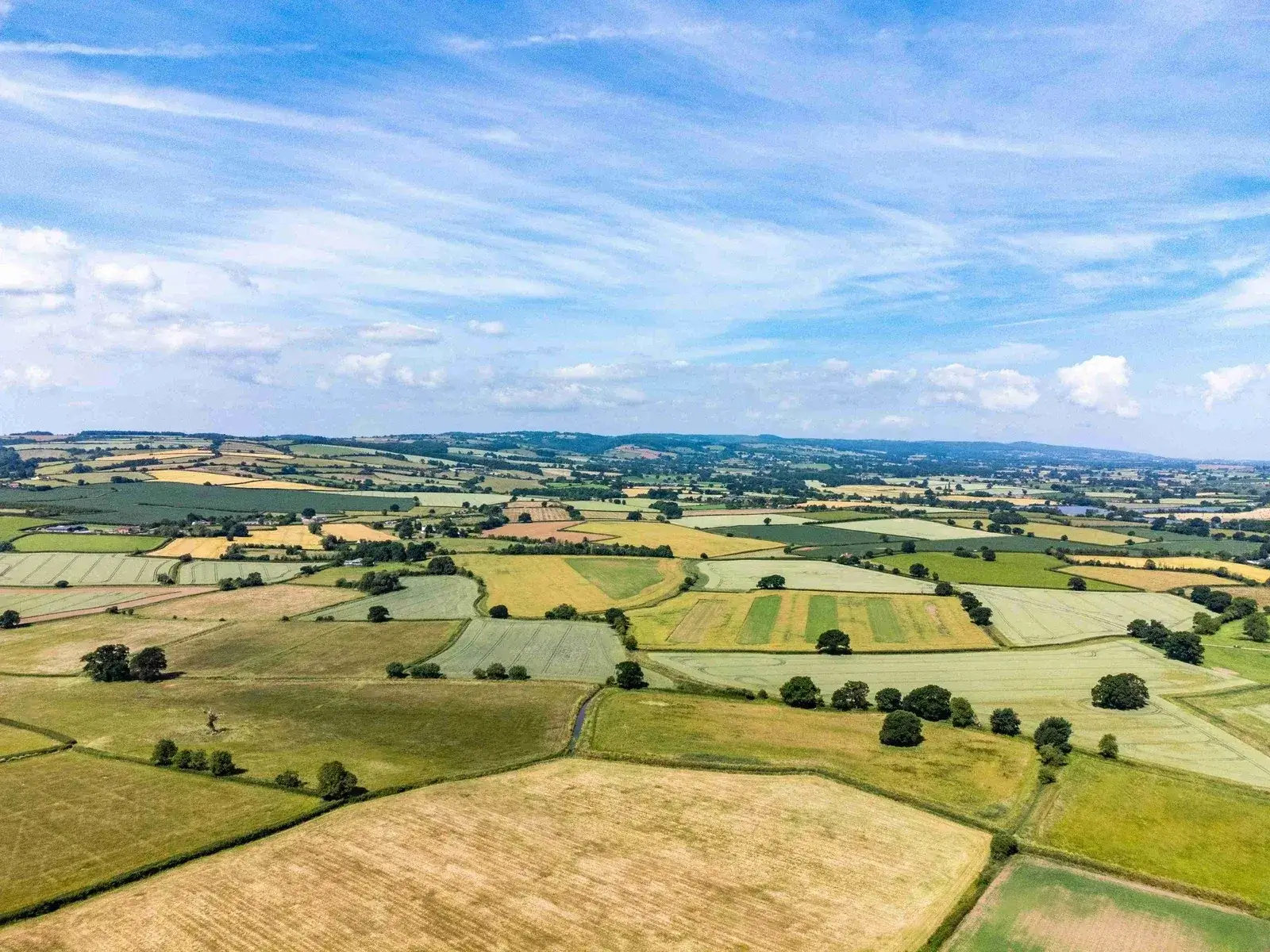
Statutory biodiversity delivery and land value
Biodiversity Net Gain—usually shortened to BNG—is a measurable planning requirement rather than a general promise to provide landscaping. Where the statutory regime applies in England, development must normally deliver a biodiversity value at least 10% higher than the pre-development baseline.
The effect on a site depends on the habitats present, their condition and strategic significance, the proposed layout, the treatment of retained habitat and whether the required units can be delivered on the site, on other land or through statutory credits as a last resort.
BNG should therefore be considered before a housing number or land value is treated as fixed. A scheme that ignores the baseline may lose developable area late in the process, face avoidable off-site costs or rely on land that cannot be secured for the required management period.
Value My Land can review the planning opportunity, apparent habitat constraints and likely evidence route as part of an initial development assessment. Detailed habitat surveys, metric calculations and legal mechanisms must be prepared by appropriately qualified advisers.
Policy and guidance checked 26 August 2026
Understand whether habitat delivery may affect the planning route, capacity or value of your land
The core landowner question
The statutory target concerns biodiversity units, not a fixed percentage of acreage. Units are calculated by applying the statutory biodiversity metric to habitat type, extent, condition, location and other factors. One hectare of low-value habitat is not interchangeable with one hectare of higher-value habitat.
A well-designed scheme may retain valuable features, improve multifunctional open space and create habitat within drainage or landscape areas. Another site may need substantial off-site delivery because the existing baseline is high, the proposed use is intensive or the habitat required cannot be established reliably within the red line.
The correct starting point is therefore the existing ecological baseline and a realistic concept layout. The planning, ecology, landscape, drainage and viability workstreams then need to use the same assumptions.
The calculation compares the pre-development habitat value with the proposed post-development value. The result is expressed in biodiversity units and must use the applicable statutory metric and rules.
Retained hedgerows, watercourses, buffers, public open space, SuDS and habitat creation can shape the net developable area. BNG belongs in the masterplan rather than in a late landscaping note.
Survey work, habitat creation, off-site units, monitoring, legal agreements and long-term management can affect residual land value. Those costs should not be hidden behind an unsupported gross-acre rate.
Step one: establish the legal route
The statutory framework contains exemptions and transitional rules. The development description, application date, site area, habitat affected and any priority habitat all matter. From 6 August 2026, official guidance includes an exemption for development whose red-line site is 0.2 hectares or less, provided the proposal does not affect priority habitat. Other exemptions have their own conditions.
An exemption from the statutory condition does not necessarily remove every biodiversity requirement. The mitigation hierarchy, protected-site duties, protected species legislation, irreplaceable-habitat policy and relevant Local Plan policies may still apply. A local authority may also seek proportionate ecological evidence to understand the effects of the proposal.
Landowners should avoid assuming that “small site” means “no ecology work” or that a self-build label automatically resolves the position. The applicable exemption must be checked against the current wording and the specific proposal.
Check the complete application boundary, not merely the building footprint. Access, drainage, landscaping and other operational land may form part of the site.
The small-site exemption does not apply where priority habitat is affected. Desktop records and field evidence may be needed before relying on it.
BNG has been introduced through phased commencement and later amendments. The position should be checked when the application strategy is fixed.
Start with what is already there
The baseline should describe the habitats present immediately before the relevant date and assess their condition using the metric rules. Habitats cannot safely be valued from an aerial image alone. Grassland that looks ordinary may have a different classification or condition once surveyed, while a boundary feature can carry disproportionate importance in the calculation.
Survey timing matters. Some habitat and species work is seasonal, and delays can affect the promotion or application programme. The ecology team also needs an accurate red line, ownership information and an explanation of any recent land-management change.
Deliberate degradation of habitat is not a legitimate way to lower the baseline. The statutory arrangements contain provisions intended to address degradation, and planning authorities can examine historic evidence. Land should continue to be managed lawfully and consistently while the development opportunity is assessed.
Confirm the application red line, access, drainage corridors and any off-site land proposed for habitat delivery. A shifting boundary can invalidate earlier assumptions.
Record habitat types, extent and condition through suitably qualified ecological work. Identify hedgerows, watercourses, ponds, woodland and potentially irreplaceable habitat.
Use a concept layout to test whether the unit target is likely to be met on site. This is an options exercise, not simply the final planning calculation.
Align ecology with highways, drainage, landscape, trees, public open space and utilities. The same land cannot be assumed to perform incompatible functions without evidence.
Housing numbers, access alignments and drainage solutions can materially change the BNG result. Re-run the calculation at meaningful design stages.
Confirm who will create, monitor and maintain significant habitat and how the obligation will bind the land for the required period.
Avoid, retain, deliver
The biodiversity gain hierarchy gives priority to avoiding adverse effects on onsite habitat, then to delivering gains on site, followed by registered off-site gains. Statutory biodiversity credits sit at the end of the sequence. It is not generally sound to design a maximised built footprint and assume that credits will repair the consequences.
BNG is also distinct from the ecological mitigation hierarchy. Avoiding and mitigating harm to protected species, designated sites or irreplaceable habitats cannot simply be replaced by a positive metric total elsewhere. The metric is an accounting tool within a wider legal and policy framework.
Irreplaceable habitats receive special treatment. Ancient woodland and ancient or veteran trees, for example, raise policy questions that cannot be reduced to an ordinary unit trade. Early identification is essential because the appropriate response may be avoidance and substantial buffers rather than compensation.
Retaining the best features can reduce losses, support landscape structure and lower delivery risk. Retention still requires suitable protection during construction and management afterwards.
Well-designed open space, SuDS and habitat corridors may contribute, but promised condition must be achievable alongside recreation, drainage, access and maintenance.
Off-site units can preserve development capacity, but price, availability, spatial risk multipliers, registration, legal security and timing need to be tested.
From application to commencement
Where the statutory condition applies, the planning application must contain the required biodiversity information. A Biodiversity Gain Plan is then generally approved after permission and before development begins. The plan explains how the minimum gain will be achieved and must be consistent with the approved development and metric.
Significant onsite habitat enhancements normally need to be secured through a planning condition, section 106 obligation or conservation covenant. Registered off-site gains also require an appropriate legal mechanism and allocation to the development. The delivery and monitoring arrangements usually extend for at least 30 years.
The landowner, promoter and purchaser should decide early who carries the obligation, who controls any retained habitat land, how management costs are funded and what happens if the habitat underperforms. These points can affect the sale plan and the drafting of promotion, option or conditional agreements.
Commission proportionate surveys, check exemptions and test an initial metric against the concept layout.
Submit the required biodiversity information, metric outputs, plans and explanation of the delivery route.
Understand the statutory condition and any separate ecological, landscaping or legal obligations attached to the permission.
Prepare the detailed plan and obtain approval before commencement where the statutory condition applies.
Implement the approved works at the right stage, protect retained habitats and maintain records.
Report against agreed milestones and deal with underperformance in accordance with the secured management arrangements.
Planning-led valuation
BNG does not automatically make land unsuitable or less valuable. It changes the evidence and delivery assumptions that sit behind a credible valuation. A site with low baseline distinctiveness, strong onsite opportunities and a coordinated landscape strategy may meet the target efficiently. A constrained site with high-value habitats may require fewer units, more open space or a costly off-site solution.
A gross acreage multiplied by a headline development-land rate will not capture these differences. The valuation should consider the net saleable area, abnormal works, professional fees, off-site unit costs, legal costs, management endowment and programme risk. It should also avoid counting habitat land as though it were unrestricted residential land.
Where the same ownership includes land that may support off-site BNG, the commercial strategy needs care. It may be advantageous to retain, register or separately control habitat land, but doing so can create long-term restrictions and interact with agricultural use, tax, access, stewardship schemes and future development aspirations.
Buffers, retained habitats and creation areas may reduce the land available for roads, plots and other uses. The effect depends on layout rather than a standard percentage.
Include surveys, design, metric work, habitat creation, off-site units, legal agreements, monitoring and management—not merely planting costs.
Seasonal surveys, unit availability, legal registration and gain-plan approval can affect the route to an implementable consent and therefore the risk allowance.
Before promoting or agreeing terms
The appropriate level of work depends on the site and proposal. The following questions help expose assumptions that should be tested before a value or development capacity is presented as reliable.
Avoidable project risk
The most damaging mistakes usually arise from treating BNG as a calculation to be completed after the scheme has been designed. By that stage, the layout may have consumed the land needed for buffers or habitat creation, and the assumed dwelling number may already underpin commercial negotiations.
Another common problem is double counting. A drainage basin, landscape buffer or public open space may contribute to biodiversity, but only if the proposed habitat and condition are compatible with its other functions and can be secured and managed. The same environmental measure may also be subject to rules limiting how far it can satisfy separate legal requirements.
Finally, a positive headline percentage does not itself prove deliverability. The habitat must be created in the right place, reach the promised condition and remain under effective management. A planning strategy should therefore explain both the arithmetic and the practical route.
The legal target is a percentage increase in biodiversity value, not a blanket requirement to surrender 10% of the land.
Seasonal constraints can delay a submission or force assumptions that are too uncertain for a robust planning or value assessment.
Amenity grass, play space, access verges and drainage features do not automatically deliver the habitat type, condition or security claimed in the metric.
Habitat delivery must be secured and allocated correctly. Ownership, management and enforcement cannot be left as an undefined post-sale matter.
Off-site unit costs vary by habitat, location, market availability and delivery route. A single unverified allowance can materially distort residual value.
A net-gain result does not remove the need to address protected species, designated sites or other ecological law and policy.
Primary material
These links provide the national policy and official guidance used when preparing this guide. Local policy, evidence and procedures must also be checked for the individual site.
Landowner questions
No. The statutory target is normally a 10% increase in calculated biodiversity value, not a requirement to dedicate a fixed 10% of the site area. The land take depends on the baseline, layout, habitat types, condition and delivery strategy.
Off-site delivery may form part of the solution, but the biodiversity gain hierarchy prioritises avoidance and onsite delivery before registered off-site gains. The planning authority will expect a justified and deliverable route, and statutory credits are intended as a last resort.
Significant onsite enhancements and registered off-site gains are generally secured for at least 30 years. The legal mechanism, management plan, monitoring and funding arrangements need to reflect that period.
No. The current exemption has defined conditions, including the red-line area and priority-habitat test. Other ecological policy and legal duties can still apply even where the statutory BNG condition does not.
No. BNG is separate from species protection, designated-site assessment and the ecological mitigation hierarchy. Those issues require their own evidence and, where relevant, licences or mitigation.
Land capable of delivering registered off-site units may have a new commercial use, but it will also be subject to long-term management and legal restrictions. Demand, habitat feasibility, location, registration, tax and the loss of alternative uses all need to be assessed.
A credible residual valuation should include the development costs and capacity effects required to secure an implementable permission. The correct allowance depends on the agreed contractual structure and whether the vendor, promoter or purchaser is responsible for delivery.
The calculation should be prepared by a competent person with the necessary ecological knowledge. The project may also require landscape, drainage, legal, planning and valuation input so that the metric assumptions match the deliverable scheme.
Free initial site review
Send us the land location and any available plans or ecological information. We can consider whether BNG appears likely to be a material planning, capacity or value issue and identify the next investigations that may be appropriate.
What the initial review considers